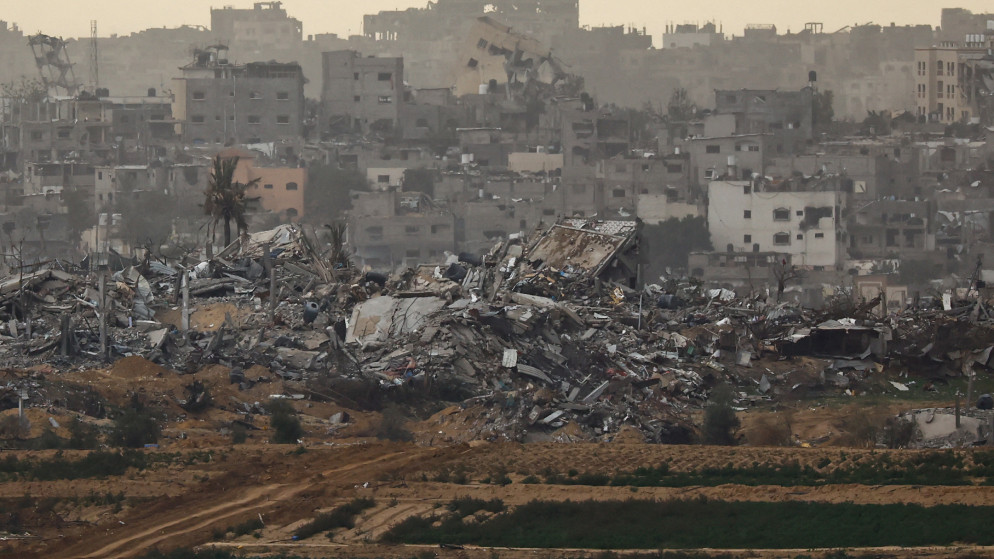
Municipalities in the Gaza Strip continue their efforts to confront the significant challenges imposed by the Israeli war, as they work to remove waste and clean sewage drains under harsh conditions. Despite the extensive destruction inflicted on the infrastructure, the municipalities strive to provide the minimum essential services to citizens.
The local authorities in Gaza operate under a "survival management" system, lacking financial and technical support, which hinders their ability to implement developmental plans. Dr. Yahya Al-Saraj, head of the Gaza Municipalities Union, confirmed that municipalities rely on repurposing available resources and coordinating with partners to meet citizens' needs.
Details of the Situation
The municipalities in Gaza face significant challenges, including funding shortages and fuel scarcity, which directly affect their ability to provide essential services. Al-Saraj explained that municipalities are working on reusing damaged equipment after repairing it in rudimentary ways, reflecting the state of emergency they are experiencing.
Al-Saraj noted that municipalities are focusing on vital tasks such as providing water, sanitation, and waste management, while many developmental projects have been postponed due to the current conditions. He emphasized that the continuation of the current situation without urgent intervention could lead to a gradual collapse in the municipalities' ability to provide their services.
Background & Context
Historically, Gaza has suffered from successive crises due to wars and occupation, impacting its infrastructure and ability to provide essential services. The recent war has exacerbated the situation, as many vital facilities have been destroyed, directly affecting citizens' lives.
The municipalities in Gaza are striving to overcome these crises by strengthening partnerships with the local community and implementing innovative solutions, despite the significant challenges they face. The lack of international support is one of the main factors hindering municipalities' efforts to improve the services provided.
Impact & Consequences
Al-Saraj warned that the continuation of the current situation could lead to the spread of diseases and epidemics, especially with the increasing waste and medical waste. He confirmed that municipalities could reach a stage of complete inability to provide essential services, directly threatening citizens' lives.
He also pointed out that the environmental situation could deteriorate further if urgent intervention is not made, potentially leading to health disasters that threaten citizens' lives. These challenges serve as a warning of the necessity for swift action from the concerned parties to provide the needed support.
Regional Significance
The crisis facing Gaza's municipalities reflects the difficult humanitarian situation experienced by Palestinians, necessitating greater Arab and international attention. The humanitarian crises in Gaza affect regional stability and increase citizens' suffering in the absence of root solutions.
Arab countries and the international community must act urgently to support the municipalities in Gaza, as these bodies are the first line of defense in facing crises. Providing the necessary support can help improve humanitarian conditions and alleviate citizens' suffering.