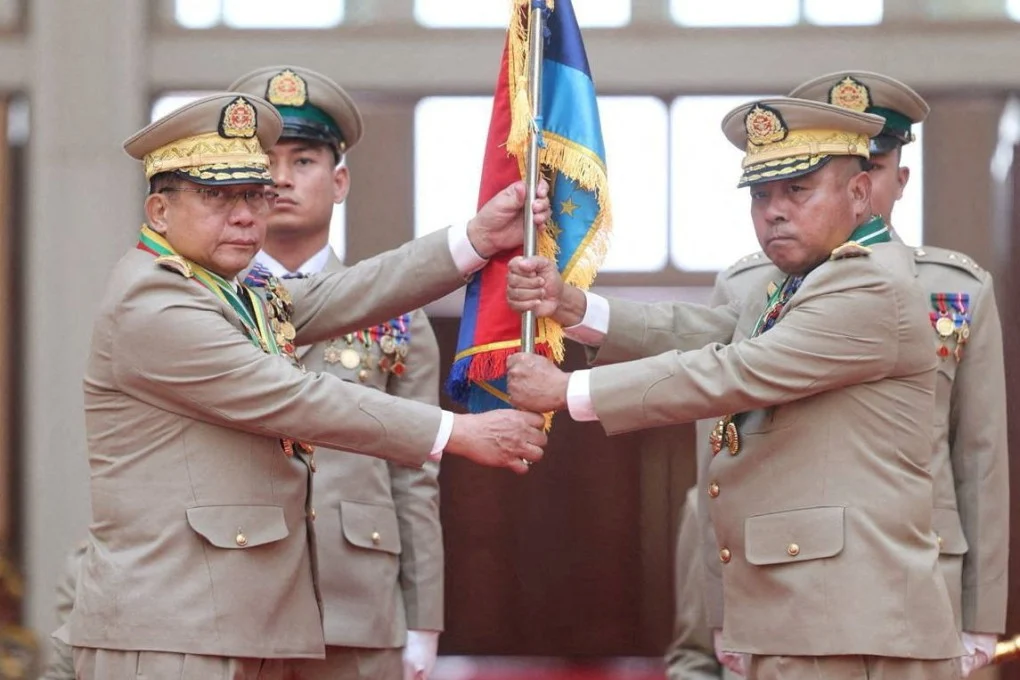
Myanmar's army chief, Min Aung Hlaing, has resigned from his position as the supreme commander of the armed forces, bringing him closer to assuming the presidency of the country. This decision follows the parliament's approval of his nomination, raising questions about the future of governance in the country after the coup that occurred in 2021.
This move is seen as part of the ruling military council's efforts to place one of its members in the highest civilian positions, which analysts describe as a "constitutional rearrangement" aimed at strengthening military control over governance, despite the pretense of a shift towards civilian administration.
Details of the Event
In an unsurprising move, Min Aung Hlaing resigned from his position as army chief, paving the way for him to take over the presidency. This step comes at a sensitive time, as the Myanmar people continue to suffer from the repercussions of the military coup that took place in February 2021, which led to the ousting of the elected government.
Despite the resignation, there remains significant concern among citizens and analysts about whether this step truly signifies a shift towards democracy or if it is merely a tactic to reinforce military rule under the guise of civilian governance.
Background & Context
Historically, Myanmar has experienced long periods of military rule since gaining independence from British colonialism in 1948. In 2011, the country began transitioning towards democracy, but this shift faced a significant setback following the military coup in 2021. Since then, the country has witnessed widespread protests and violent crackdowns by military forces, exacerbating the humanitarian situation.
Now, with the resignation of Min Aung Hlaing, many are questioning whether this move will lead to improvements in the political and economic conditions in the country or if it will merely strengthen the military's grip on power.
Impact & Consequences
The resignation of Min Aung Hlaing could have implications for Myanmar's international relations. Many countries and international organizations have condemned the military coup and called for a return to civilian rule. If Hlaing manages to assume the presidency, it could lead to further international isolation for the country, as pressure on the military government continues.
Moreover, this step may escalate internal tensions, as there remains significant opposition to the military regime. Protests and popular resistance are expected to continue, which could intensify military repression.
Regional Significance
Looking at the events in Myanmar, important lessons can be observed for Arab countries facing similar political challenges. Previous experiences in the region, such as the Arab Spring revolutions, demonstrate that political transformations can be complex and difficult, often facing resistance from ruling regimes.
Additionally, the situation in Myanmar highlights the importance of international support for democracy and human rights, which may have a direct impact on how Arab countries address issues of governance and freedom.
In conclusion, the situation in Myanmar remains under close observation, as attention turns to what the next steps will be under a military regime that appears to be seeking to reinforce its power under a civilian facade.