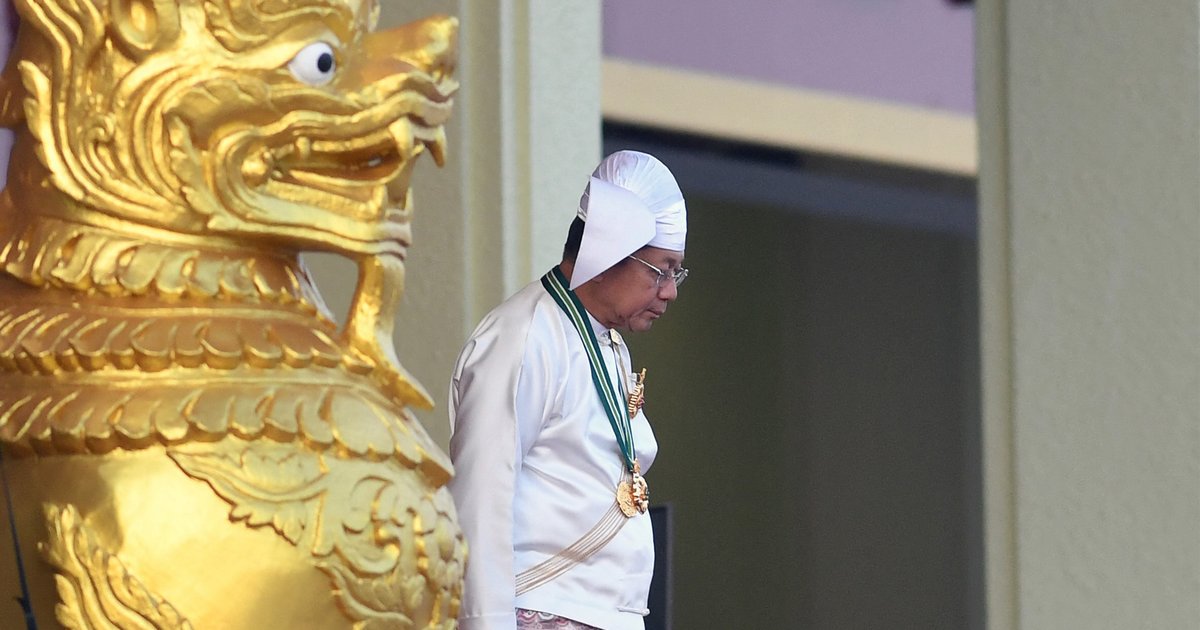
Myanmar's military leader, Min Aung Hlaing, was elected president on Friday after an easy parliamentary vote, reinforcing his grip on power in a country plagued by civil wars. This election follows five years after the ousting of the democratically elected government led by Aung San Suu Kyi, the Nobel Peace Prize laureate, in a military coup in 2021.
The 69-year-old Min Aung Hlaing received significant support from the Union Solidarity and Development Party, which is backed by the military, as well as from military-appointed lawmakers, securing 429 votes against 126 votes for his rival, current Prime Minister Nyu Saw.
Details of the Election
This election comes after controversial elections in December and January, which critics and Western governments deemed a mere charade aimed at legitimizing military rule. The country has witnessed widespread protests since the coup, which have escalated into armed resistance against military governance.
As Min Aung Hlaing seeks to consolidate his authority, he has made significant changes in military leadership, appointing Ye Win Oo, the former intelligence chief, as his successor in leading the military. This move reflects his ambitions to strengthen military power under the guise of a civilian government.
Background & Context
Historically, Myanmar has suffered from continuous military rule for over half a century, with the country under direct or indirect military control. In 2015, Myanmar experienced a relatively democratic transition with the victory of the National League for Democracy led by Aung San Suu Kyi in elections, but this transition was short-lived following the military coup in 2021.
The coup triggered a wave of popular protests and violence, with human rights organizations accusing the military of committing serious violations against civilians, including killings and torture. These events have exacerbated the humanitarian situation in the country, with millions living under dire conditions.
Impact & Consequences
Current analysis indicates that the election of Min Aung Hlaing as president may contribute to strengthening his authority, but it could also escalate the conflict with opposition groups. The ongoing civil war may adversely affect the country's economic and social stability.
The new government seeks to gain international legitimacy, but the challenges it faces are significant, especially with ongoing accusations of human rights violations. Additionally, international pressures may increase as the conflict continues, potentially leading to severe consequences for the national economy.
Regional Significance
For Arab countries, the situation in Myanmar highlights the importance of supporting human rights and democratic governance. The conflicts in Myanmar could also impact regional security, especially given the complex relationships between Arab states and Southeast Asia.
In conclusion, the future of Myanmar remains uncertain as challenges mount for the new government, while the people continue to face humanitarian and political crises. The situation in Myanmar requires greater international attention to ensure the achievement of peace and stability.