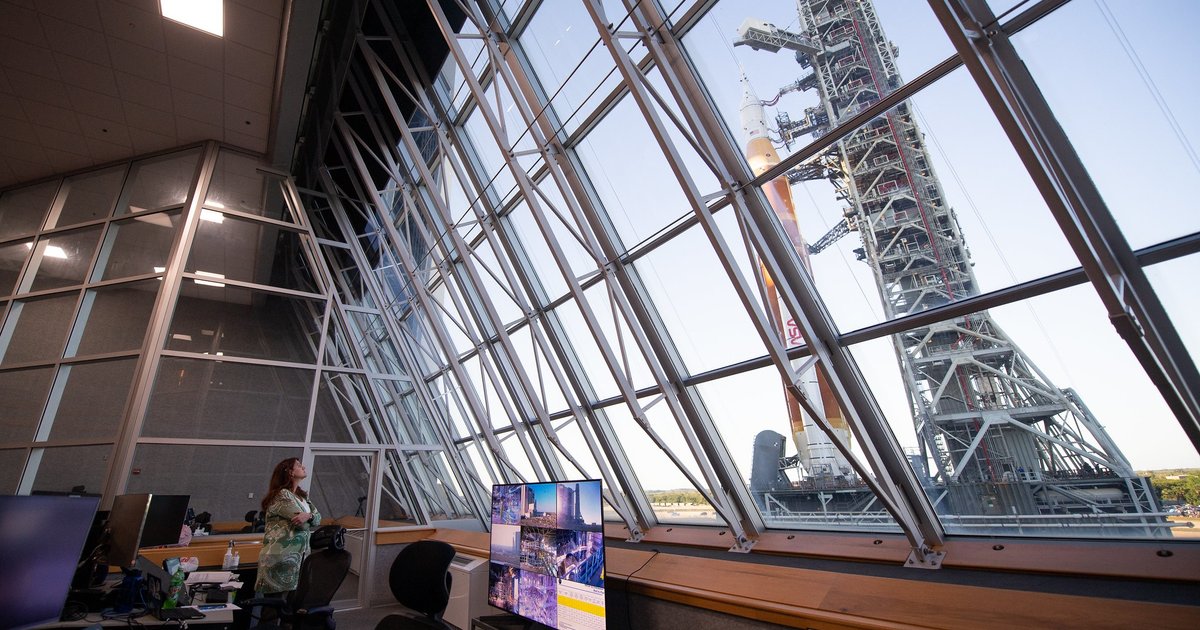
NASA announced the successful launch of its Space Launch System rocket at 12:35 AM on Thursday, embarking on a historic journey to the Moon with four astronauts aboard. This mission, known as Artemis-2, represents a significant milestone in the American space program, being the first crewed flight to the Moon in over half a century.
The mission will last for nine days, during which the astronauts aim to conduct a series of experiments and studies about the Moon, as part of preparations for a human return to the lunar surface by 2028. This goal was set by the previous administration under Donald Trump and reflects the United States' commitment to space exploration.
Event Details
The four astronauts who launched on this mission are Jessica Watkins, John Shoffner, Christina Koch, and David Saint-Jacques. They were carefully selected from a large pool of applicants, each bringing extensive experience in space and science fields. The astronauts are scheduled to conduct scientific experiments and observe the Moon from low orbit, enabling them to gather valuable data about the lunar surface.
This mission is part of the Artemis program, which aims to return humans to the Moon and expand the scope of space exploration to include Mars in the future. This flight represents a crucial step toward achieving this goal, as it will help test new technologies necessary for future missions.
Background & Context
Historically, the last crewed mission to the Moon occurred in 1972 during the Apollo program, when astronauts landed on the lunar surface and conducted a series of experiments. Since then, humanity has not witnessed any crewed missions to the Moon, making this new mission particularly significant in the history of space exploration.
With advancements in technology and a growing interest in space, many countries have begun developing their own space programs. Competition in space has intensified, with major nations like China and Russia striving to achieve similar milestones. In this context, the Artemis-2 mission is part of the United States' strategy to maintain its leadership in space.
Impact & Consequences
This mission is a strategic step that reflects the United States' commitment to enhancing its presence in space. It also underscores the importance of international cooperation in space, as NASA seeks to collaborate with other space agencies, such as the European Space Agency.
This mission is expected to contribute to innovation and technology development, as new technologies will be created that can be utilized in other fields such as communications and navigation. Additionally, it will enhance scientific understanding of space, potentially leading to new discoveries in the future.
Regional Significance
As Arab countries focus on developing their own space programs, this new mission could inspire younger generations in the region. Seeing astronauts achieve new milestones in space may encourage Arab youth to engage in science, technology, engineering, and mathematics fields.
Furthermore, international cooperation in space could open new horizons for Arab countries, allowing them to benefit from the advanced expertise and technology offered by major powers. Developing Arab space programs could enhance the region's standing on the international stage.
The success of the Artemis-2 mission marks a new beginning in space exploration, reflecting humanity's commitment to the pursuit of knowledge and progress. As developments in this field continue, hopes remain high for achieving new milestones in the future.