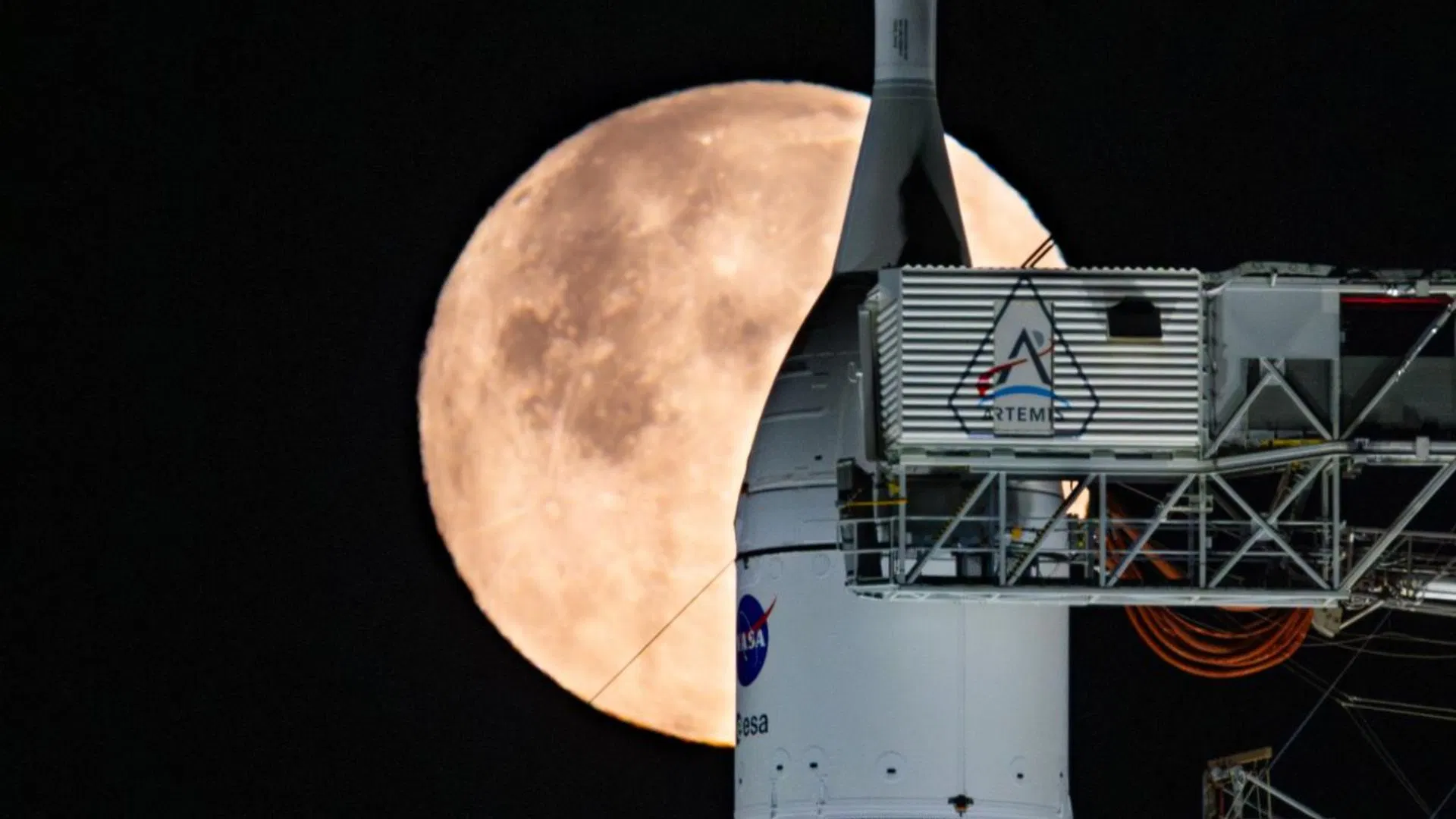
NASA has announced the successful launch of the Artemis II mission to the Moon, where the rocket took off from the Kennedy Space Center in Florida. This mission marks the first crewed flight to the Moon since 1972, representing a significant step in space exploration.
The mission, which launched on April 1, carries a crew of four astronauts, with the team aiming to conduct a series of scientific experiments and explore the lunar surface. This mission is part of a larger plan to establish a permanent base on the Moon, paving the way for future exploration of Mars.
Details of the Launch Event
The rocket launched from the launch pad at 12:00 PM Eastern Time, witnessing a large turnout from media and the public. The rocket is equipped with the Space Launch System (SLS) and the Orion capsule, which are among the latest technologies used in space exploration.
During the journey, the astronauts will conduct scientific experiments related to the lunar environment, as well as test new technologies that could be used in future missions. The capsule will orbit the Moon before returning to Earth, providing valuable data on the feasibility of living and working in space.
Background & Context
The Artemis II mission is part of the Artemis program launched by NASA in 2019, which aims to return humans to the Moon by 2024. This program is part of the United States' efforts to enhance its presence in space, especially after decades of decline in crewed space exploration.
Historically, the last crewed mission to the Moon was Apollo 17 in 1972, and since then, no space agency has sent astronauts to the Moon. Therefore, Artemis II represents a strong return for the United States to lunar space.
Impact & Consequences
This mission is a significant step in enhancing international cooperation in space, as NASA seeks to collaborate with other space agencies such as the European Space Agency and the Japan Aerospace Exploration Agency. This collaboration could lead to the development of new technologies and achieve greater accomplishments in space exploration.
Moreover, the success of this mission may encourage further investments in space by the private sector, fostering innovation and leading to the development of new technologies that could benefit humanity as a whole.
Regional Significance
As Arab countries focus on developing their space programs, the success of the Artemis II mission may inspire them to enhance their investments in space. Many Arab nations, such as the United Arab Emirates and Saudi Arabia, have already begun developing their own space programs, reflecting a growing interest in space exploration.
Additionally, international cooperation in space may open new avenues for Arab countries to participate in global projects, enhancing their standing in the international community.