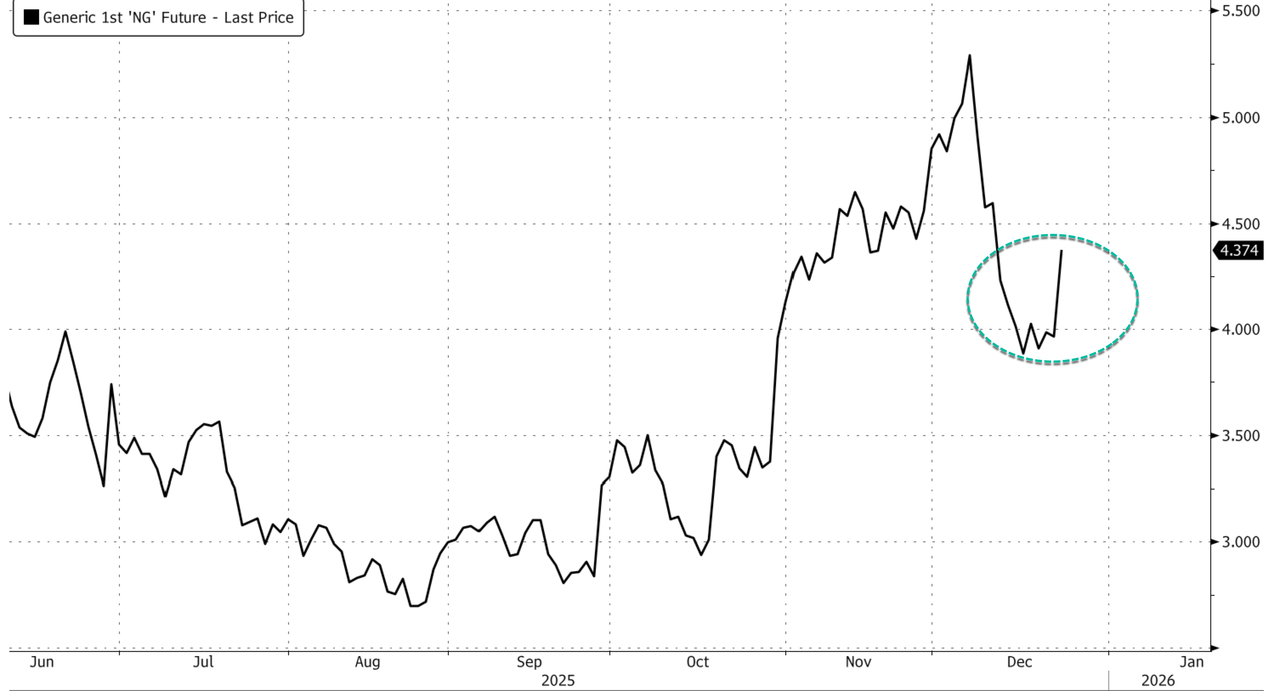
Natural gas futures in the United States have risen sharply due to changes in weather forecasts, with predictions indicating new cold spells that could lead to increased demand for gas used in heating and power generation. Although the winter heating season is starting to decline, these climatic changes may reactivate the market.
The recent rise in oil prices has also contributed to supporting natural gas prices, as oil prices directly affect natural gas futures. This increase in oil prices has led to significant financial flows towards a basket of energy products, reflecting a complex interaction between different energy markets.
Details of the Price Increase
Data shows that natural gas futures have risen significantly, with increases of up to 5% in certain periods. This rise reflects growing market expectations regarding gas demand, especially with winter approaching in some regions. Additionally, forecasts suggest that cold weather may persist longer than previously expected, increasing the need for natural gas.
It is noteworthy that natural gas prices have experienced significant fluctuations in recent months, influenced by multiple factors including supply and demand, as well as climatic changes. However, the current increase reflects a shift in market dynamics, where demand for gas has become more critical under changing weather conditions.
Background & Context
Historically, natural gas has been one of the primary energy sources in the United States, heavily relied upon for heating and power generation. In recent years, the United States has seen a notable increase in natural gas production, making it one of the largest producers in the world. However, price fluctuations continue to pose significant challenges for both consumers and investors.
In past years, there has been an increasing focus on renewable energy, but natural gas still plays a vital role in the American energy mix. This balance between traditional and renewable energy reflects the challenges the United States faces in achieving its environmental and energy goals.
Impact & Consequences
The rise in natural gas prices could have widespread effects on the American economy, potentially leading to increased energy costs for consumers and businesses. This, in turn, could impact inflation and the purchasing power of citizens. Companies that rely on natural gas as a primary energy source may face challenges in managing costs.
Furthermore, this price increase may lead to a reevaluation of energy investments in the United States, as investors may seek new opportunities in the renewable energy sector or in new technologies to improve gas efficiency.
Regional Significance
The rise in natural gas prices is indicative of climate changes and their impact on energy markets, which in turn affects the American and global economy. As demand for natural gas increases, it could lead to a shift in energy policies and investment strategies aimed at balancing traditional energy sources with renewable alternatives.
In conclusion, the current trends in natural gas pricing highlight the intricate relationship between weather patterns, energy demand, and market dynamics, underscoring the importance of adapting to these changes for future energy security.