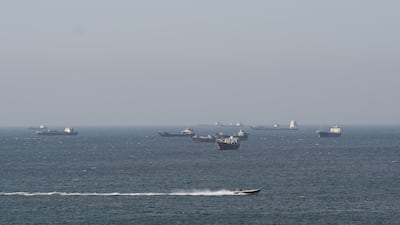
Navigation in the Strait of Hormuz has nearly ceased after the US Navy inspected an Iranian vessel, heightening tensions in the region. The strait is a vital transit point for oil and gas, witnessing significant traffic from commercial ships.
The US inspection was part of Washington's efforts to monitor Iranian activities in the area, with reports indicating that the ship was carrying suspicious cargo. This action elicited mixed reactions from Tehran, which deemed it a violation of its sovereignty.
Details of the Incident
Early this morning, the US Navy conducted an inspection of an Iranian ship in the Strait of Hormuz, targeting it based on allegations of transporting illegal shipments. The operation was carried out without any clashes, but it significantly disrupted navigation in the area.
The strait, through which approximately 20% of the world's oil supply passes, has seen a noticeable decline in the number of vessels transiting. This situation could have a substantial impact on global oil prices, as many countries rely on these supplies.
Background & Context
Historically, the Strait of Hormuz has been a flashpoint between Iran and the United States, with the region experiencing numerous similar incidents. Since the US withdrawal from the Iranian nuclear deal in 2018, tensions between the two sides have escalated, leading to a series of maritime incidents.
Iran, which considers the strait part of its territorial waters, often accuses the US of interfering in its affairs. This recent escalation comes at a sensitive time, as Tehran seeks to bolster its position in nuclear talks with global powers.
Impact & Consequences
The US inspection of the Iranian ship could lead to further escalation in tensions between Tehran and Washington, potentially affecting regional stability. If these operations continue, we may witness Iranian responses that include threats to close the strait, which would significantly impact global trade.
This escalation could also affect oil prices, with expectations of a rise if tensions persist. Financial markets may also be impacted, as any escalation in the region could lead to significant fluctuations in stock prices.
Regional Significance
For Arab countries, any escalation in the Strait of Hormuz could directly impact local economies, especially those reliant on oil exports. Countries like Saudi Arabia and the UAE may face challenges in securing their oil supplies.
Moreover, regional tensions could influence security dynamics, prompting some nations to enhance their military capabilities in response to potential threats. This scenario could lead to an arms race in the region, complicating security situations further.
The recent escalation in the Strait of Hormuz reflects ongoing tensions between Iran and the United States and indicates that the region may face a new phase of instability. It is crucial for Arab nations to closely monitor the situation and prepare to address any potential repercussions.