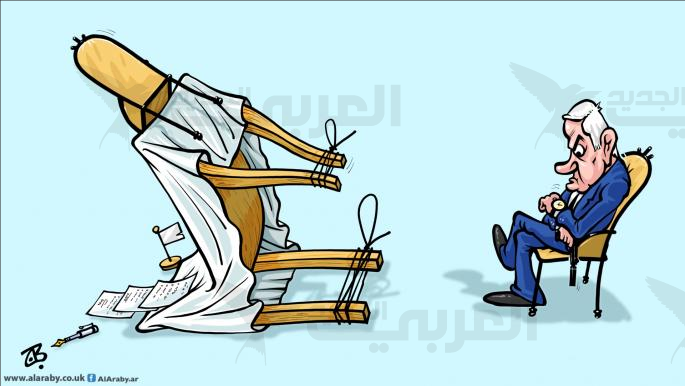
The negotiations with the Israeli occupation manifest as a process that legitimizes the crimes committed against the Palestinians, where these crimes receive official sanction from the United States, followed by Arab approvals. This reality raises questions about the effectiveness of these negotiations and their impact on the Palestinian cause.
Amid the ongoing occupation, it appears that the negotiations do not reflect a genuine desire for peace but are used as a means to justify aggressive policies. Instead of serving as a platform for conflict resolution, they transform into a tool for marketing the crimes committed daily against the Palestinian people.
Details of the Event
Reports continue to emerge regarding the negotiations held between the concerned parties, showing that the occupation seeks to strengthen its positions on the ground through settlement expansion and forced displacement. At the same time, these negotiations create a false impression that progress is being made toward peace, while the reality indicates the exact opposite.
Statistics show that the number of settlers in the West Bank has significantly increased, complicating any future efforts to achieve peace. Additionally, the forced displacement of Palestinians from their homes has become a recurring phenomenon, reflecting a systematic policy aimed at emptying Palestinian areas of their original inhabitants.
Background & Context
Historically, the Palestinian cause has witnessed numerous attempts at negotiation, but most have ended in failure. This is due to the lack of genuine political will from the occupation to achieve peace. Instead, negotiations are used as a cover to expand settlement projects.
Over the years, there have been pivotal moments in the history of negotiations, such as the Oslo Accords, which were supposed to mark the beginning of a resolution to the conflict, but have not yielded any tangible progress. On the contrary, tensions and violence in the region have intensified.
Impact & Consequences
This dynamic exacerbates the humanitarian situation in the Palestinian territories, where the population suffers from a severe shortage of basic resources, in addition to restrictions on their movement. The continuation of the occupation also reinforces feelings of frustration and despair among Palestinians, increasing the likelihood of further violence.
Arab relations with the occupation are also affected, as these negotiations are viewed as a justification for repressive policies. This could lead to a erosion of trust between Arab peoples and governing regimes, especially in light of the growing public awareness of the Palestinian cause.
Regional Significance
The Palestinian cause is a central issue in Arab politics, and any developments in it directly affect relations between Arab countries. The ongoing occupation and disregard for Palestinian rights may contribute to rising tensions in the region and bolster feelings of resistance.
Moreover, negotiations held under these circumstances could lead to internal divisions within Arab countries, as citizens demand a firmer stance against the occupation. This situation may reflect on the internal policies of Arab states and affect their stability.
In conclusion, negotiations with the Israeli occupation remain a symbol of absurdity, as they are used as a means to justify crimes against Palestinians. The need for a new strategy based on justice and human rights is more urgent than ever.