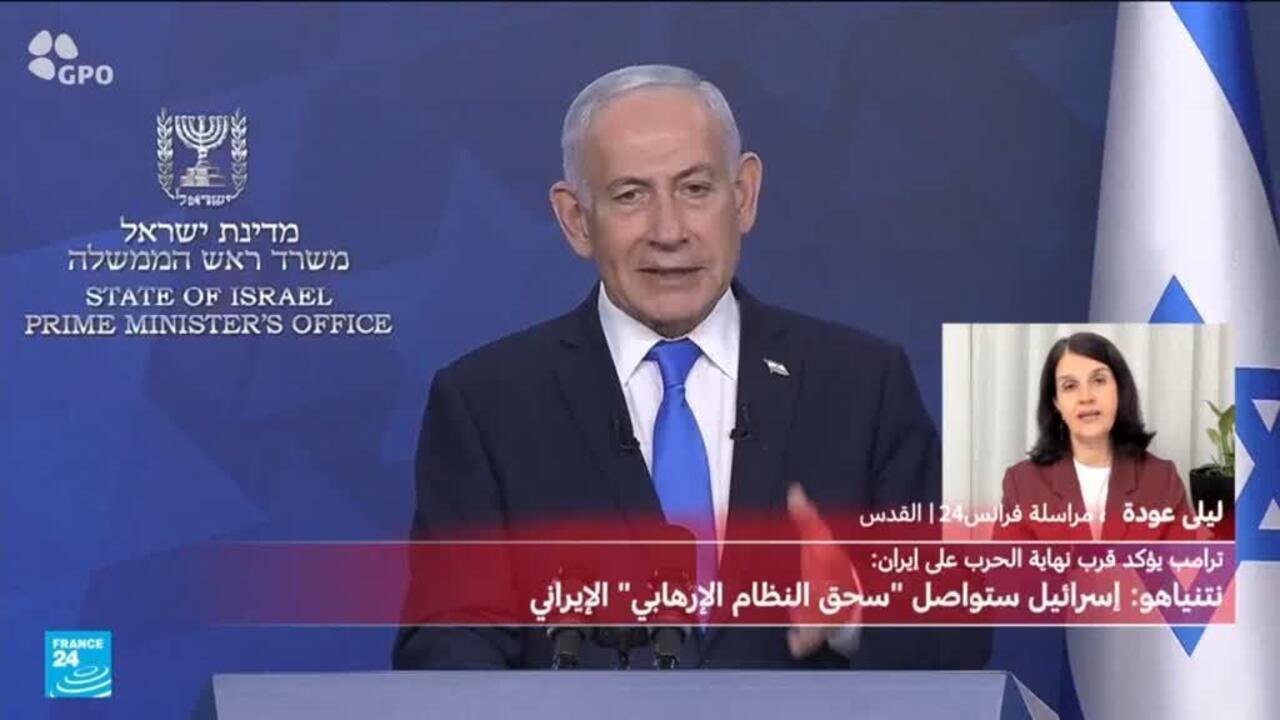
Israeli Prime Minister Benjamin Netanyahu announced on Tuesday evening that Israel will continue its military campaign against Iran, asserting that "crushing the terrorist regime in Iran" is the primary goal. Netanyahu considered that the war, which began over a month ago, is not yet over, reflecting Tel Aviv's determination to continue military operations in the region.
In contrast, U.S. President Donald Trump indicated that the United States may halt its military attacks on Iran within two to three weeks. These statements reflect a divergence in positions between Washington and Tel Aviv, where it seems each side adopts a different strategy in dealing with the Iranian crisis.
Details of the Event
Netanyahu's statements come at a sensitive time, as Israel seeks to bolster its military position in the region. He noted that military operations aim to eliminate Iranian threats posed by militias backed by Tehran in Iraq and Syria. He also confirmed that Israel will not hesitate to use military force to ensure its national security.
On the other hand, Trump's remarks reflect the United States' desire to reduce military escalation in the region. This comes at a time when the world is experiencing increasing diplomatic pressure to mitigate tensions between Iran and Western countries, raising questions about whether Washington will adopt a more diplomatic approach in the near future.
Background & Context
Historically, relations between Iran and Israel have been tense, with Israel viewing Iran as an existential threat. Since the Islamic Revolution in 1979, tensions between the two countries have escalated, leading to indirect military conflicts in several areas, including Syria.
In recent years, Iran has increased its influence in the region by supporting Shiite militias in Iraq and Syria, prompting Israel to take preemptive military action. This complex dynamic makes it difficult to predict the course of events in the future.
Impact & Consequences
The divergent statements between Netanyahu and Trump could complicate the situation in the region. If Israel continues to escalate its military operations, it may provoke reactions from Iran and its allies, increasing the likelihood of a broader conflict.
On the other hand, if the United States decides to reduce its military intervention, it could be seen as a green light for Israel to continue its operations without constraints. This scenario could exacerbate security conditions in the region and heighten the risks of military escalation.
Regional Significance
Developments in the Iranian-Israeli conflict directly affect security and stability in the Arab region. Neighboring Arab countries, such as Iraq and Syria, may find themselves at the heart of this conflict, complicating security and economic conditions.
Furthermore, the continuation of the war could lead to an influx of refugees and increased sectarian tensions, threatening stability in the countries of the region. It is crucial for Arab nations to closely monitor developments and take proactive steps to protect their national interests.
In conclusion, the situation in the Middle East remains volatile, and the divergent statements between leaders may reflect deeper conflicts in military and political strategies. It is essential for the concerned countries to adopt a diplomatic approach to resolve disputes and avoid military escalation.