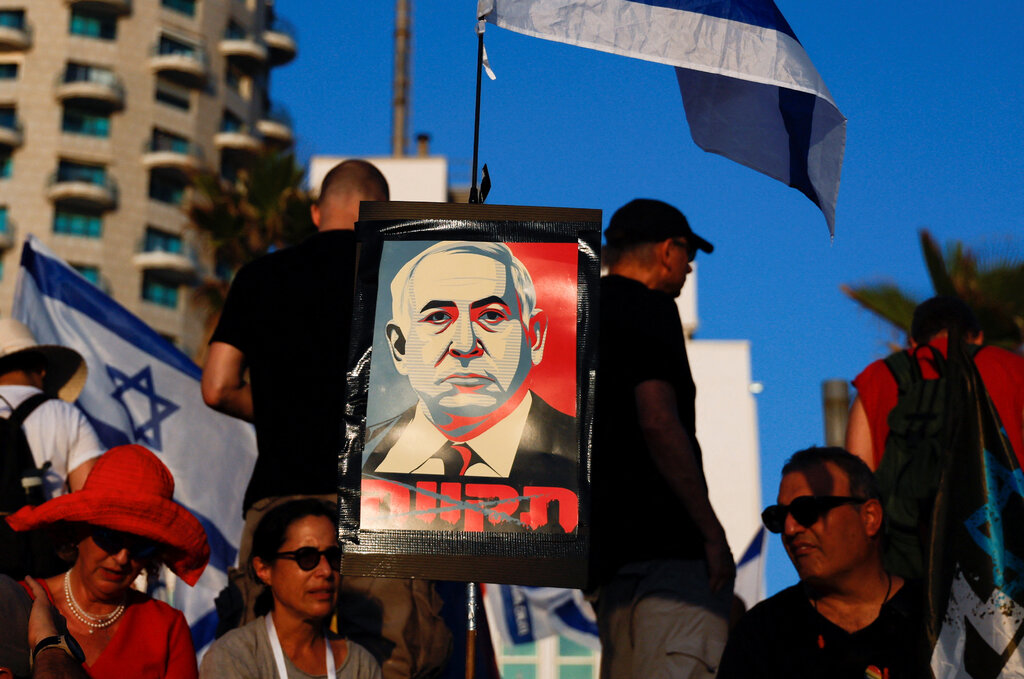
Israeli Prime Minister Benjamin Netanyahu criticized the Israeli Supreme Court on Sunday for its decision to allow an anti-war protest against Iran, deeming it 'unbelievable.' This attack comes at a sensitive time when Israel is experiencing increasing tensions regarding a potential conflict with Iran.
Netanyahu's remarks followed a day of protests in Tel Aviv, where demonstrators gathered to express their opposition to a potential war. The Israeli police confronted the demonstration, leading to the arrest of 17 individuals, according to reports from the newspaper Yedioth Ahronoth.
Details of the Event
The protest that took place in Tel Aviv was part of a broader movement expressing concern over military escalation against Iran. The demonstration saw widespread participation from various segments of Israeli society, who voiced their fears about the dire consequences that a war could entail.
Netanyahu, facing increasing criticism from the opposition regarding his policy towards Iran, used his platform to condemn the Supreme Court's decision, reflecting the growing tensions between the government and the judiciary.
Background & Context
Historically, relations between Israel and Iran have been tense, with Israel viewing Iran as an existential threat. These tensions have escalated in recent years as Iran has advanced its nuclear program, prompting Israel to adopt more hardline stances.
Anti-war protests are not new to the Israeli landscape, as the country has witnessed similar demonstrations in the past against wars in Gaza and Lebanon. However, this protest comes at a critical time when calls for dialogue rather than military escalation are increasing.
Impact & Consequences
These events could exacerbate internal divisions within Israel, as polarization between supporters and opponents of the war grows. Netanyahu's statements may also heighten tensions between the government and the Supreme Court, impacting the judicial system in the country.
The repercussions may extend to international relations, as major powers like the United States are closely monitoring the situation. Any escalation in the conflict could affect diplomatic efforts aimed at containing Iran's nuclear program.
Regional Significance
The developments in Israel are of significant importance to the Arab region, as any military escalation could destabilize neighboring countries. Many Arab nations are closely watching the situation, as war in the region could lead to severe humanitarian and economic repercussions.
At the same time, these events may increase Arab support for diplomatic efforts aimed at achieving peace and stability in the region, as war would not benefit any party involved.
In conclusion, the situation in Israel remains complex, with domestic politics intertwining with regional challenges, making it essential to closely monitor the developments.