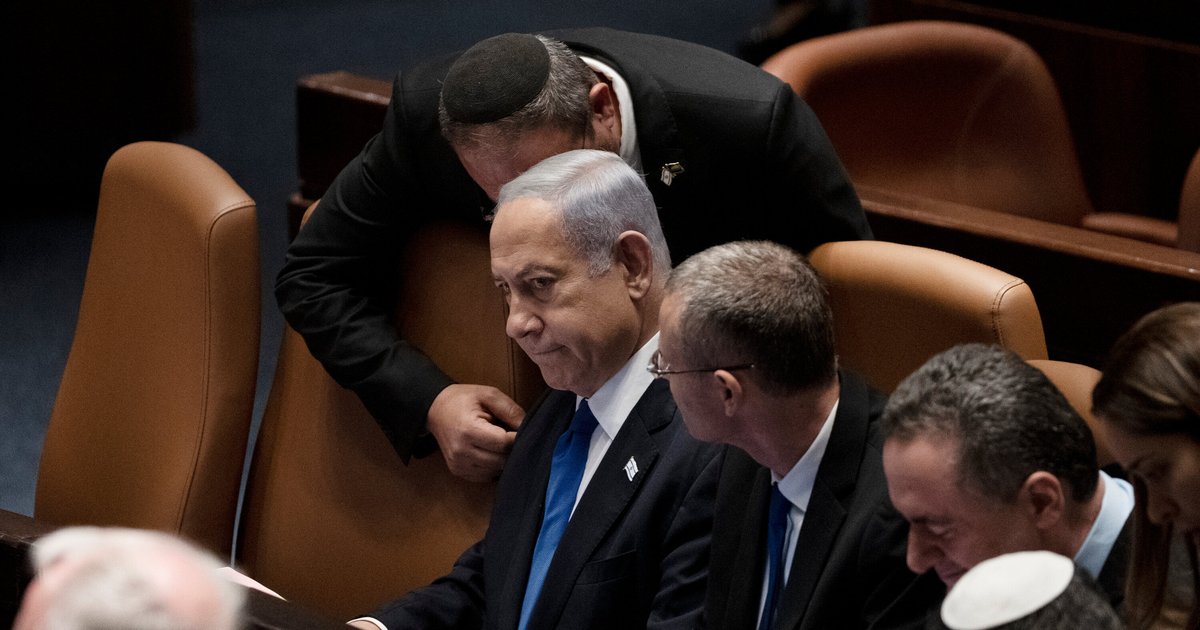
Former Israeli army chief and head of the "Yashar" party, Gadi Eisenkot, expressed his concern regarding the current situation faced by Israelis under the leadership of Prime Minister Benjamin Netanyahu. Eisenkot emphasized that Netanyahu is leading Israelis from war to war, speaking of alleged victories, while the reality indicates a ceasefire being imposed on them in several areas, including Iran and Gaza, raising fears of a similar scenario in Lebanon.
Eisenkot's remarks come at a sensitive time, as Netanyahu faces increasing criticism from within Israeli society. While Netanyahu attempts to portray himself as a strong leader, many believe that his military policies have failed to achieve the desired goals, instead leading to more tensions and conflicts.
Details of the Situation
In his remarks, Eisenkot pointed out that Israelis are experiencing significant disappointment due to the failure to achieve declared military objectives. A ceasefire has been imposed in Gaza, which many consider a failure to meet strategic goals. Eisenkot also expressed concerns that these scenarios could repeat in Lebanon, where tensions with Hezbollah are escalating.
These statements coincide with rising public protests in Israel against the government's policies, with many Israelis calling for a change in the approach to dealing with security crises. Some believe that Netanyahu is focusing on achieving political gains at the expense of national security.
Background & Context
Historically, Israel has witnessed numerous wars and conflicts that have led to radical changes in the political and security landscape. Since the establishment of the state, wars have been an integral part of Israeli identity, but over time, many Israelis have begun to question the efficacy of these wars and whether they achieve the intended goals.
The recent war in Gaza is considered one of the most controversial, resulting in significant human and material losses. Nevertheless, Netanyahu continues to attempt to portray this war as a success, widening the gap between the government and the people.
Impact & Consequences
Netanyahu's military policies are affecting Israel's relations with neighboring countries, as tensions increase with each round of conflict. While Netanyahu seeks to assert his strength, he simultaneously faces criticism from traditional allies who believe these policies may lead to greater instability in the region.
Moreover, the continuation of these policies could exacerbate humanitarian crises in the affected areas, complicating the security situation and impacting peace efforts in the region.
Regional Significance
Developments in Israel have a direct impact on neighboring Arab countries, which are closely monitoring the tense security situation. As the conflict intensifies, concerns about its repercussions on regional security grow.
Furthermore, the ongoing conflict may worsen humanitarian crises in Gaza and Lebanon, necessitating international intervention to seek lasting solutions. The current situation requires Arab countries to enhance cooperation among themselves to confront shared challenges.
In conclusion, Eisenkot's statements serve as a warning about the consequences of current military policies, necessitating a reevaluation of the strategies employed to ensure security and stability in the region.