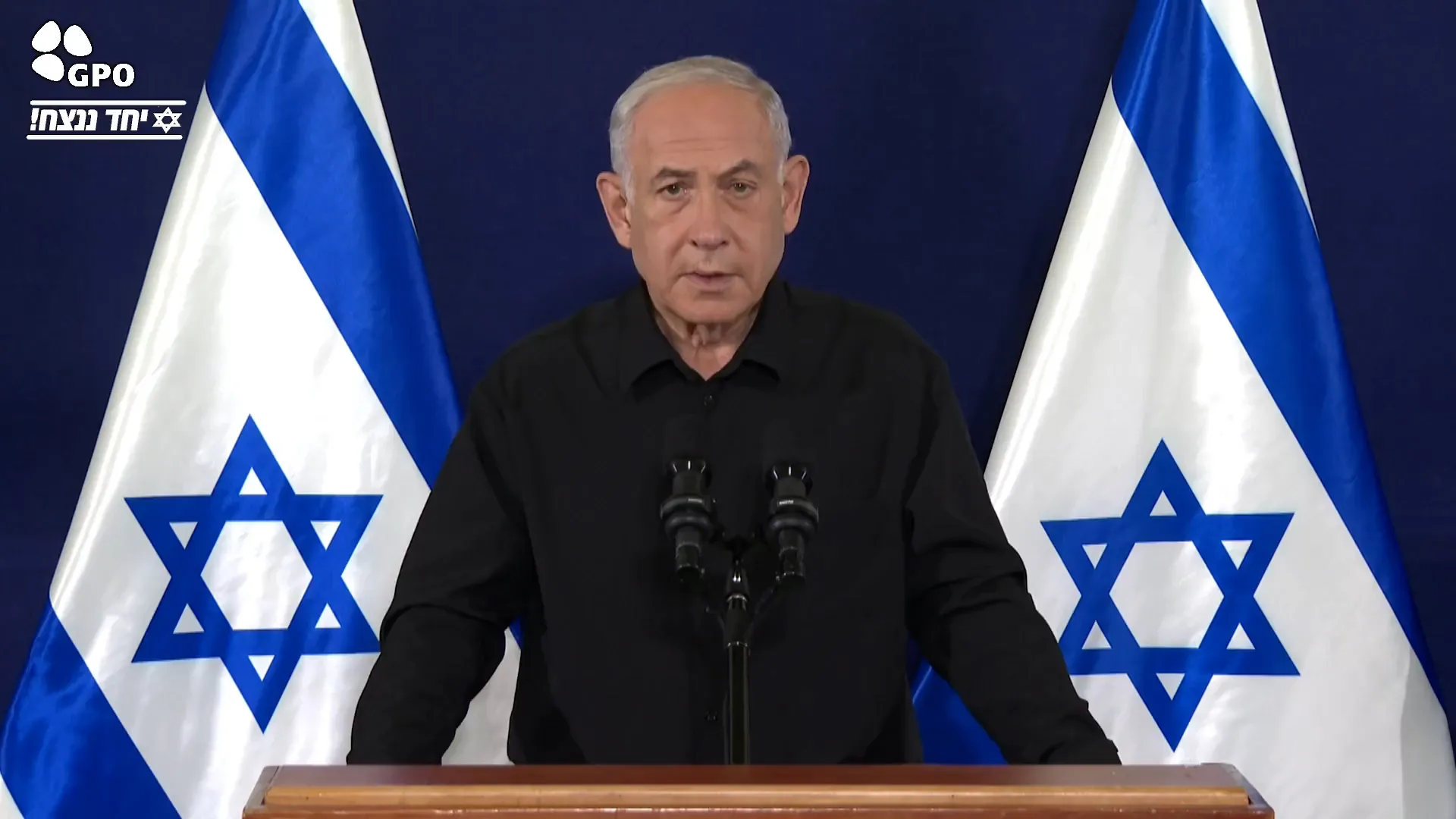
In a move reflecting increasing Israeli aspirations, Israeli Prime Minister Benjamin Netanyahu announced his pursuit of the 'Greater Israel' project, which aims to expand the borders of the Jewish state to include additional territories. These statements come at a sensitive time when the region is witnessing escalating political and military tensions, raising questions about the strategic implications of this project.
In a related context, Egyptian MP Mustafa Bakri stated that the goal of current U.S. policies, particularly those led by former President Donald Trump, is to contain China. These remarks highlight the complex relationship between ongoing events in the Middle East and global geopolitical competition.
Details of the Announcement
During a press conference, Netanyahu emphasized that achieving 'Greater Israel' is a top priority for his government, noting that this project requires international and regional support. He pointed out that this direction is part of enhancing Israeli national security, especially in light of increasing threats from neighboring countries.
Conversely, Mustafa Bakri considered that U.S. military movements in the region are not merely reactions to local crises but part of a broader strategy aimed at countering rising Chinese influence. He explained that these dynamics affect stability in the Middle East, necessitating clear positions from Arab countries.
Background & Context
Historically, the region has seen multiple attempts to expand Israel's borders, starting from the establishment of the state in 1948, through several wars, to peace agreements that have not achieved the desired stability. Netanyahu's recent statements come amid rising tensions with the Palestinians, as Israel continues its settlement activities in the West Bank, exacerbating the conflict.
On the other hand, China seeks to enhance its influence in the Middle East through massive investments and economic initiatives, raising concerns for the United States and its allies. These dynamics reflect the increasing struggle between major powers and its impact on regional security.
Impact & Consequences
Analyses predict that Netanyahu's policies will escalate tensions with Palestinians and Arab countries, which could negatively impact security and stability in the region. At the same time, tensions between the United States and China may lead to changes in regional alliances, as some Arab countries might seek to strengthen their relations with Beijing as a means to counter U.S. pressures.
Moreover, these developments could affect peace efforts in the region, as Palestinians may feel that their chances of establishing an independent state are diminishing under these increasingly aggressive Israeli policies.
Regional Significance
These statements serve as a wake-up call for Arab countries, which must reassess their strategies in facing new challenges. Old alliances may no longer suffice to address current geopolitical changes, requiring Arab nations to consider new partnerships and enhance cooperation among themselves.
In conclusion, Netanyahu's pursuit of 'Greater Israel' amid current global tensions poses a significant challenge to peace in the region, necessitating clear and unified positions from Arab countries to protect their interests and security.