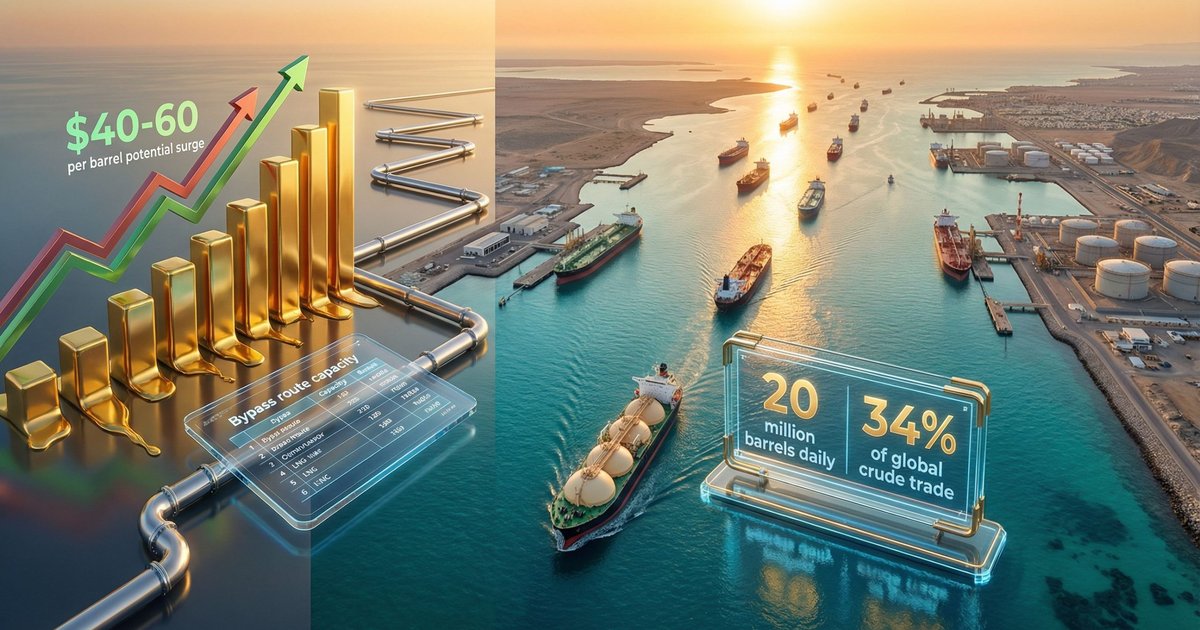
Israeli Prime Minister Benjamin Netanyahu has suggested the possibility of bypassing the Strait of Hormuz for energy transport, indicating a shift in geographical thinking. This proposal is not merely a passing comment on current events but highlights a new direction in how to deal with maritime corridors that have long been central to the flow of oil and trade.
Bypassing the Strait of Hormuz, which is considered one of the most important maritime corridors in the world, means seeking alternative routes for transporting energy from the Gulf to the Mediterranean Sea. This idea goes beyond merely protecting the corridors to reducing reliance on them, and perhaps even completely dispensing with them. The corridors that have been associated with the flow of oil and trade for decades are now seen as replaceable options, reflecting a significant shift in the equations of influence.
Event Details
Despite Netanyahu's statements about the possibility of bypassing the Strait of Hormuz, the reality appears to be more complex. The strait does not only carry oil; it also hosts another critical flow: undersea cables that transmit the internet, which form the backbone of global data movement. Data from the Submarine Cable Map indicates that seven major cables pass through the Gulf and the Strait of Hormuz, including Falcon, SeaMeWe-6, TGN-Gulf, and AAE-1. Some of these cables cross the strait multiple times and in different directions, increasing their vulnerability in the event of any disruption.
The importance of the Strait of Hormuz is not only related to what passes above its surface but also to what occurs beneath it. The risks are no longer limited to disruptions in oil supplies; they now include the potential for data flow disturbances, granting this region a sensitivity that transcends its traditional dimension.
Background & Context
Historically, the Strait of Hormuz has been a vital hub for global oil trade, with approximately 20% of the world's oil supplies passing through it. As reliance on the internet and digital data increases, this corridor has become more complex, intertwining energy interests with information flows. Geopolitical and geographical shifts in the region, such as regional conflicts and tensions between major powers, directly impact the significance of this strait.
In recent years, we have witnessed multiple attempts to secure alternative routes for energy transport, but these efforts do not eliminate the need for the Strait of Hormuz. Instead, they reproduce the same challenges in other locations, reflecting the depth of interconnection between economic and political interests.
Impact & Consequences
Netanyahu's statements indicate a shift in how the importance of maritime corridors is understood. Instead of focusing on protecting these corridors, there is now consideration of how to bypass them. This shift could lead to a redistribution of risks, where new vulnerabilities may emerge in alternative routes. Any attempt to circumvent these maritime paths may lead to new routes that carry the same risks, even if they appear safer on the surface.
The irony is clear: every attempt to reduce reliance on a specific point may lead to a reproduction of dependence on other points, making the global system more complex. The flow that underpins this world, whether it be oil or data, cannot afford interruption and cannot be separated from the geography that carries it.
Regional Significance
For the Arab region, discussions about bypassing the Strait of Hormuz may raise significant concerns. The strait is not just a maritime corridor; it symbolizes influence and control in the region. Any changes in energy transport routes could impact the economies of Arab countries, especially those heavily reliant on oil exports. Additionally, any disruption in data flow could affect the digital infrastructure in the region, complicating the landscape further.
In conclusion, the reality remains simpler than it may seem. Corridors may be redrawn, but the geography upon which they are based does not disappear. The Strait of Hormuz, ultimately, is an expression of a broader geography that governs the movement of the world and cannot be easily bypassed, regardless of the proposals.