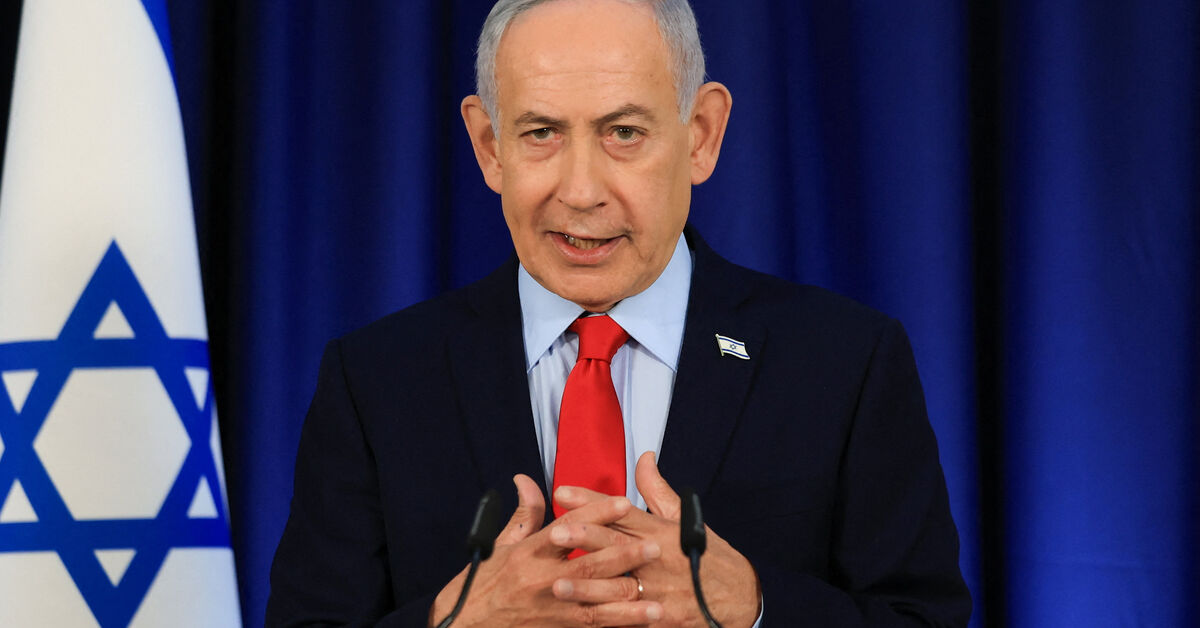
In a move reflecting ongoing tensions in the Middle East, Israeli Prime Minister Benjamin Netanyahu announced his country's support for U.S. President Donald Trump's decision to halt attacks against Iran for two weeks. Netanyahu emphasized that this ceasefire does not extend to Lebanon, raising concerns about the future of Israeli-Lebanese relations in light of the tense situation.
This announcement comes at a sensitive time, as fears of escalating hostilities in the region are on the rise. Netanyahu pointed out that Israel will remain on high alert to counter any potential threats from Lebanon, particularly with the presence of Hezbollah, which is backed by Iran, along the northern border.
Details of the Announcement
In his statements, Netanyahu clarified that Israel supports U.S. efforts to de-escalate the situation, but stressed that Lebanon will not be part of this ceasefire. These remarks come as the region experiences increasing tensions, with the international community seeking peaceful solutions to ongoing conflicts.
It is noteworthy that relations between Israel and Lebanon have been strained for decades, especially with the presence of Hezbollah, which many countries classify as a terrorist organization. This situation has led to a series of armed conflicts, making it difficult to achieve lasting peace in the region.
Background & Context
Historically, relations between Israel and Lebanon have been fraught with tension, having witnessed several wars and conflicts. Since 2006, when the July War broke out, the border between the two countries has become a theater for military tensions. The military activities by Hezbollah, supported by Iran, have intensified these tensions.
In recent years, the United States and European countries have attempted to push the parties towards dialogue, but these efforts often collide with the complex realities on the ground. As tensions between Iran and the United States escalate, the region has become more prone to ignition.
Impact & Consequences
Netanyahu's support for a ceasefire with Iran, while excluding Lebanon, could significantly affect regional dynamics. This may escalate tensions between Israel and Hezbollah, threatening stability in Lebanon and increasing the likelihood of a new conflict.
Furthermore, this stance may also reflect the challenges faced by the U.S. administration in its policy towards Iran. While the United States seeks to ease tensions, the exclusion of Lebanon may indicate a lack of confidence in Iran's ability to control its allies in the region.
Regional Significance
For Arab countries, this development represents a new challenge, as it could lead to further divisions in positions towards Iran. Some Arab nations may view this stance as an opportunity to strengthen their alliances with the United States, while others may be concerned about the rising tensions in the region.
Ultimately, the question remains as to how these developments will affect security and stability in the region. The ongoing tensions between Iran and Israel, coupled with the presence of Hezbollah in Lebanon, make achieving lasting peace in the Middle East a challenging endeavor.