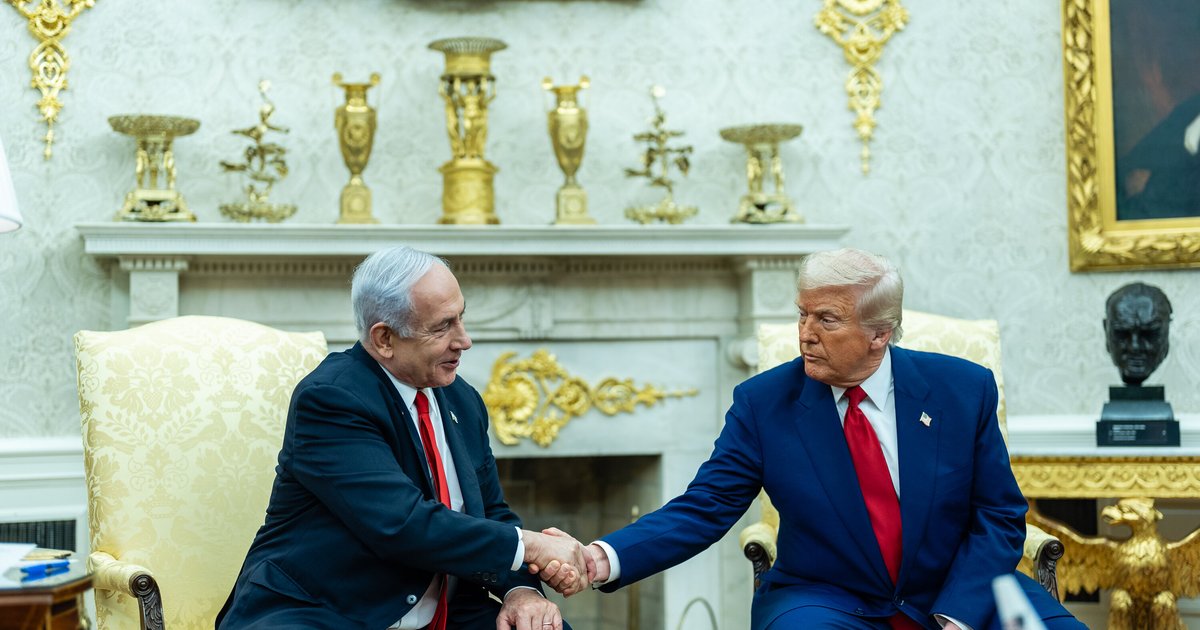
Amid the escalating crises facing the Israeli government, it is believed that Prime Minister Benjamin Netanyahu may resort to a model similar to that of former U.S. President Donald Trump in managing conflicts. Predictions suggest that Netanyahu might seek to shift blame onto his allies, potentially altering the dynamics of both domestic and foreign Israeli politics.
These statements come at a sensitive time, as pressures on the Israeli government rise due to security and economic conditions. This trend reflects Netanyahu's attempt to distance himself from direct responsibility for the crises, a tactic frequently employed by Trump during his presidency.
Details of the Situation
Despite facing significant challenges in his current policies, Netanyahu's use of Trump's model could have profound implications. This model is believed to involve directing blame towards other leaders or external entities, which may help him maintain his political support base. In this context, blaming Netanyahu's allies could be seen as an effort to alleviate pressure on himself.
Tensions in the region are increasing, as Israel continues to confront security challenges from multiple fronts. Netanyahu's resort to this model could influence how the government addresses future crises, especially given the mounting criticisms from the opposition.
Background & Context
Historically, Israel has witnessed numerous political and security crises that have affected government stability. Since Netanyahu assumed office, the country has faced multiple challenges, ranging from the Palestinian conflict to tensions with Iran. In this context, Trump's model of crisis management serves as an example of how politics can be used to deflect blame away from the government.
History shows that leaders who adopt similar strategies often succeed in maintaining their power for extended periods, even amid crises. However, this approach may also exacerbate situations if core issues are not effectively addressed.
Impact & Consequences
If Netanyahu successfully implements this model, it could lead to significant changes in Israeli politics. This strategy may affect Israeli-American relations, as American allies might feel concerned about the political instability in Israel. Additionally, shifting blame onto allies could lead to the disintegration of political alliances within the Israeli government.
Furthermore, this strategy could increase political polarization in Israel, as opponents may seize the opportunity to criticize Netanyahu and his government. Ultimately, this could impact the government's ability to make effective decisions in the face of current challenges.
Regional Significance
Arab countries are directly affected by Israeli policies, especially amid ongoing crises in Palestine. If Netanyahu succeeds in deflecting blame away from his government, it could exacerbate conditions in the occupied territories, increasing tensions in the region. This model may also strengthen the position of anti-Israel forces in the area.
In conclusion, Netanyahu's use of Trump's model in crisis management is a controversial step that may carry significant implications for Israeli politics and relations with Arab countries. Observers must closely monitor developments in this matter, as they could impact the future of the entire region.