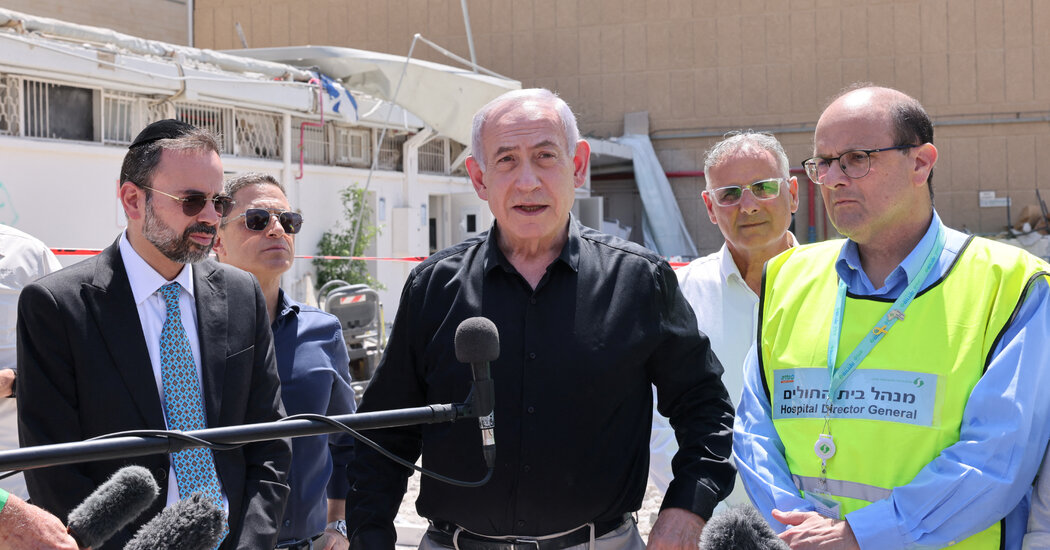
Israeli Prime Minister Benjamin Netanyahu stated on Monday that the war Israel is waging against Iran has achieved more than half of its goals, indicating that military operations are progressing significantly. However, Netanyahu did not provide any timeline for concluding this war, stressing that the focus is on accomplishing military tasks rather than on the duration.
In comments to the American channel Newsmax, Netanyahu said, "The war has indeed surpassed the halfway point, but I do not want to set a timeline for it." He clarified that the achievements include the elimination of "thousands" of Iranian Revolutionary Guard members, as well as the destruction of a significant portion of Iran's military infrastructure.
Details of the Situation
Netanyahu's statements come at a sensitive time, as he noted that Israel and the United States are nearing the completion of their military industries, reflecting an escalation in military operations against Iran. He mentioned that the objectives include the destruction of Iranian nuclear facilities, which contradicts reports from the International Atomic Energy Agency that have not confirmed the existence of an advanced Iranian nuclear program.
Netanyahu also pointed out that the war began after the Iranian authorities suppressed popular protests, resulting in the deaths of thousands. Former U.S. President Donald Trump, who initiated the war alongside Netanyahu, expressed optimism that military operations could lead to a regime change in Iran, raising concerns among many observers.
Background & Context
Historically, the relationship between Iran and Israel has been marked by increasing tensions, as Israel views Iran as an existential threat due to its nuclear program and support for armed groups in the region. These tensions have notably escalated since the U.S. withdrawal from the Iranian nuclear deal in 2018, leading to renewed American sanctions on Tehran.
The current war takes place within a broader context of conflicts in the Middle East, where Israeli and American interests intersect with numerous regional issues, including the Palestinian conflict and Gulf tensions.
Impact & Consequences
The war against Iran represents a bold step by Israel and may lead to greater escalation in the region. Assertions of achieving war objectives may reflect Israel's desire to bolster its regional position, but they could provoke strong reactions from Iran and its allies, increasing the likelihood of new conflicts.
Moreover, the continuation of military operations could affect global oil prices, as markets have already seen a rise in prices due to tensions in the region. This could impact the global economy, especially amid current economic crises.
Regional Significance
For Arab countries, the war on Iran poses a significant challenge, as it may lead to destabilization in the region. Countries sharing borders with Iran, such as Iraq and Syria, may find themselves at the heart of the conflict, complicating security situations.
These developments could also affect relations between Arab states and Iran, as some countries may seek to strengthen their alliances with Israel in the face of Iranian threats, altering the political dynamics in the region.
In conclusion, developments in the war against Iran remain a focal point for the world, as military and political dimensions intertwine complexly, necessitating close monitoring by observers and analysts.