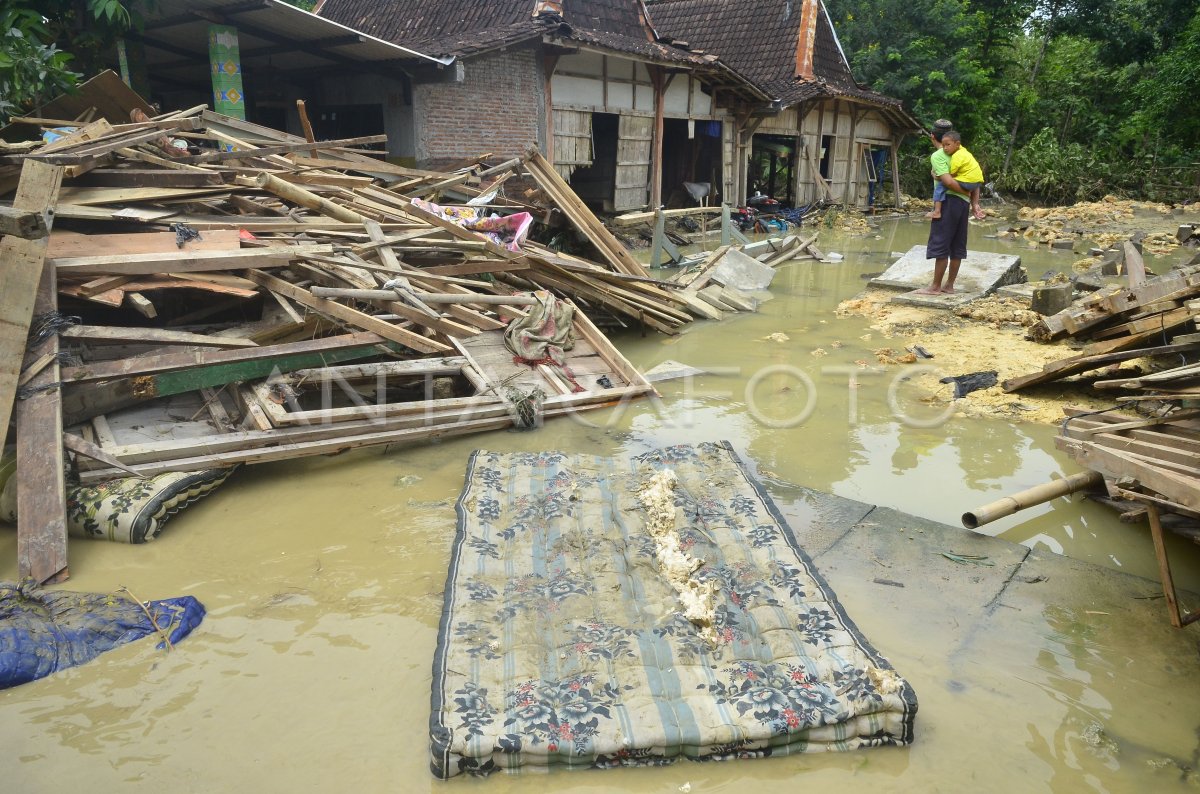
Twelve villages in four regions of Grobogan, Indonesia, faced new floods due to heavy rainfall on Thursday evening, resulting in the inundation of homes and roads. According to local sources, the floods began around 8 PM after rain fell from 3 PM to 4:30 PM.
The operator of the Grobogan Emergency Management Center, Mohimin, reported that the floods particularly affected the Kidongjati area, where water levels in the Tunting River rose, flooding several areas with heights ranging from 10 to 50 centimeters. The affected villages in this area include Ngumbak, Kidongjati, Wats, Karanglang, Kalemaro, Jomo, Padas, and Deras.
Details of the Incident
In the Tangongjargo area, floods submerged the village of Suji Manik due to rising water levels in the Klitieh River, where water heights reached between 10 to 60 centimeters in areas such as Randosari, Regosari, and Gidangan. Major roads, such as the Gubug-Kidongjati road, experienced water levels rising up to 40 centimeters, hindering traffic.
In the Gubug area, floods inundated the village of Penadaran due to water flowing from the forests into the Tunting River, with water levels in some homes reaching 60 centimeters. In the Tiguwano area, the villages of Sukorejo and Tanggerijgo were affected by rising water levels in the Ringgung and Klitieh rivers, leading to the flooding of roads and homes.
Background & Context
Flooding in Indonesia is a recurring phenomenon, especially during the rainy season. In recent years, the country has experienced several instances of flooding that have caused significant damage to infrastructure and homes. In 2022, Grobogan province faced similar floods that cut off major roads between Grobogan and Semarang, exacerbating the suffering of local residents.
Indonesia is affected by a tropical climate, making it prone to heavy rains and flooding. Environmental factors such as deforestation and climate change contribute to the worsening of this phenomenon, necessitating effective preventive measures.
Impact & Consequences
The floods significantly impact the lives of local residents, causing property loss and destroying agricultural crops. Additionally, flooding can lead to the outbreak of diseases due to water contamination and lack of sanitation. The disruption of roads hinders access to humanitarian aid and increases the suffering of those affected.
Local authorities are working to assess the damage and provide necessary assistance to affected residents. However, the biggest challenge remains how to deal with recurring floods and develop effective strategies to adapt to climate changes.
Regional Significance
The floods in Indonesia serve as a reminder of the importance of preparedness for natural disasters worldwide, including in Arab countries. Although the Arab region is not as prone to flooding, climate change may lead to an increase in the severity of extreme weather events.
Arab countries can benefit from Indonesia's experiences in disaster management and develop effective strategies to mitigate their impacts. Regional and international cooperation in disaster management can enhance the capacity to face future challenges.