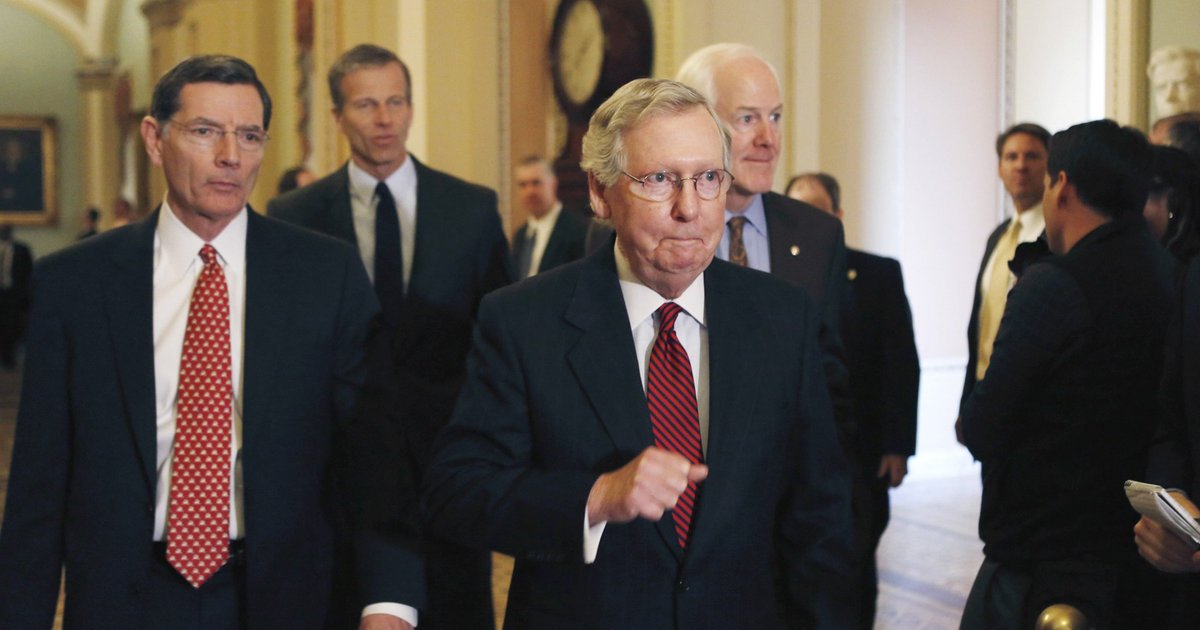
In a new move aimed at addressing the funding crisis of the U.S. Department of Homeland Security, Republican leaders in Congress, including Senate Majority Leader John Thune and House Speaker Mike Johnson, have announced a dual-track plan for funding the department. This step comes after the funding period ended last February, amid Democratic concerns regarding the department's immigration policies.
The new plan allows for immediate funding of the Transportation Security Administration, while discussions on more controversial immigration issues are postponed. Republican leaders indicated that initial funding for the department would be followed by additional measures related to funding for Immigration and Customs Enforcement, utilizing special procedures in the Senate known as budget reconciliation.
Details of the Funding Plan
The announced plan involves reverting to the bill that was passed in the Senate last week, which would have included funding for all divisions of the Department of Homeland Security except for Immigration and Customs Enforcement and some parts of Customs and Border Protection. Democrats have called for changes to immigration enforcement policies before approving funding for those sub-agencies.
In a joint statement, Thune and Johnson confirmed that Republicans in Congress would work to implement the President's directives by fully funding the department through two parallel tracks: via the appropriations process and through the reconciliation process. This measure allows the Senate to approve the budget with a simple majority, rather than needing 60 votes to overcome any filibuster.
Background & Context
The roots of this crisis date back to last February when the Department of Homeland Security halted its operations following the deaths of American citizens in Minneapolis during an immigration enforcement crackdown. Since then, Democrats have refused to fund the department until changes are made to immigration enforcement policies. These policies have been a subject of significant controversy in the United States, with varying opinions on how to handle immigration and national security issues.
The Department of Homeland Security is considered one of the vital agencies in the U.S. government, responsible for duties that include border protection, counter-terrorism, and crisis management. Therefore, any halt in its funding could significantly impact the internal security of the United States.
Impact & Consequences
Analysts expect this move to exacerbate political divisions between the two parties, as Republicans seek to pass funding without addressing immigration-related issues, while Democrats insist on the necessity of changes before any funding. This dynamic could lead to further tensions in Congress, especially with elections approaching.
Moreover, the continued funding halt could affect the daily operations of the department, undermining its ability to carry out its core missions. At the same time, some individuals may exploit this chaos for political or economic gain at the expense of national security.
Regional Significance
U.S. policies related to immigration and homeland security have a direct impact on relations between the United States and Arab countries. With the increasing issues surrounding immigration, immigration policies towards Arabs and migrants from Islamic countries may be affected. Additionally, any changes in U.S. policies could influence security and economic cooperation between the United States and Arab nations.
In conclusion, the situation in the U.S. Congress remains under scrutiny, as everyone looks to see how these plans will evolve and their impact on homeland security and foreign policies.