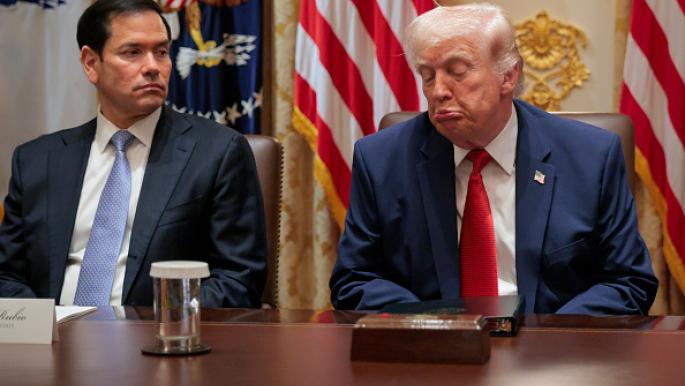
The U.S. Congress has enacted a new law that imposes restrictions on President Donald Trump's ability to withdraw from the North Atlantic Treaty Organization (NATO), complicating his plans regarding the military alliance. This law, adopted at the initiative of Senator Marco Rubio, requires congressional approval before any decision to withdraw is made, reflecting a broad concern about the future of the alliance.
This move comes at a time when the world is witnessing increasing tensions, as Trump seeks to reassess the United States' commitments to the alliance, which has sparked widespread debate in political circles. Many observers believe that this law reflects Congress's desire to maintain U.S. commitments to its European allies, especially in light of the growing threats from Russia.
Details of the Legislation
The law passed by Congress requires the president to submit a detailed report outlining the reasons behind any decision to withdraw from NATO, as well as an alternative plan to ensure security in the region. This measure reflects lawmakers' concerns that a U.S. withdrawal could lead to a security vacuum in Europe, potentially allowing countries like Russia to expand their influence.
Marco Rubio, who played a prominent role in pushing this law, emphasized that maintaining NATO is vital for U.S. national security. He pointed out that any decision to withdraw must be carefully considered and should involve consultations with European allies.
Background & Context
NATO was established in 1949 as a military alliance aimed at countering Soviet threats during the Cold War. Since then, the alliance has evolved to include numerous European countries and has become a central pillar of European security. However, current tensions between Russia and the West, particularly following the annexation of Crimea, have brought renewed attention to the importance of this alliance.
In recent years, Trump has made sharp criticisms of the alliance, stating that some member countries do not contribute enough to the alliance's budget. These remarks have raised concerns among European allies, who fear that a U.S. withdrawal could destabilize the region.
Impact & Consequences
This law may strengthen Congress's position against any attempts by Trump to withdraw from NATO, reflecting a division within the U.S. administration regarding foreign policy. If Trump decides to ignore this law, he may face significant legal and political repercussions, which could affect his image as a leader.
Moreover, instability in the relationship between the United States and its NATO allies could lead to negative repercussions for regional and international security. This could increase tensions with Russia, which may exploit any weakness in the alliance to enhance its influence in Europe.
Regional Significance
Although this law directly pertains to U.S. policy towards NATO, its ramifications may extend to the Arab region. Tensions between the United States and Russia impact many issues in the Middle East, including the conflicts in Syria and Iraq.
If the United States continues to support its NATO allies, it may strengthen its position in the region, contributing to the stability of certain Arab countries. However, any decline in U.S. commitments could open the door for greater Russian interventions, further complicating the situation in the region.
In conclusion, the law passed by the U.S. Congress reflects deep concerns about the future of NATO and presents challenges for President Trump in his foreign policy. Amidst tense conditions, the question remains about how these developments will impact global security, particularly in the Middle East.