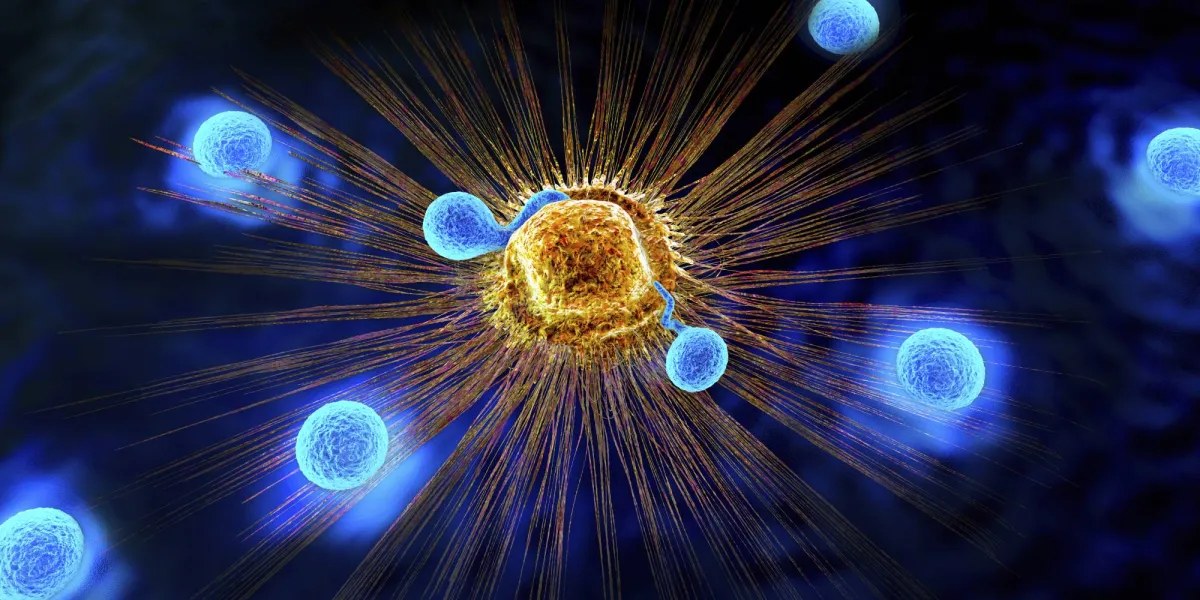
Recent studies have reported significant advancements in the treatment of solid tumors, highlighting the development of genetically modified immune cells capable of efficiently targeting cancer while dismantling chemical defenses of tumors. These breakthroughs represent crucial steps toward a radical transformation in how the deadliest types of cancer are confronted.
In a study published in the journal Nature, researchers from the Yale University School of Medicine announced their success in developing immune cells known as CAR-NK, which are genetically modified natural killer cells. These cells demonstrated an exceptional ability to target solid tumors, successfully eliminating tumors in animal models of breast cancer. This team is led by geneticist Sidney Chen, who identified a new gene known as OR7A10, considered key to enhancing the effectiveness of these cells against cancer.
Details of the Breakthrough
This technology is revolutionary, as CAR-NK cells can be produced from healthy donors and stored for immediate use, facilitating the treatment process and reducing costs. This new model offers a potential alternative to traditional therapies that are often expensive and can cause severe complications, such as cytokine storms. Initial clinical trials indicate that these therapies achieve high response rates, especially in blood cancers, with some studies recording response rates exceeding 70% with complete remission cases.
In another study, a research team in Munich, Germany, led by Professor Sebastian Kobold, discovered that tumors utilize a chemical known as prostaglandin E2 to disable T-cells and prevent them from performing their function. To overcome this obstacle, the team modified CAR-T cells to become unresponsive to this inhibitory compound, allowing them to operate freely within the harsh tumor environment. The results of this study, published in Nature Biomedical Engineering, showed remarkable success in controlling difficult tumors such as pancreatic cancer.
Background & Context
These developments coincide with a profound shift in scientists' understanding of the nature of solid tumors, as scientific research moves toward a dual approach that combines enhancing immune cell capabilities with disrupting the defense mechanisms employed by tumors. This trend reflects the importance of scientific innovations in cancer treatment, where therapy is no longer limited to killing cancer cells but is moving toward reprogramming the immune system itself.
Artificial intelligence technologies are also playing an increasing role in designing these therapies, paving the way for more precise medicine, where treatment becomes tailored according to the biological makeup of each tumor and each patient. These innovations could lead to significant improvements in treatment outcomes and alleviate suffering for patients.
Impact & Consequences
Although these results are still in experimental stages, they carry real hopes for millions of patients worldwide, especially those suffering from solid tumors that have not responded to traditional treatments. Estimates indicate that there are currently over 100 ongoing clinical trials aimed at developing new-generation CAR-NK and CAR-T therapies targeting various types of cancer, including breast, ovarian, and pancreatic tumors.
Human clinical trials are expected to commence within the next few years, potentially paving the way for a new era in cancer treatment. This era may not limit therapies to traditional targeting of the disease but will rely on redesigning the immune system to be smarter and more adaptable.
Regional Significance
These scientific advancements hold particular importance for the Arab region, where many countries are experiencing high cancer incidence rates. The success of this research could improve treatment options available to patients in the region and enhance the ability of health systems to confront this significant challenge.
In conclusion, these developments indicate that humanity's battle against cancer is no longer just a direct confrontation with toxic drugs, but has transformed into a scientific race for a deeper understanding of the language of cells and molecules, opening new horizons for treating this dreadful disease.