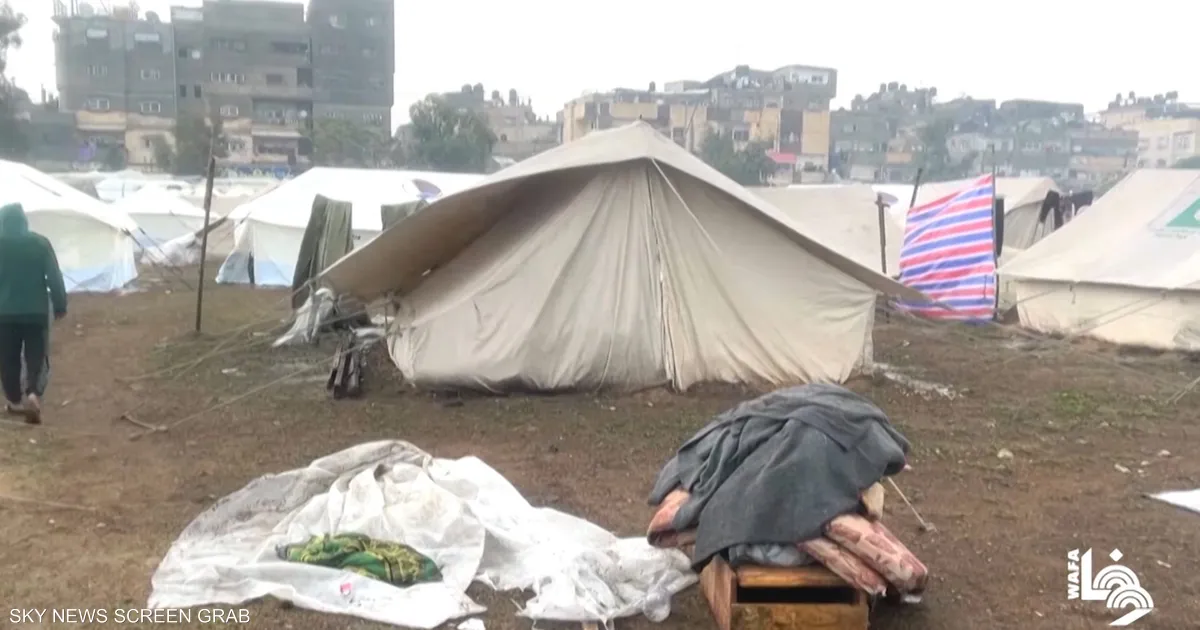
A new weather system affecting the Gaza region has worsened the plight of displaced individuals, as heavy rains have inundated their tents and roads, complicating the humanitarian situation in the area. Municipalities are grappling with limited resources, hampering their ability to provide necessary assistance.
Al Jazeera correspondent Hani Al-Sha'er reported from the Mawasi area, west of Khan Younis, on the efforts of municipal teams to pump water from tents and roads, using outdated and worn-out equipment that is ill-suited for the scale of the disaster. The spokesperson for Khan Younis Municipality, Saeb Luqan, confirmed that the ongoing Israeli war and the targeting of rainwater drainage networks and sewage lines have exacerbated the crisis management.
Details of the Situation
Displaced individuals have described their situation as tragic, noting that the tents they live in are uninhabitable and have been submerged in water throughout the night. These tents lack even the most basic necessities for life. One displaced person told Al Jazeera that their attempts to seek help from the municipality and civil defense have failed due to a lack of resources. Another explained that the streets are flooded, and municipalities are unable to intervene to pump out the water or provide necessary support.
According to official estimates, hundreds of thousands of displaced individuals reside in the Mawasi area, making the impact of weather systems more severe and dangerous. Addressing these challenges is nearly impossible due to the destruction of infrastructure and the targeting of municipal equipment and personnel during the Israeli war.
Background & Context
Approximately 1.9 million Palestinian displaced individuals in Gaza are living in dire conditions within dilapidated tents lacking the most basic living essentials due to Israeli aggression and blockade. Despite a ceasefire agreement that came into effect on October 10, 2025, living conditions have not improved, as the Israeli occupation continues to prevent the entry of humanitarian aid and shelter materials into the region.
The Israeli genocide against the Gaza Strip has resulted in over 72,000 martyrs and nearly 172,000 injured, in addition to the destruction of about 90% of the civilian infrastructure. This devastation has left residents vulnerable to weather fluctuations, especially during winter, without any shelter to protect them.
Impact & Consequences
The humanitarian situation in Gaza deteriorates with every weather system, as the suffering of the displaced intensifies in the absence of adequate support. The inability of municipalities to manage these crises threatens the lives of many and exacerbates their daily hardships. Furthermore, the ongoing war and Israeli blockade hinder any efforts to rebuild the damaged infrastructure, worsening the situation.
These conditions require urgent action from the international community to provide necessary assistance and support for the displaced individuals living in harsh conditions. The lack of effective response could lead to worsening humanitarian crises and increase poverty and unemployment rates in the region.
Regional Significance
The situation in Gaza serves as an indicator of the humanitarian crises faced by many Arab countries, highlighting the urgent need to support these affected areas. What is happening in Gaza underscores the importance of Arab solidarity and reflects the challenges faced by peoples amid political and economic crises.
In conclusion, the situation in Gaza remains a stark example of the humanitarian suffering that demands urgent action from the international community. Hope for improving the living conditions of the displaced requires coordinated efforts and effective international cooperation.