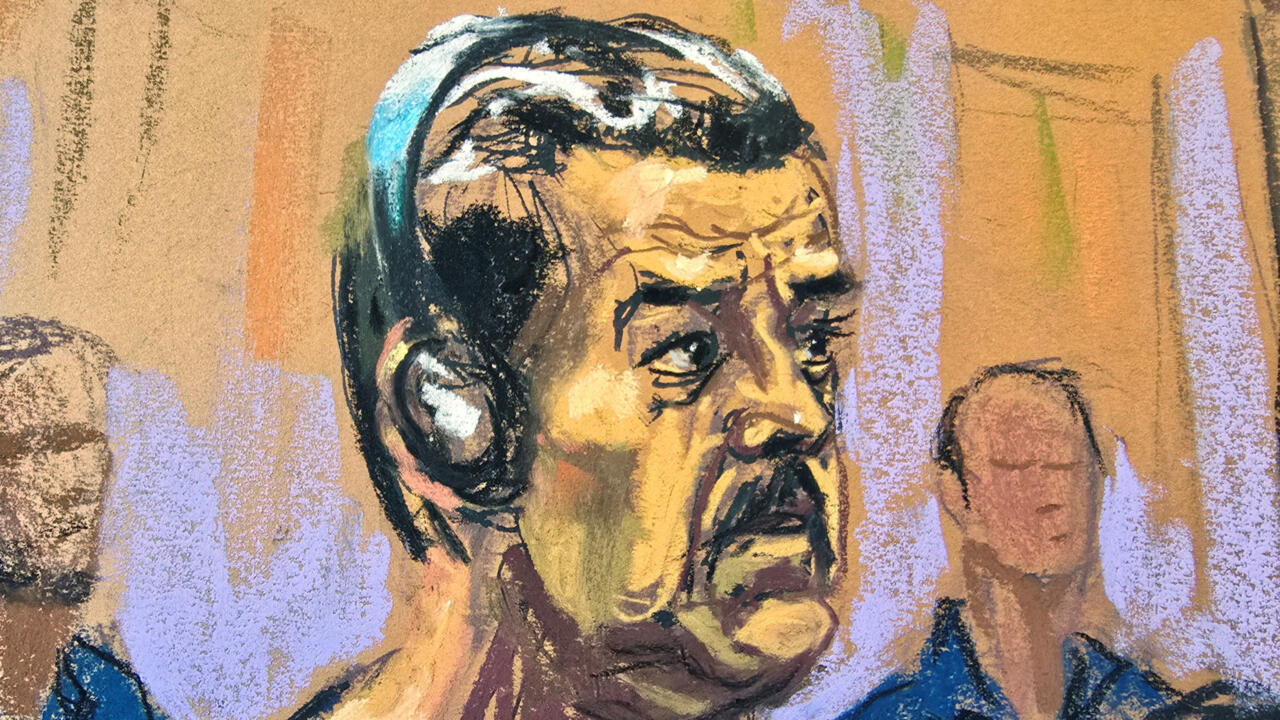
Former Venezuelan President Nicolás Maduro appeared in a New York court on Thursday, marking his second appearance since his arrest in Caracas. This session is part of the ongoing trial against Maduro on charges related to drugs and arms, where he displayed a calm demeanor during the approximately hour-long hearing.
During the session, Judge Alvin Hellerstein made it clear that he would not dismiss the case, pointing out Maduro and his wife’s inability to pay legal fees due to U.S. sanctions that prevent the Venezuelan government from providing financial support to them.
Details of the Hearing
Maduro (63 years old) and his wife Cilia Flores have been held in a Brooklyn jail for nearly three months, after being transferred from their residence in Caracas in early January. This operation is part of the United States' efforts to oust Maduro, who has ruled Venezuela since 2013, and has contributed to increasing U.S. pressure on the oil-rich nation.
Maduro faces four main charges, including conspiracy to commit drug trafficking, conspiracy to import cocaine, possession of firearms and destructive devices, as well as conspiracy to possess those weapons. He has identified himself to his defense team as a "prisoner of war," asserting his innocence of all charges against him.
Background & Context
The trial of Maduro coincides with rising tensions between the United States and Venezuela, where Washington views Maduro as representing a corrupt regime that threatens regional stability. The U.S. government has imposed several sanctions against Venezuela, exacerbating the country’s economic situation. Additionally, this trial comes at a sensitive time for Venezuela, which is suffering from a severe economic crisis leading to acute shortages of food and medicine.
At the same time, Caracas has witnessed massive protests, with hundreds of participants, including Maduro's son, who expressed confidence in the American legal system, arguing that the "kidnapping" of his father undermines the legitimacy of the case. These protests reflect the sharp division within Venezuelan society regarding Maduro's case.
Impact & Consequences
The trial of Maduro is seen as a turning point in U.S.-Venezuela relations and could significantly affect the future of the Venezuelan regime. If convicted, it could exacerbate the political and economic crises in the country, weakening the current government's position. Furthermore, this case may open the door for further U.S. interventions in Venezuela's internal affairs.
Moreover, the outcomes of this trial could influence relations between the United States and other countries in Latin America, as many leaders in the region are closely monitoring the developments of this case. Should Maduro be convicted, it may provoke reactions from countries that support the Venezuelan government, complicating the political landscape in the region.
Regional Significance
The Maduro case holds particular importance for the Arab region, as it reflects the political and economic struggles faced by many Arab countries. Additionally, foreign interventions in the internal affairs of nations are a sensitive issue in the Arab world, where similar scenarios recur in several countries. This trial may ignite discussions about national sovereignty and human rights in the context of foreign interventions.
In conclusion, the case of Nicolás Maduro remains a focal point for the world, intertwining political and economic dimensions, making it a complex issue that requires careful monitoring by international observers.