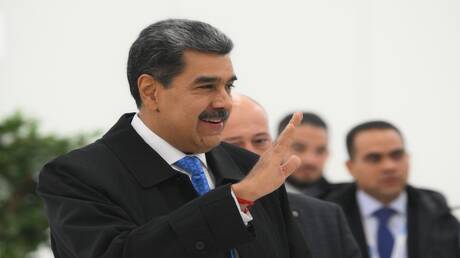
Venezuelan President Nicolas Maduro and his wife Cilia Flores appeared in a New York court on Thursday for a new session of their trial concerning "drug terrorism" charges filed against them by the U.S. government. Maduro attended the session without handcuffs, raising questions about the procedures followed in his case.
This session comes at a sensitive time for Venezuela, which is grappling with severe economic and political crises. The trial has been announced as part of the United States' efforts to hold Venezuelan officials accountable for drug trafficking, which is considered part of Washington's strategy to confront what it describes as the "dictatorial regime" in Caracas.
Details of the Court Session
During the session, evidence and testimonies related to the charges against Maduro and his wife were presented, which include involvement in drug trafficking operations across borders. Questions were raised about how this case might affect relations between the United States and Venezuela, especially in light of the ongoing political crises in the region.
It is worth noting that Maduro and his wife have denied all charges against them, asserting that these accusations are part of a political campaign aimed at destabilizing their government. Maduro pointed out that this trial is part of an "economic war" waged by the United States against his country.
Historical Context and Background
Historically, relations between the United States and Venezuela have seen increasing tensions, particularly since Maduro took office in 2013. Washington has accused the Venezuelan government of corruption and human rights violations, leading to the imposition of severe economic sanctions on Caracas.
In recent years, accusations against Maduro and his wife regarding their involvement in drug trafficking have escalated, with Maduro's name appearing on the U.S. State Department's wanted list, which has offered a substantial financial reward for information leading to his arrest.
Consequences and Implications
This trial could exacerbate the political crises in Venezuela, as Maduro faces increasing pressure from domestic opposition and the international community. Additionally, this case may affect the Venezuelan government's position in international forums, increasing its isolation.
Furthermore, this trial could bolster the United States' position in the region, as it seeks to enhance its influence in Latin America by supporting governments opposed to Maduro.
Impact on the Arab Region
Although the case pertains to Venezuela, its repercussions may extend to the Arab region. The political and economic tensions in Venezuela may reflect the crises faced by some Arab countries, raising questions about how governments manage internal crises.
Moreover, U.S. actions in Venezuela could influence Arab countries' strategies in dealing with external pressures, necessitating a reevaluation of relations with major powers.
In conclusion, the trial of Maduro and his wife in New York represents a turning point in international relations, highlighting tensions between the United States and Venezuela and opening the floor to questions about the future of Venezuelan politics and its impact on the international stage.