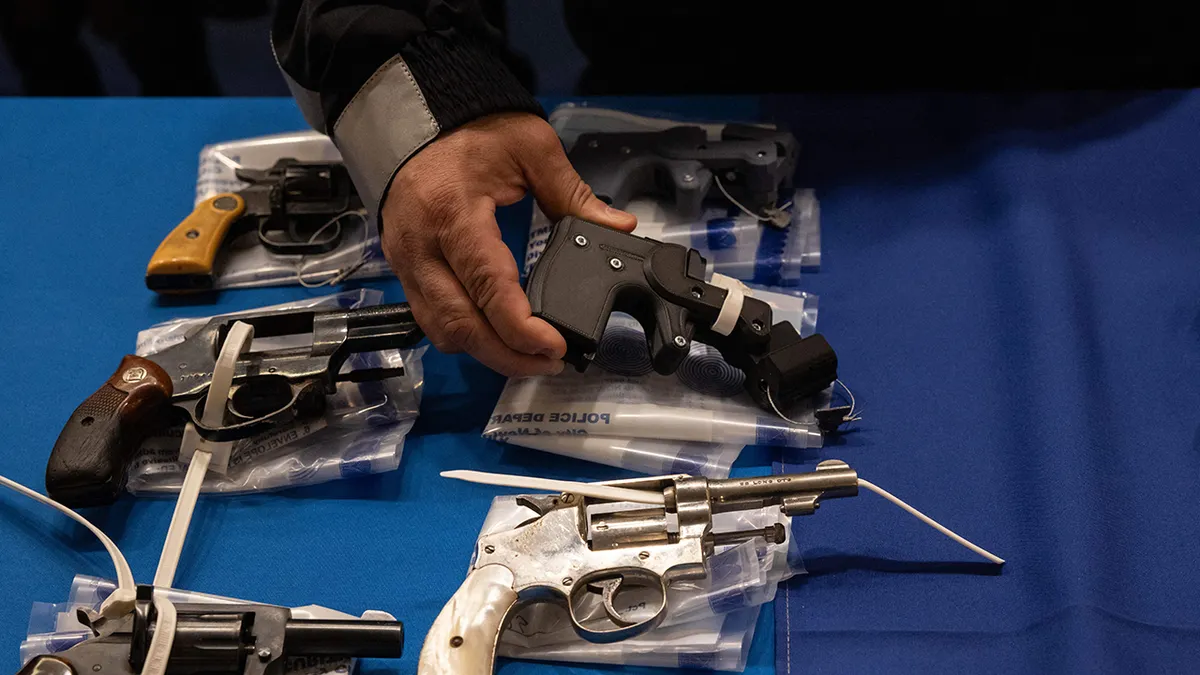
New York Governor Kathy Hochul and several state legislators are working to prevent 3D printing companies from producing components used in the manufacturing of 'ghost guns,' which are firearms without serial numbers that can be easily printed, allowing them to evade security checks. This announcement came during a press conference held by Manhattan District Attorney Alvin Bragg, who confirmed that two 3D printing companies have voluntarily agreed to adopt technology that prevents the creation of weapons using their printers.
Bragg also noted that another digital design company has agreed to remove certain weapon design files from its services. Meanwhile, legislators proposed new legislation that would make it illegal to sell or possess weapon design files without a license, effectively imposing a ban on 3D printing companies from producing guns.
Details of the Announcement
During the conference, Bragg stated, "You can't print counterfeit money. We don't allow you to do that, so why should we allow you to print deadly weapons?" These efforts come in the wake of the December 2024 incident involving the murder of United Health Care CEO Brian Thompson, where Lloyd Mangione, the suspect in the case, was found in possession of a 3D-printed firearm at the time of his arrest. In 2025, Wired magazine published a report detailing how easy it is to find information on how to print and use the weapon allegedly used by Mangione to kill Thompson.
Bragg and Justin Wagner, the managing director at Everytown for Gun Safety, mentioned that they have reached out to YouTube regarding content related to 3D-printed guns on the platform. Bragg noted that YouTube has made changes to its algorithm and restricted some content from being accessible to children, but he described this as an "ongoing conversation." In 2024, YouTube tightened restrictions on certain gun-related content, and Bragg thanked the company for these changes.
Background & Context
The phenomenon of untraceable firearms, or 'ghost guns,' is an increasingly important issue in the United States, as they can be easily manufactured thanks to 3D printing technology. A 3D printer can be purchased for prices starting from a few hundred dollars, making it accessible to the general public. Additionally, weapon design files are readily available online, enabling anyone to manufacture their own weapon without the need for a license or security check.
In recent years, rates of crimes associated with untraceable firearms have significantly increased, with research showing that rates of suicide by firearm have risen with every 20 untraceable guns recovered for every 100,000 people. These statistics raise concerns about the impact of these weapons on American society.
Impact & Consequences
New York's legislation aims to reduce the spread of untraceable firearms, but questions remain about the effectiveness of these laws in addressing this issue. Given the ease of manufacturing weapons and the availability of design files online, achieving tangible results may be challenging. Furthermore, there is concern that these laws could lead to an increased demand for untraceable firearms, potentially heightening security risks.
These steps are part of broader efforts to combat gun violence in the United States, as many states seek to impose stricter regulations on firearms. However, the biggest challenge remains how to effectively enforce these laws in light of the readily available 3D printing technology.
Regional Significance
Although this issue pertains to the United States, it has potential implications for the Arab region. As the use of technology in weapon manufacturing increases, Arab countries may face similar challenges in the future. This phenomenon could lead to heightened security tensions in the region, especially amid ongoing conflicts.
In conclusion, New York's efforts to combat untraceable firearms represent an important step in addressing the challenges of gun violence, but the question remains about the effectiveness of these efforts in light of modern manufacturing technologies.