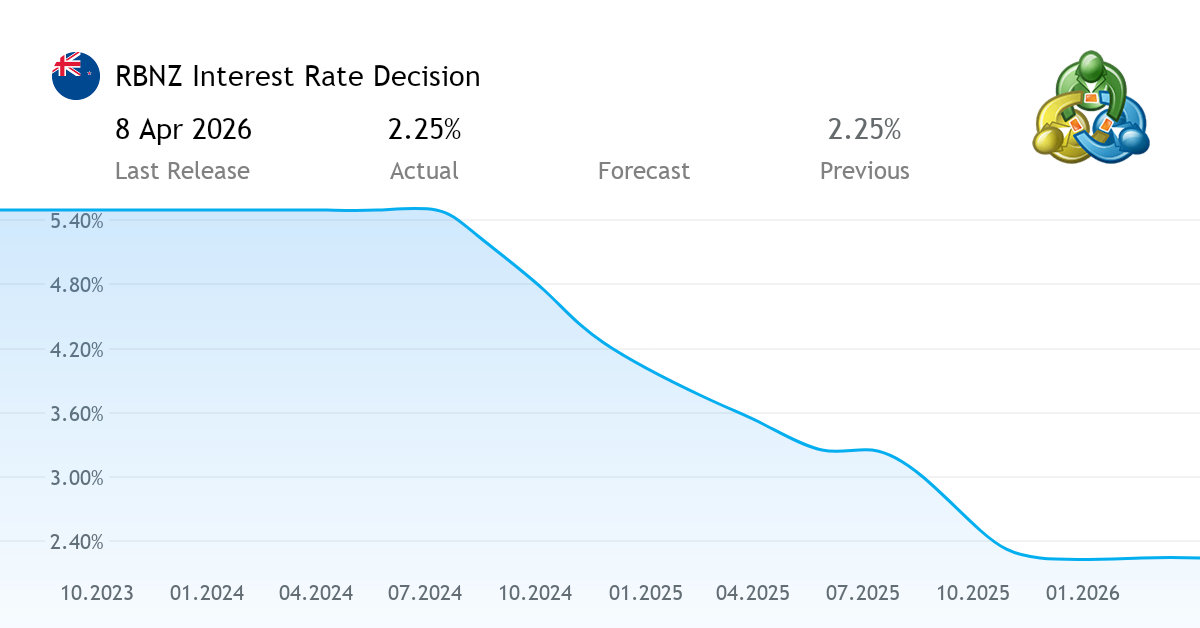
The Reserve Bank of New Zealand has decided to keep the interest rate at 5.5%, an unexpected move that indicates stability in the country's monetary policy. This decision comes at a time when New Zealand is grappling with increasing economic challenges, including inflation and the potential for recession.
This step is significant in the central bank's efforts to control inflation, which has seen a notable rise in recent months. The bank indicated that maintaining the interest rate will help support economic growth and preserve price stability.
Details of the Decision
The decision to hold the interest rate steady follows a series of increases that occurred over the past two years. The rate had gradually risen from 0.25% to 5.5% in an attempt to combat inflationary pressures. The bank noted that the recent decision reflects its assessment of the current economic situation.
The bank also confirmed that it will continue to closely monitor economic conditions and is prepared to adjust its monetary policy if necessary. These statements reflect the bank's commitment to achieving its goals of price stability and economic growth.
Background & Context
Historically, New Zealand has experienced significant economic fluctuations, heavily impacted by global crises. In recent years, the country has faced new challenges due to the COVID-19 pandemic, leading to substantial changes in monetary policy. The central bank has played a crucial role in guiding the economy during this period.
New Zealand is considered one of the countries that heavily relies on agricultural and tourism sectors, making it vulnerable to global economic fluctuations. Therefore, stabilizing the interest rate is a vital step to maintain growth in these sectors.
Impact & Consequences
Holding the interest rate steady may positively affect consumers and businesses, as it can lead to stability in borrowing costs. This situation could encourage investment and consumption, contributing to economic growth.
On the other hand, the central bank may face pressure from certain sectors that demand lower interest rates to support growth. Thus, balancing inflation control with growth support will be a significant challenge in the upcoming period.
Regional Significance
The decisions made by the Reserve Bank of New Zealand are particularly significant for the Arab region, as they reflect global trends in monetary policy. Given the current economic conditions, these decisions may influence interest rates in Arab countries, necessitating close monitoring by central banks in the region.
Moreover, the stability of interest rates in New Zealand could encourage foreign investments in the region, especially in sectors that rely on external investments. Therefore, tracking developments in New Zealand's monetary policy will be of great importance to Arab nations.