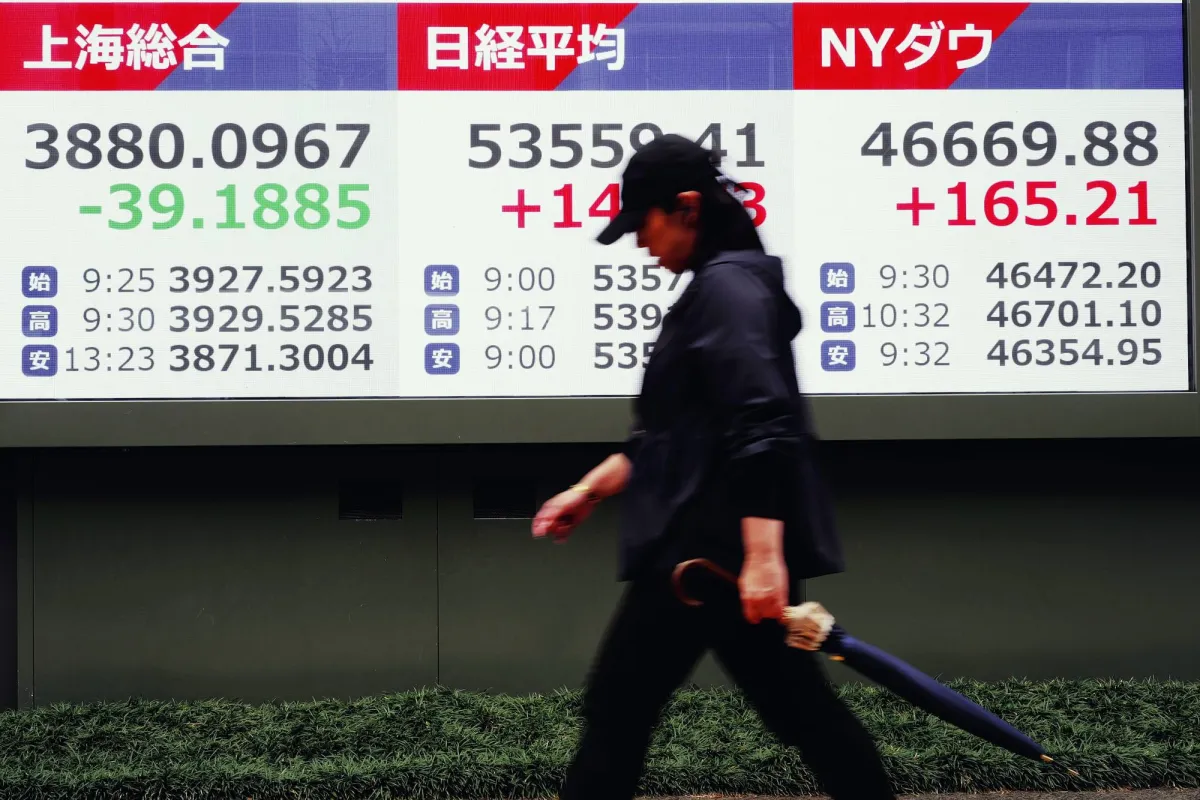
The Nikkei stock index closed stable during volatile trading on Tuesday, with investor opinions varying between optimism about a potential ceasefire in the Middle East and concern over U.S. President Donald Trump's threats to escalate pressure on Iran if it does not reopen the Strait of Hormuz.
The Japanese economy is particularly susceptible to the impact of conflict on shipments and prices, as the country relies on the Middle East for about 90% of its oil needs. The Nikkei index fluctuated between gains and losses before closing up 0.03% at 53,429.56 points. The broader Topix index also struggled to find direction, closing up 0.3% at 3,654.02 points.
Event Details
In response to a U.S. proposal mediated by Pakistan, Tehran rejected a ceasefire, emphasizing the need for a permanent end to the war and resisting pressure to reopen the Strait of Hormuz. This came after increasingly harsh warnings from Trump, who threatened to unleash "hell" on Tehran if it did not comply with the deadline of 8 PM Eastern Time on Tuesday (00:00 GMT Wednesday) to reopen the strait, through which about 20% of global oil supplies typically pass.
Hitoshi Asauka, chief strategist at Asset Management One, stated, "It seems that President Trump is increasingly speaking in a reactive or improvised manner, and his messages have become less consistent. As a result, the markets are no longer analyzing every statement with the same sensitivity as before."
Background & Context
The Nikkei index saw an increase in 142 stocks and a decrease in 81 stocks. Software testing company Shift was the highest gainer, rising by 4.3%, while truck manufacturer Archion lost 7.2%, making it the biggest loser on the Nikkei index. Japanese government bond prices also rose on Tuesday after a successful 30-year bond auction reassured investors, alleviating market concerns over weak demand for sales.
The private sector growth in the Eurozone sharply declined in March, as the war in the Middle East led to rising energy costs and disrupted supply chains, with overall demand falling for the first time in 8 months, a key indicator of economic health.
Impact & Consequences
The composite Purchasing Managers' Index (PMI) for the Eurozone, published by Standard & Poor's, fell to 50.7 in March from 51.9 in February, slightly exceeding the preliminary estimate of 50.5. Readings above 50 indicate economic activity growth, according to Reuters. New business also declined after a steady improvement since July, affected by weak demand for services.
Employment rates fell, and business confidence declined, raising concerns about future employment and investment. Input cost inflation rose to its highest level in over 3 years, with the manufacturing sector recording a record jump in one month.
Regional Significance
Arab markets are directly affected by tensions in the Strait of Hormuz, as this vital corridor is one of the most important shipping points for oil. With rising tensions, analysts expect oil prices to increase, which could negatively impact Arab economies that heavily rely on oil.
In conclusion, global markets appear to be on edge, as investors look for any new developments that could affect price stability and shipping movements in the region.