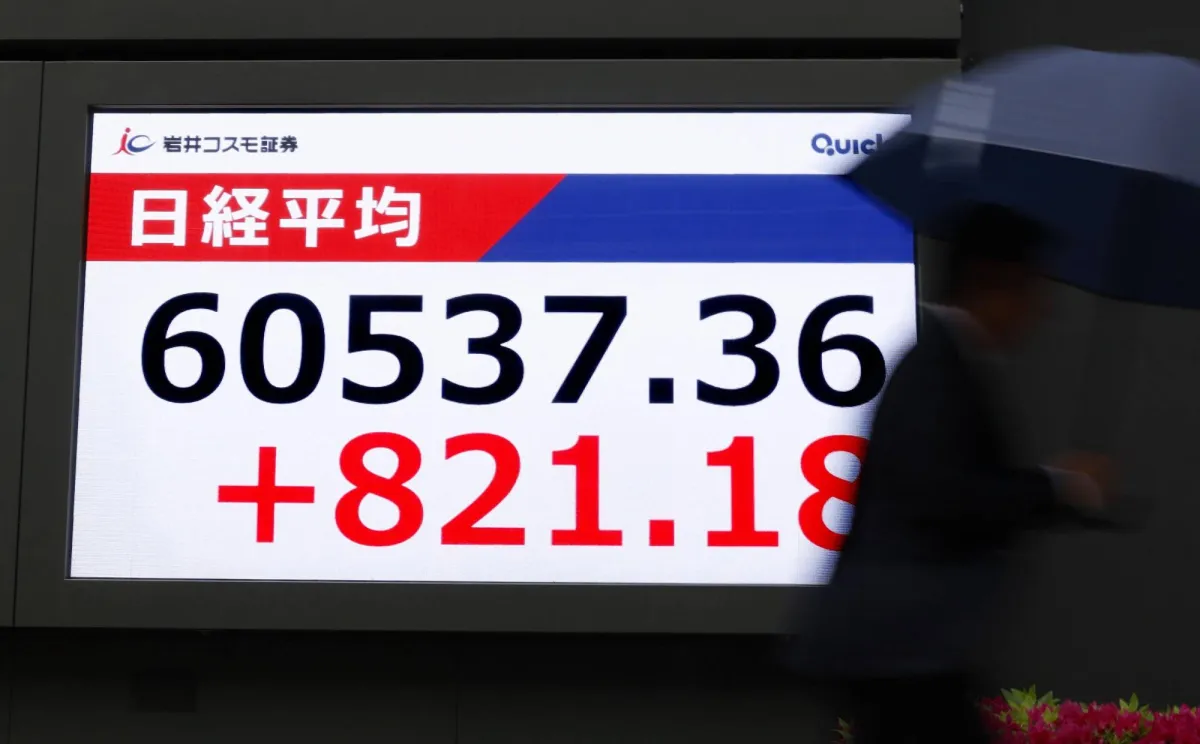
The Japanese Nikkei Index closed on Monday at a new record high, exceeding 60,000 points for the first time in its history. The index rose by 1.38% to reach 60,537.36 points, reflecting investor optimism about corporate earnings while ignoring fears related to the conflict in the Middle East.
The broader Topix index also saw an increase of 0.5%, reaching 3,735.28 points. This rise is seen as a positive sign reflecting the strength of the Japanese economy amid volatile global conditions.
Event Details
The Nikkei has gained 18.6% since the beginning of the year, indicating strong performance in the financial markets. Major indices on Wall Street closed at record levels on Friday after Intel exceeded its earnings expectations, supported by increasing demand in the artificial intelligence sector.
The Philadelphia Semiconductor Index continued its winning streak for the eighteenth consecutive session, reflecting the growing demand for modern technology. Shares of Kian's, a factory automation specialist, and Fanuc, a manufacturer of industrial robots, surged by nearly 16%, leading the Nikkei gains after both companies reported earnings that surpassed expectations.
Background & Context
Maki Sauda, an equity strategist at Nomura Securities, reported that stocks linked to earnings announcements, along with AI and semiconductor stocks, drove the market higher at the opening. This week is expected to see a continuous flow of earnings reports from major companies in Japan and the United States, attracting investor interest.
Despite a negative start for the Nikkei after the market opened, it rebounded strongly following a report that Iran had presented a new proposal to the United States to end their ongoing dispute. Negotiations had stalled over the weekend, raising concerns among investors.
Impact & Consequences
The Nikkei saw an increase in shares of 94 companies compared to a decline in shares of 130 companies. SMC Corporation was among the top gainers, with its shares rising by 7.1% after Reuters reported that the activist investment fund Yser Capital had made a significant investment in the company.
Conversely, shares of Rohm fell by 9.19% after Denso Corporation announced that it was considering withdrawing its acquisition offer for the company. These movements reflect market volatility and the impact of economic news on corporate performance.
Regional Significance
Financial markets in the Arab region are significantly influenced by global economic developments, especially those related to Japanese and American markets. The rise of the Nikkei may encourage Arab investors to seek new investment opportunities in Asian markets.
Moreover, the stability of Japanese markets could contribute to strengthening trade relations between Japan and Arab countries, opening new avenues for economic cooperation.
In conclusion, surpassing the 60,000 points mark represents a milestone in the history of the Japanese market, reflecting increasing optimism regarding corporate performance amid volatile global conditions.