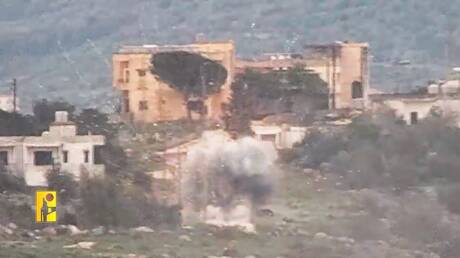
The Israeli army announced that nine of its soldiers and officers were injured during the ongoing confrontations on the northern front with Hezbollah. These injuries resulted from rocket attacks, reflecting the escalating tensions in the region.
This incident is part of a series of clashes that have recently occurred along the Lebanese-Israeli border, raising fears of a larger escalation that could lead to a full-scale armed conflict. The Israeli army indicated that these clashes are a response to Hezbollah's military activities, which Israel views as a direct threat to its national security.
Details of the Incident
In detail, the Israeli army reported that the injuries occurred due to rocket attacks from Hezbollah, which possesses a large arsenal of advanced weapons. The injured were transported to hospitals for treatment while military operations in the area continued. These incidents come at a sensitive time, as Israel continues to bolster its military presence along the border amid concerns of a potential escalation.
It is noteworthy that Hezbollah has previously declared its readiness to respond to any Israeli aggression, further heightening tensions in the region. Reports have indicated that the clashes may involve the use of advanced weaponry, increasing the seriousness of the situation.
Background & Context
Historically, the Lebanese-Israeli border has experienced ongoing tensions, especially since the 2006 war, which resulted in widespread destruction in Lebanon. Since then, Hezbollah has sought to enhance its military capabilities, while Israel continues to conduct military operations against what it perceives as security threats. These dynamics make the border a volatile area, where situations can escalate at any moment.
The situation in neighboring Syria has also impacted relations between the two sides, with Iranian forces supporting Hezbollah, complicating the security landscape in the region. Many analysts consider this Iranian presence a direct threat to Israel, prompting it to take preemptive actions.
Impact & Consequences
The repercussions of these incidents extend beyond the Lebanese borders, potentially affecting regional stability as a whole. If the clashes escalate, it could lead to a full-scale armed conflict that drags other countries into the fray, complicating the situation in the Middle East.
These events may also influence international relations, as they could prompt interventions from major powers like the United States and Russia. Such interventions could lead to shifts in regional and international policies, further increasing instability in the area.
Regional Significance
Considering the situation in the Arab region, the rising tensions between Israel and Hezbollah could impact many neighboring countries. Events in Lebanon may lead to increased tensions in Syria and could also affect situations in Iraq and Palestine.
Moreover, these events may evoke memories of past conflicts, increasing anxiety among the peoples of the region. Given the difficult economic and social conditions faced by many Arab countries, any military escalation could have negative repercussions on internal stability.
In conclusion, the situation along the Lebanese-Israeli border remains under close observation, with analysts expecting tensions to continue to rise. It is crucial to monitor developments closely, as any escalation could have significant consequences at both the regional and international levels.