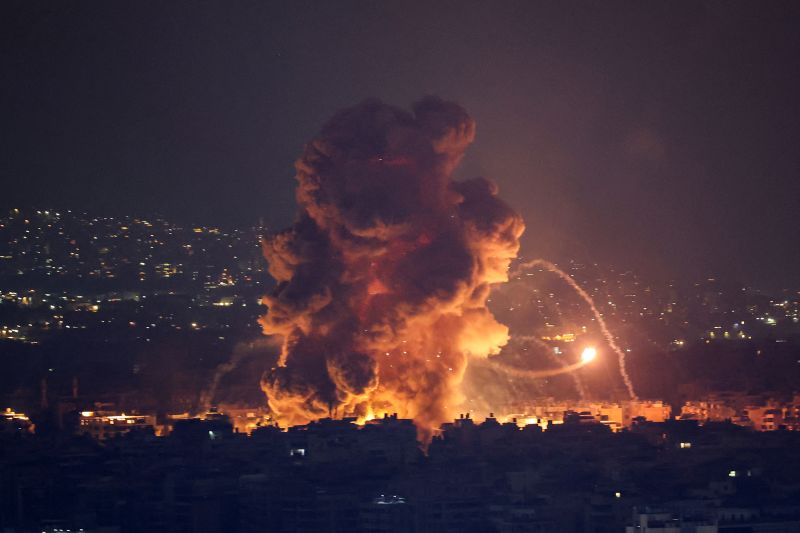
On Saturday, nine people were killed in airstrikes carried out by Israeli aircraft in different areas of southern Lebanon, including the southern suburbs of the capital, Beirut. The Lebanese news agency reported that one of the strikes targeted a motorcycle on the Qadmous road north of the city of Tyre, resulting in the deaths of two individuals. The agency added that another strike at the intersection of the town of Ma'arakeh in Tyre resulted in the deaths of five others.
These airstrikes come at a time of increasing tensions in the region, as military actions between Israel and armed factions in Lebanon escalate. These events have raised international concerns about the potential escalation of the conflict, which could affect stability throughout the region.
Details of the Incident
The Israeli airstrikes on Lebanon continue, with recent attacks focusing on areas near the border, reflecting an Israeli strategy aimed at undermining the capabilities of armed factions. Reports indicate that Israeli aircraft utilized drones to carry out these strikes, enhancing the precision of the attacks and reducing risks to pilots.
At the same time, local sources reported that the airstrikes caused widespread destruction to property and infrastructure, exacerbating the suffering of civilians in those areas. Lebanon is already grappling with economic and social crises, complicating the situation further.
Background & Context
Historically, Lebanon has witnessed numerous armed conflicts with Israel, especially since the 2006 war. These conflicts have led to a deterioration of security and economic conditions in Lebanon, with the Lebanese people suffering from the repercussions of repeated wars. Armed factions in Lebanon, such as Hezbollah, are part of the political and military landscape, complicating any peace efforts.
These airstrikes coincide with rising tensions in the region, with increasing fears of an outbreak of a comprehensive war. Recent events have shown that the situation in Lebanon could be significantly affected by regional and international conflicts, necessitating greater global attention.
Impact & Consequences
The Israeli airstrikes on Lebanon underscore the continuation of Israel's policy of using military force as a means to pressure armed factions. This strategy could lead to an escalation of the conflict, threatening stability across the entire region. The deaths of civilians further heighten feelings of anger and resentment among Lebanese people, potentially leading to violent reactions from armed factions.
Moreover, these events may affect relations between Lebanon and other countries, as some nations may intervene in attempts to mediate or provide support, complicating the situation further. The international community is called upon to act to halt the escalation and protect civilians in Lebanon.
Regional Significance
Recent events in Lebanon indicate that regional crises continue to significantly impact the stability of neighboring countries. With escalating tensions between Israel and armed factions, security in countries such as Syria and Jordan may be affected, increasing the likelihood of new conflicts.
The situation in Lebanon could also impact peace efforts in the region, as negotiations among various parties may become more complicated due to military escalation. Therefore, Lebanon's stability holds strategic importance for the entire region.
In conclusion, events in Lebanon remain a focal point of significant interest, as the world looks for peaceful solutions to the ongoing conflict. The deaths of civilians in Israeli airstrikes highlight the urgent need to protect human rights and ensure security for civilians in the region.