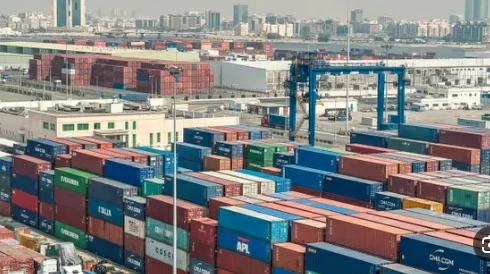
Data from the Gulf Cooperation Council's statistical center indicates that the Gulf economy recorded positive performance during the third quarter of 2025, with the non-oil sector contributing 78% to the nominal gross domestic product, compared to 22% for the oil sector. This transformation reflects the success of economic policies in the member states aimed at diversifying income sources.
The data also revealed that the gross domestic product of the member states at current prices reached approximately $595.8 billion, compared to around $583 billion in the same quarter of 2024, achieving an annual growth rate of 2.2%. Meanwhile, the gross domestic product at constant prices amounted to $474.4 billion, registering a real growth rate of 5.2%, indicating that economic growth was not solely driven by rising prices, but by an actual increase in economic activity.
Quarterly Economic Performance
The Gulf economy recorded a quarterly growth rate of 1.6% at constant prices compared to the second quarter of 2025, reflecting continued economic momentum. In terms of real output, the contribution of the non-oil sector was 70.7% compared to 29.3% for the oil sector, indicating a relative decline in dependence on oil.
The data shows that the Gulf economy has become more diversified, with contributions from economic activities (at current prices) distributed as follows: 12.4% for manufacturing, 9.7% for wholesale and retail trade, 8.4% for construction, 7.5% for public administration and defense, 7% for finance and insurance, 5.8% for real estate activities, 27.3% for other activities, and 22% for oil and gas extraction.
Background & Context
These results come as part of the Gulf Cooperation Council's efforts to enhance economic diversification and reduce reliance on oil, which has been the backbone of Gulf economies for decades. New economic policies have contributed to strengthening non-oil sectors, leading to increased investments in areas such as tourism, trade, and services.
The member states are striving to achieve Vision 2030, which aims to build a sustainable economy capable of facing future challenges. The data has shown that non-oil activities have achieved strong growth rates, with real estate activities growing by 10.2%, accommodation and food services by 8.2%, and wholesale and retail trade by 8%.
Impact & Consequences
These results are a positive indicator of the Gulf economy's ability to adapt to global changes and reflect the success of economic policies in achieving diversification. Additionally, growth in non-oil sectors enhances job opportunities and increases foreign investments.
Experts assert that the continuation of this trend towards economic diversification will help Gulf countries face future challenges, especially amid fluctuations in oil prices. Furthermore, the increased contribution of service and industrial sectors to the gross domestic product reflects the vitality of the Gulf economy.
Regional Significance
The growth in the non-oil sector serves as a model for other Arab countries seeking to achieve economic diversification. Other nations can benefit from the successful experiences of the Gulf Cooperation Council countries in promoting non-oil sectors.
In conclusion, the released data reflects a positive transformation in the Gulf economy, contributing to enhanced economic stability and strengthening the ability of countries to face future challenges.