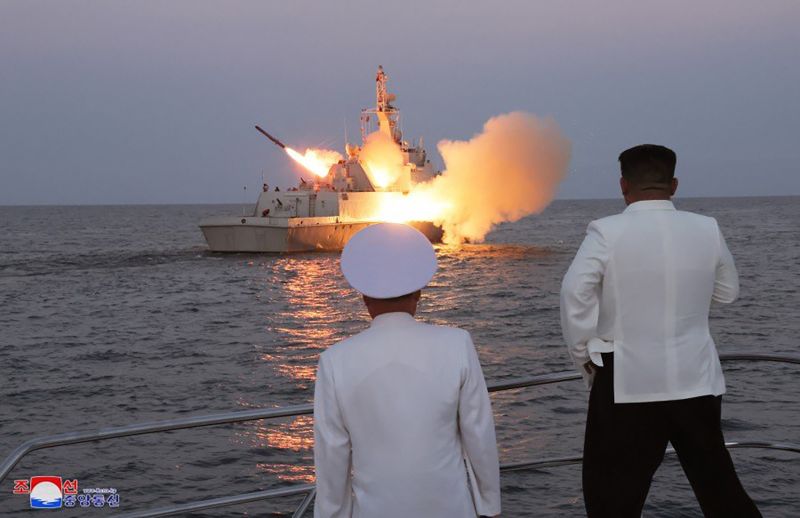
North Korean leader Kim Jong Un oversaw advanced weapon tests on Sunday at a training base for special operations forces, reaffirming his country's commitment to enhancing its nuclear capabilities. This move is part of a clear policy aimed at strengthening North Korea's military capabilities, with Kim considering South Korea as the "most hostile state" towards his country.
The Korean Central News Agency reported that Kim also attended trials for a new main battle tank, capable of countering a wide range of anti-tank weapons. He witnessed a test of a high-thrust solid-fuel rocket engine, which uses carbon fiber materials and features significant thrust, as part of a five-year plan to modernize North Korea's offensive capabilities.
Details of the Event
In a related context, Kim had announced days earlier during a speech to parliament that his country would permanently enhance its nuclear forces, emphasizing that North Korea's status as a nuclear state is irreversible. He asserted that strengthening defensive nuclear deterrence is essential for protecting the nation's security.
It is noteworthy that North Korea has conducted several nuclear tests and is believed to possess dozens of nuclear warheads. While Kim rejects the idea of denuclearization in exchange for economic benefits or security guarantees, he sees maintaining nuclear forces while pursuing development as the correct strategic choice.
Background & Context
These developments coincide with rising tensions in the region, where analysts believe that Kim Jong Un may refer to the U.S.-Israeli war on Iran as evidence that countries lacking nuclear deterrent capabilities become more vulnerable to attack. This situation may increase Kim's resolve to advance his nuclear program.
North Korea is under strict Western sanctions, primarily due to its nuclear program and its support for Russia's war against Ukraine. Estimates from South Korean and Western intelligence agencies confirm that North Korea has sent thousands of soldiers and munitions to Russia during the ongoing war in Ukraine.
Impact & Consequences
North Korea receives financial aid, military technology, food supplies, and energy from Russia in exchange for logistical support. In this context, Russia has described the joint military exercises between the United States and South Korea as "open preparations for war," reflecting the increasing tensions in the region.
This situation also reflects the growing international concern over the nuclear threats posed by North Korea, as major powers seek diplomatic solutions to reduce these tensions. However, Kim appears determined to proceed with his nuclear program, complicating the regional security landscape.
Regional Significance
The developments in North Korea are particularly significant for the Arab region, as they reflect the security challenges faced by countries in the face of nuclear threats. Additionally, regional and international conflicts may impact stability in the area, necessitating enhanced security and defense cooperation among Arab nations.
Ultimately, the situation in North Korea remains a focal point of global interest, as fears of escalating military tensions and regional conflicts grow, requiring a response from the international community to ensure security and stability in the region.