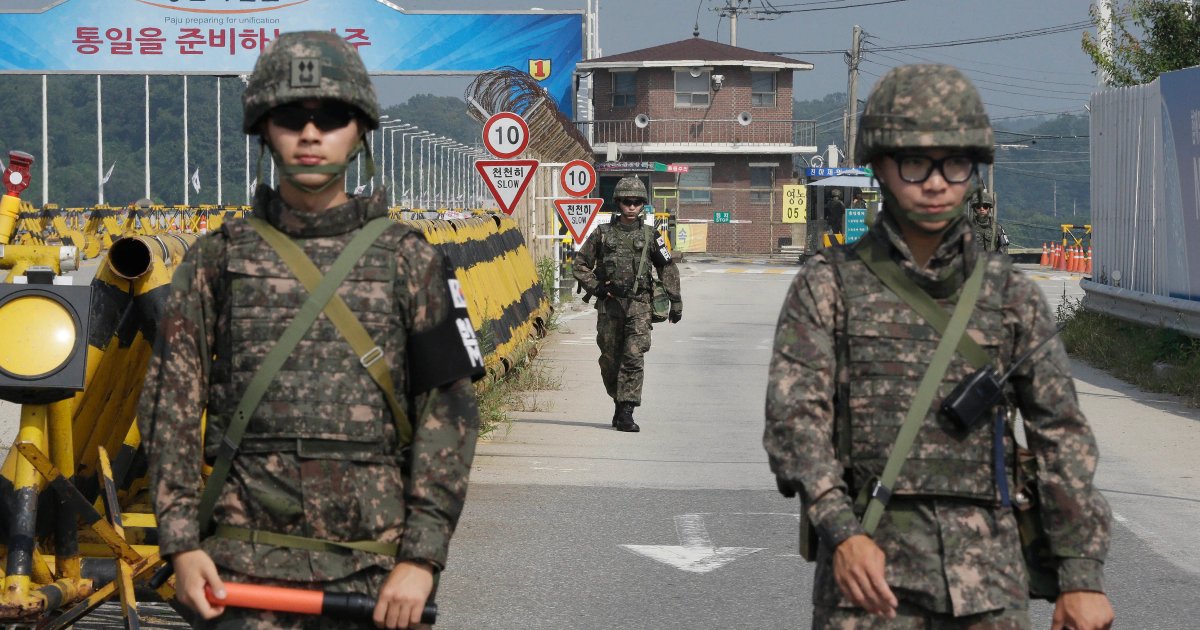
In a controversial statement, a North Korean official confirmed that the southern capital, Seoul, is still regarded as an enemy, despite the praise directed at South Korea's president as 'broad-minded.' This statement comes at a time when tensions between the two Koreas are escalating, raising questions about the potential for improving relations.
It is noteworthy that these remarks follow a period of military and political tensions between the two Koreas, during which the region has witnessed numerous military maneuvers from both sides. The North Korean official indicated that Seoul continues to maintain a hostile stance towards the North, reflecting the mutual distrust between the two parties.
Details of the Statement
Earlier, North Korean officials described the South Korean president as 'broad-minded,' which was interpreted as an attempt to break the deadlock in relations. However, the recent statements reflect a continuation of hostility, as the official pointed out that Seoul still poses a threat to the North's national security.
Historically, relations between the two Koreas have experienced numerous fluctuations, with periods of intense tension followed by phases of détente. Nevertheless, the recent statements suggest that the current situation remains complex, and any improvement in relations will require significant efforts from both sides.
Background & Context
Since the end of the Korean War in 1953, the two Koreas have remained divided. Recent years have seen an escalation in tensions, particularly with North Korea's nuclear tests. These events have led to international sanctions on Pyongyang, complicating the situation further.
In recent years, some governments in the region, including South Korea, have attempted to improve relations with the North, but these efforts often encounter significant obstacles. The recent statements from North Korea reflect its unwillingness to make concessions, further complicating the situation.
Impact & Consequences
The recent statements could negatively impact peace efforts in the region, potentially leading to an escalation of military tensions. The ongoing hostility between the two Koreas may also affect regional stability, especially with major powers like the United States and China having interests in the area.
Additionally, these statements could influence the relationship between South Korea and the United States, as Seoul relies on Washington to counter threats from the North. Continued hostility may lead to increased U.S. military support for South Korea, which could heighten tensions further.
Regional Significance
Although events on the Korean Peninsula may seem distant from the Arab region, stability in Asia has global repercussions. Any escalation in tensions could impact global markets, including oil prices, which would reflect on the Arab economy.
Furthermore, the relations between the two Koreas could serve as a lesson for Arab countries facing similar challenges in their internal and external relations. There may be valuable insights on how to handle conflicts and seek peaceful solutions.
In conclusion, the recent statements from North Korea reflect the ongoing state of tension and hostility with South Korea, complicating peace efforts in the region. Under these circumstances, hope remains that the involved parties can find ways to communicate and achieve stability.