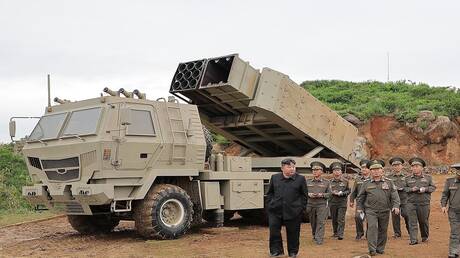
North Korean leader Kim Jong Un has confirmed that his country will continue to strengthen its nuclear and conventional military capabilities, indicating that this policy is steadfast and will not change. These statements come at a sensitive time when the region is experiencing increasing tensions, which raises concerns for the international community.
In a speech during a high-level meeting, Kim emphasized the importance of modernizing the North Korean armed forces in line with the growing threats from abroad. He assured that his country would work on developing new weapons and enhancing its defensive capabilities to face any potential challenges.
Details of the Event
Kim Jong Un's remarks follow a series of missile tests conducted by North Korea, which elicited strong reactions from neighboring countries and the United States. These tests have demonstrated North Korea's ability to develop long-range missiles, complicating the security situation in the region.
Kim also pointed out that enhancing nuclear capabilities is part of a comprehensive strategy aimed at protecting the country's sovereignty. He confirmed that this policy would not be influenced by international pressures or sanctions imposed on his nation, reflecting the determination of the North Korean leadership to advance its nuclear program.
Background & Context
Historically, North Korea under Kim Jong Un has pursued a policy of enhancing its military capabilities, especially in the field of nuclear weapons. Since taking power in 2011, the country has seen an escalation in its nuclear and missile tests, leading to the imposition of strict international sanctions.
North Korea considers its nuclear program a fundamental pillar of its defense policy, viewing it as a means to ensure its survival against external threats. This policy has led to ongoing tensions with its neighbors, particularly with South Korea and Japan, as well as with the United States.
Impact & Consequences
The enhancement of North Korea's nuclear capabilities could escalate tensions in the region, potentially affecting both regional and global security. Neighboring countries, such as South Korea and Japan, may feel an increasing threat, prompting them to bolster their military capabilities.
This policy could also impact diplomatic relations between North Korea and major powers, making it difficult to achieve any progress in negotiations regarding nuclear disarmament. Under these circumstances, the likelihood of military conflicts in the region may increase.
Regional Significance
Although events in North Korea may seem distant from the Arab region, the escalation of tensions in any part of the world can affect regional stability. Arab countries may need to closely monitor the situation, especially in light of increasing security challenges.
Any escalation in Korean tensions could influence oil prices and global markets, potentially impacting the Arab economy. Additionally, relations between major powers in the region may be affected, necessitating a careful analysis of the situation.
In light of these circumstances, it appears that North Korea is moving forward with enhancing its military capabilities, raising concerns for the international community. The current situation requires a coordinated response from major powers to ensure security and stability in the region.