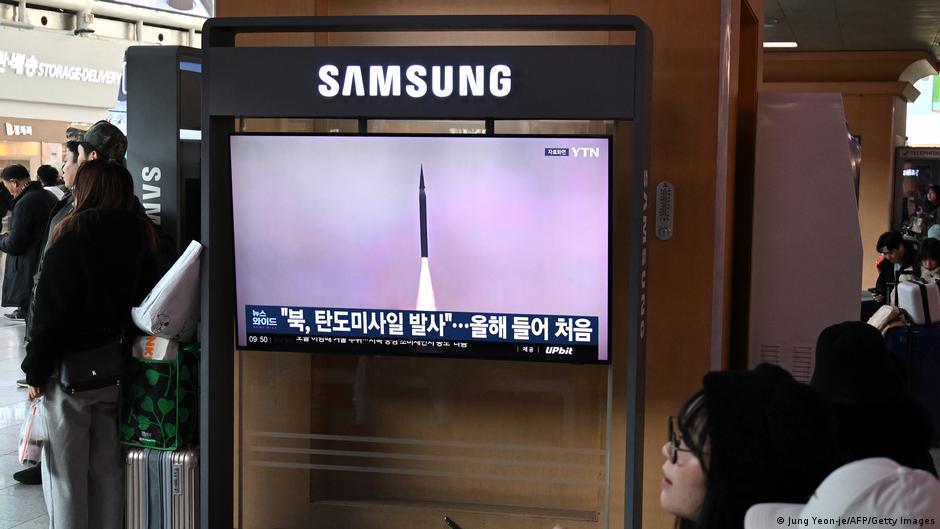
In a new escalation of military tensions, North Korea launched several ballistic missiles into the sea on Wednesday, following an unspecified missile launch on Tuesday, according to the South Korean military.
The Joint Chiefs of Staff of South Korea reported that the missiles were fired from the eastern coastal area of Wonsan towards the eastern waters. The missile detected on Tuesday is also believed to have been a ballistic missile, raising concerns about North Korea's military activities.
Details of the Incident
These launches come at a critical time, as North Korea has confirmed its intention not to ease hostilities towards the South, disappointing hopes in Seoul for resuming dialogue. On Tuesday night, Jang Kum Chol, the Deputy Foreign Minister in Pyongyang, stated that South Korea will always remain the "most hostile enemy state" to the North.
Jang also mocked South Korea, describing it as "fools who provoke astonishment" for raising hopes after the sister of North Korean leader Kim Jong Un praised South Korean President Yoon Suk Yeol for expressing regret over a recent drone incident.
Background & Context
Historically, relations between the two Koreas have seen periods of tension and calm, with multiple attempts to establish peace. However, the current tensions stem from several factors, including North Korea's nuclear program and joint military exercises between South Korea and the United States.
In recent years, North Korea has increased its missile tests, raising concerns in the international community and leading to the imposition of economic sanctions. This dynamic reflects the ongoing struggle for influence on the Korean Peninsula.
Impact & Consequences
These launches serve as a clear message from North Korea that it will not back down from its position, complicating peace efforts in the region. Additionally, these events could lead to potential military escalation, threatening regional security.
Concerns are growing that the continuation of these military activities may provoke reactions from the United States and South Korea, further heightening tensions in the region. This dynamic could also affect stability in East Asia as a whole.
Regional Significance
Although events on the Korean Peninsula may seem distant from the Arab region, regional stability in any part of the world impacts Arab interests. Military tensions could lead to rising oil prices and exacerbate humanitarian crises in other areas.
Moreover, any escalation in the conflict could open the door for international interventions, potentially influencing Arab policies regarding security and peace issues.