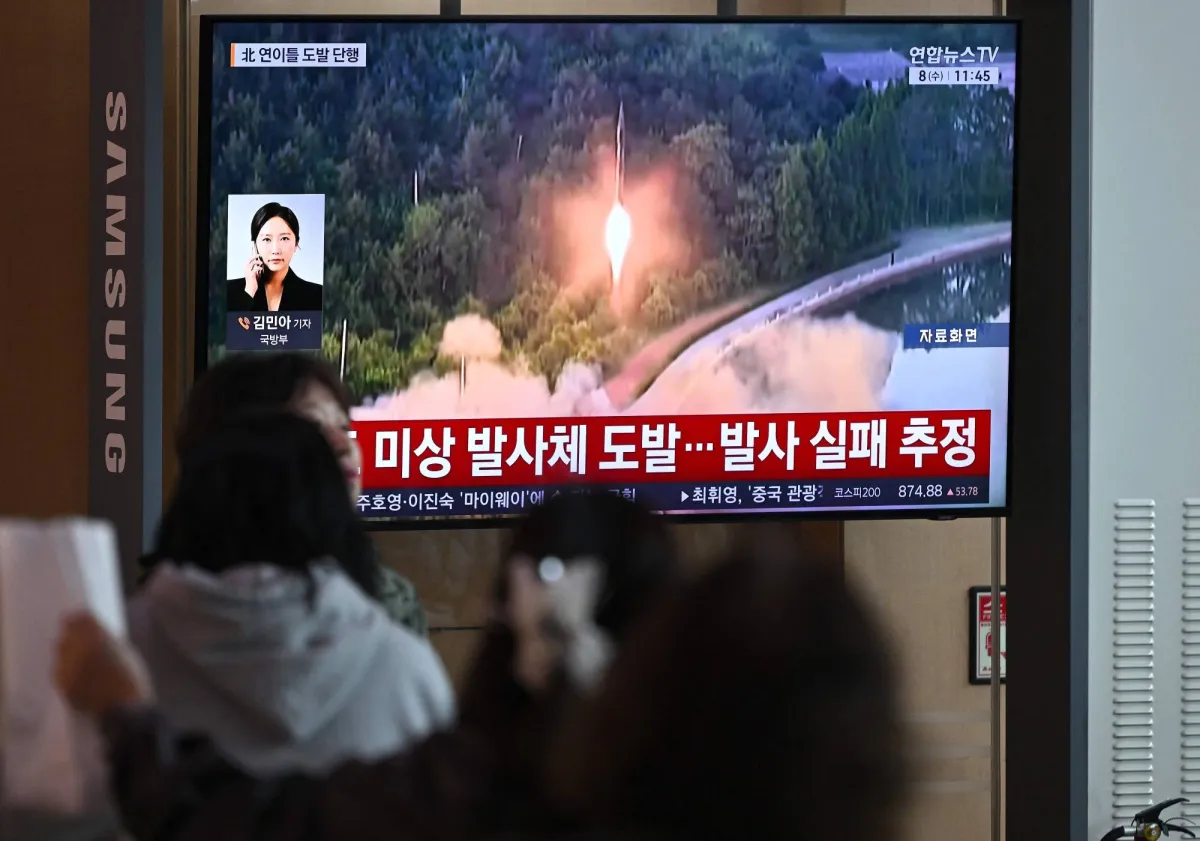
The South Korean military reported that North Korea launched a new ballistic missile today, Wednesday, shortly after Seoul announced another projectile from Pyongyang. The Joint Chiefs of Staff in South Korea confirmed that the launch was directed towards the East Sea, also known as the Sea of Japan, noting that this launch was separate from previous launches that occurred on the same day.
This escalation comes at a sensitive time, as Seoul expressed regret over incursions by civilian drones into northern airspace, which South Korean President Yoon Suk-yeol described as "irresponsible actions." His remarks sparked reactions from the North Korean side, where Kim Yo-jong, sister of leader Kim Jong-un, deemed Yoon's regret as "wise behavior."
Details of the Incident
As tensions escalate, a senior official from the North Korean Foreign Ministry described South Korea as "the most hostile state towards North Korea," reflecting the ongoing animosity between the two sides. This comes amid continued military drills and sharp statements from both parties, further intensifying tensions in the region.
These launches are part of North Korea's strategy to enhance its military capabilities, as Pyongyang seeks to develop its missile programs in the face of international pressure and sanctions imposed on it.
Background & Context
Historically, relations between the two Koreas have seen a continuous escalation since the end of the Korean War in 1953, with no formal peace agreement reached. Instead, military and political tensions have persisted, making the region one of the most volatile areas in the world.
In recent years, North Korea has increased its missile testing, raising concerns in the international community, particularly from the United States and South Korea. These tests are part of Pyongyang's efforts to bolster its position in potential negotiations with major powers.
Impact & Consequences
These events underscore the urgent need for diplomatic solutions to alleviate tensions on the Korean Peninsula. Military escalation could lead to a chain reaction from neighboring countries, increasing the risk of military conflict.
Moreover, the continuation of these military activities could negatively impact the South Korean economy and increase pressure on the government to address rising security threats. At the same time, this escalation may enhance international support for South Korea in facing security challenges.
Regional Significance
The developments on the Korean Peninsula are of significant importance to the Arab region, reflecting military and political tensions that could affect regional stability. These events highlight the importance of international cooperation in addressing security challenges.
In light of the tense situation, Arab countries should closely monitor developments in North Korea, as these events could impact regional and international security.