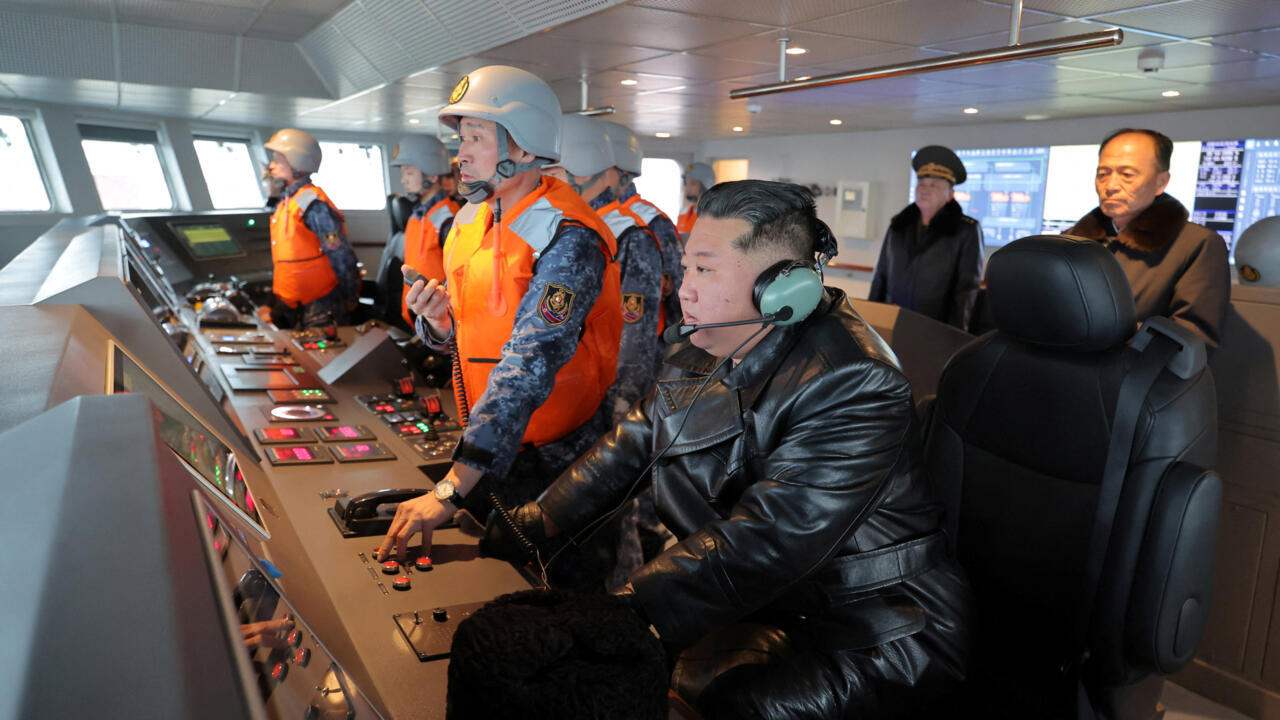
North Korean leader Kim Jong Un oversaw a new test of a solid-fuel rocket engine, according to the official Korean Central News Agency on Sunday. This test is part of North Korea's efforts to enhance its military capabilities amid increasing tensions with the United States and its allies, including South Korea.
Solid-fuel engines are known for their high thrust capabilities, which facilitate launch procedures and increase missile efficiency. Experts have noted that this engine is specifically designed to power the Hwasong-20 intercontinental ballistic missiles, which were unveiled last October and are intended to reach U.S. territory.
Details of the Event
The Korean Central News Agency did not specify the date or location of the test, but it confirmed that it is part of North Korea's ongoing efforts to bolster its strategic arsenal. The announcement of the test comes at a time when diplomatic relations between North Korea and the United States are at a low point, with both sides engaging in a war of words and military posturing.
In recent months, North Korea has conducted a series of missile tests, which it claims are necessary for its self-defense against perceived threats. The solid-fuel technology is particularly significant because it allows for quicker launch times and greater mobility, making it harder for adversaries to detect and intercept missiles before they are launched.
Background & Context
North Korea's missile program has been a focal point of international concern for years. The country has faced numerous sanctions from the United Nations in response to its nuclear and missile tests, which it continues to pursue despite international pressure. The development of solid-fuel technology is seen as a significant advancement in North Korea's missile capabilities, allowing for more reliable and effective delivery systems.
The Hwasong-20 missiles, which are designed to carry nuclear warheads, represent a direct threat to the United States and its allies. Analysts believe that the successful testing of solid-fuel engines could enable North Korea to launch missiles more swiftly and with less warning, thereby complicating defense strategies for the U.S. and South Korea.
Impact & Consequences
The implications of North Korea's advancements in missile technology are profound. As the country continues to develop its military capabilities, it raises the stakes for regional security and international diplomacy. The successful test of a solid-fuel rocket engine could prompt a reassessment of military strategies by the United States and its allies, potentially leading to an arms race in the region.
Moreover, the test could also influence the dynamics of negotiations surrounding North Korea's nuclear program. If North Korea perceives that it has achieved a significant technological advantage, it may become less willing to engage in dialogue or compromise on its nuclear ambitions.
Regional Significance
The test of the solid-fuel rocket engine is not only a technical achievement for North Korea but also a strategic maneuver in the context of its relationships with neighboring countries. As tensions escalate, North Korea's actions could provoke stronger military responses from South Korea and the United States, leading to a cycle of escalation that could destabilize the region further.
In addition, North Korea's missile tests often coincide with military exercises conducted by the United States and South Korea, which Pyongyang views as provocative. This ongoing cycle of testing and military drills contributes to a volatile security environment on the Korean Peninsula.
In conclusion, the recent solid-fuel rocket engine test under the supervision of Kim Jong Un underscores North Korea's commitment to advancing its military capabilities. As tensions rise, the international community will be closely monitoring the developments in North Korea's missile program and the potential implications for regional and global security.