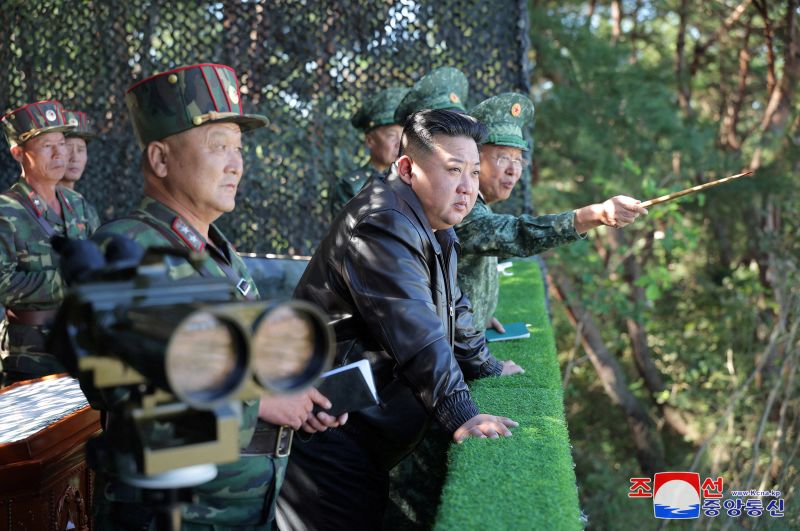
North Korean leader Kim Jong Un announced his country's intention to irreversibly strengthen its nuclear position amid escalating regional and international tensions. This announcement came during a meeting of the ruling party in Pyongyang, where Kim emphasized the importance of developing military nuclear capabilities as a means to ensure the country's security and stability.
In his remarks, Kim indicated that North Korea would continue to enhance its nuclear arsenal, deeming this step necessary to confront external threats. He also called for increased military preparedness to counter any potential escalation from major powers, particularly the United States and its allies in the region.
Details of the Announcement
Kim Jong Un's statements come at a sensitive time, as the region is witnessing a rise in military tensions, especially with the military exercises being conducted by the United States and South Korea. Kim pointed out that the development of nuclear weapons is a sovereign right of North Korea and that the country will not retreat from this path.
During the meeting, there was also a reaffirmation of the importance of strengthening defensive capabilities, including the development of new ballistic missiles. Recently, North Korea has shown progress in its military programs, raising concerns within the international community.
Background & Context
Historically, North Korea under Kim Jong Un has sought to develop its nuclear capabilities for many years, beginning its first nuclear tests in 2006. Since then, the country has conducted several nuclear tests, leading to the imposition of strict international sanctions.
In recent years, relations between North Korea and the United States have experienced significant fluctuations, with some attempts at negotiating nuclear disarmament, though these talks have yielded no tangible results. As tensions rise, it appears that Kim prefers to bolster his country's capabilities rather than engage in negotiations.
Impact & Consequences
The enhancement of North Korea's nuclear position could exacerbate tensions in the region, as neighboring countries such as South Korea and Japan may feel a greater threat, prompting them to bolster their military capabilities. This situation could also affect regional stability and increase the likelihood of future conflicts.
Moreover, this announcement may hinder international efforts aimed at nuclear disarmament on the Korean Peninsula, complicating the security landscape in the region.
Regional Significance
Although the situation in North Korea may seem distant from the Arab region, nuclear tensions in any part of the world can impact global security as a whole. The rising tensions in East Asia could also reflect on the policies of Arab countries, especially those with close ties to the United States.
Ultimately, the situation in North Korea remains a focal point for the world, as concerns grow over the implications of enhancing nuclear capabilities on regional and international security and stability.