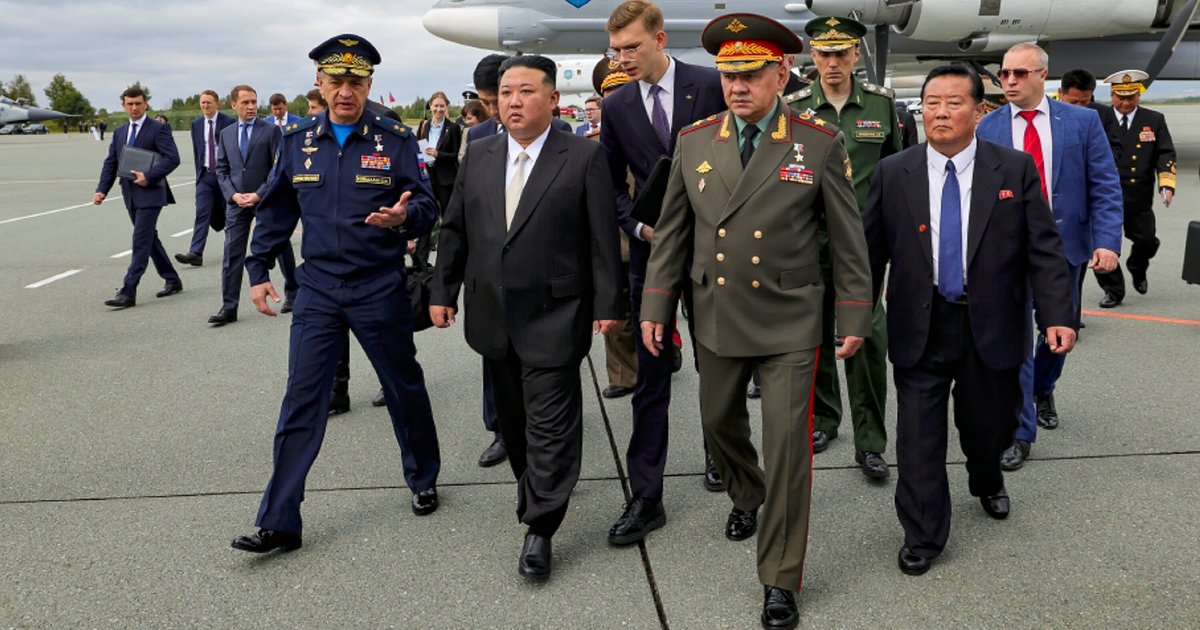
In a move reflecting the growing alliance between North Korea and Russia, North Korean leader Kim Jong Un affirmed his country's full support for Russia's war in Ukraine, stressing the importance of achieving victory in this war, which he described as sacred. This statement came during a meeting with Russian Defense Minister Andrei Belousov, where Kim expressed confidence in the Russian army's ability to secure victory.
These remarks come at a time when military relations between the two countries are increasing, with North Korea sending missiles, ammunition, and thousands of soldiers to support Russia in the Ukrainian conflict. In return, reports indicate that Moscow is providing financial, technological, and military assistance to North Korea, reflecting a mutual exchange of interests between the two parties.
Details of the Meeting
During the meeting, Kim confirmed that North Korea would continue to support Russia's policy in defending its national sovereignty and security. He also noted that both sides discussed enhancing military cooperation, with Belousov expressing Moscow's readiness to sign a cooperation plan covering the period from 2027 to 2031.
In a related context, Kim, Belousov, and Russian Parliament Speaker Vyacheslav Volodin attended the inauguration ceremony of a memorial complex honoring North Korean soldiers who died in Ukraine. The ceremony included a musical performance and a fireworks display, adding a festive atmosphere to the event.
Background & Context
The relations between North Korea and Russia date back decades, with the two countries signing a military treaty in 2024 that commits each to provide military assistance to the other in case of an attack. This treaty reflects the depth of cooperation between the two countries amid the diplomatic isolation faced by North Korea.
Simultaneously, the inauguration ceremony coincided with the first anniversary of Russia's reclamation of parts of the Kursk region, where North Korean soldiers were deployed to help repel the Ukrainian attack. Kim pointed to the bright military outcomes in the liberation of Kursk, reflecting North Korea's national pride.
Impact & Consequences
These developments are indicative of the growing alliance between North Korea and Russia, which could alter the balance of power in the region. Additionally, military support from North Korea to Russia may bolster Moscow's position in the Ukrainian conflict and complicate security situations in the area.
On another note, estimates suggest that around 2000 North Korean soldiers have died in the Ukrainian war, as they were directed to fight to the death rather than surrender. This policy reflects North Korea's commitment to supporting Russia, even at the cost of its soldiers' lives.
Regional Significance
The Arab region is indirectly affected by these developments, as the strengthening of relations between North Korea and Russia may impact regional balances. Furthermore, any escalation in the Ukrainian conflict could lead to economic and political repercussions for Arab countries, especially those reliant on energy imports.
In conclusion, North Korea's support for Russia in its war against Ukraine represents a significant shift in international relations and reflects the increasing military alliances in a world characterized by rising tensions.