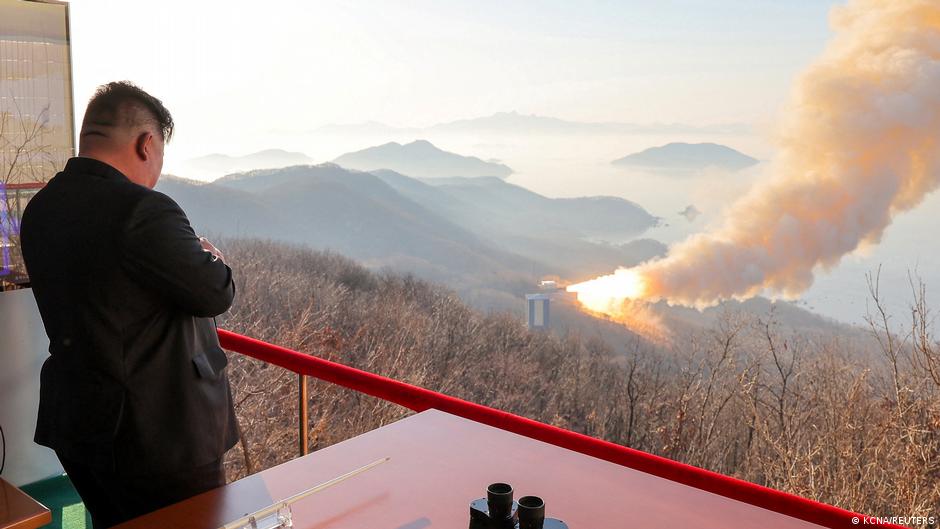
North Korean leader Kim Jong Un oversaw a ground test of a new high-thrust rocket engine, according to reports from North Korea's state media. This test is part of a five-year defense plan and features a carbon fiber engine with a thrust capacity of 2500 kilonewtons.
The Korean Central News Agency (KCNA) did not disclose the date or location of the test but confirmed that the experiment demonstrates the technical and physical capabilities prepared to meet military challenges.
Details of the Event
This test is part of North Korea's ongoing efforts to develop its military capabilities, representing the first confirmed test of a high-thrust rocket engine since last September. Kim indicated that this engine could support intercontinental ballistic missiles, making them more capable of reaching distant targets, including U.S. territory.
Kim also inspected special forces training and a new main battle tank, reflecting his commitment to enhancing North Korea's military capabilities in the face of regional and international tensions.
Background & Context
The pace of weapons development in North Korea has accelerated since the collapse of diplomatic talks with the United States in 2019. Those talks aimed at nuclear disarmament but yielded no tangible progress. In February, Kim expressed willingness to resume talks if Washington dropped its demands for nuclear disarmament.
Recently, Kim accused the United States of engaging in 'international terrorism,' a clear reference to conflicts in the Middle East, reflecting the strained relations between Pyongyang and Washington.
Impact & Consequences
The development of high-thrust rocket engines is a significant step for North Korea, as it could increase its ability to launch ballistic missiles more quickly and over longer ranges. This development may heighten tensions in the region and complicate the ability of other nations, including the United States, to monitor and counter these threats.
Analysts suggest that these developments reflect North Korea's determination to bolster its military capabilities, potentially leading to a new arms race in the region and increasing fears of military conflict.
Regional Significance
While attention is focused on tensions in the Korean Peninsula, Arab nations should be aware of the potential implications of these developments. Increased tensions in Asia could affect the stability of global markets, including energy markets that many Arab countries rely on.
The military escalation in North Korea may also encourage certain groups in the region to adopt more hardline positions, further complicating security situations in the Middle East.
In conclusion, North Korea's testing of a new rocket engine represents a strategic step aimed at enhancing its military capabilities, and the international community must remain vigilant regarding these developments and their potential impacts on regional and global security.