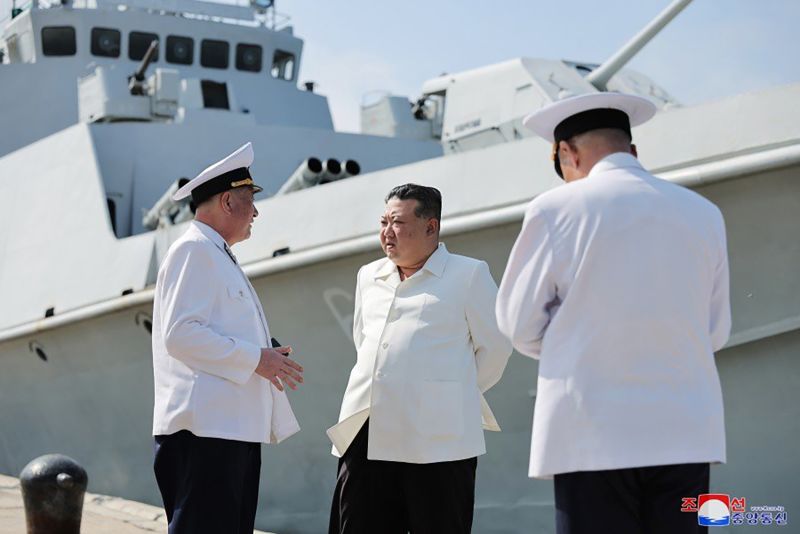
North Korean leader Kim Jong Un oversaw the testing of a powerful solid-fuel rocket engine, according to state media reports from North Korea on Sunday, March 29. This test is part of Pyongyang's efforts to enhance its strategic arsenal, indicating the country's intention to further develop its military capabilities.
The tested engine is made from composite carbon fiber materials and is capable of producing a maximum thrust of 2500 kilonewtons. This test is considered part of the national defense plan under the new five-year strategy announced by North Korea, where Kim emphasized that the development of such engines aligns with the national strategy and military demands for modernizing strategic forces.
Details of the Event
The Korean Central News Agency (KCNA) did not disclose the date or location of the test, but published images showed Kim inspecting parts of the engine, surrounded by several officials. Another image depicted the engine structure igniting, adding a dramatic atmosphere to the event.
This is the first officially confirmed test of its kind since September 2025, when a test was announced for an engine that produced a maximum thrust of 1971 kilonewtons. This development reflects North Korea's commitment to developing missiles capable of striking targets worldwide, as noted by Dr. Hong Min, an analyst at the Korea Institute for National Unification.
Background & Context
Historically, North Korea has always sought to develop its military capabilities, especially in the field of ballistic missiles. Since Kim Jong Un assumed power, the country has witnessed a significant increase in the number of missile tests, raising concerns in the international community. In recent years, Pyongyang has intensified its efforts to develop solid-fuel missiles, as these types of engines are considered more efficient and quicker to launch compared to liquid fuel.
These steps are part of a broader strategy aimed at enhancing North Korea's ability to confront external threats, particularly from the United States and South Korea. Additionally, the development of powerful engines could give North Korea the capability to overcome complex missile defense systems.
Impact & Consequences
These developments in North Korea's missile program pose a significant challenge to regional and international security. With an increased ability to produce missiles with global range, Pyongyang may enhance its capacity to threaten neighboring countries, potentially escalating tensions in the region. Furthermore, these steps could prompt other countries, such as the United States and South Korea, to bolster their defense capabilities.
These tests are expected to elicit strong reactions from the international community, with the possibility of new sanctions being imposed on North Korea. Additionally, these developments could complicate diplomatic efforts related to nuclear disarmament, as North Korea seeks to strengthen its negotiating position through military enhancements.
Regional Significance
Although events in North Korea may seem distant from the Arab region, they have indirect implications for regional security. Increased tensions on the Korean Peninsula could lead to heightened military spending in other areas, including the Middle East. Any escalation in conflict could also affect oil prices and global markets, impacting the Arab economy.
In conclusion, the situation in North Korea remains a global concern, as security challenges continue to rise amid ongoing military developments. The international community must closely monitor these events and work towards diplomatic solutions to prevent any potential escalation.