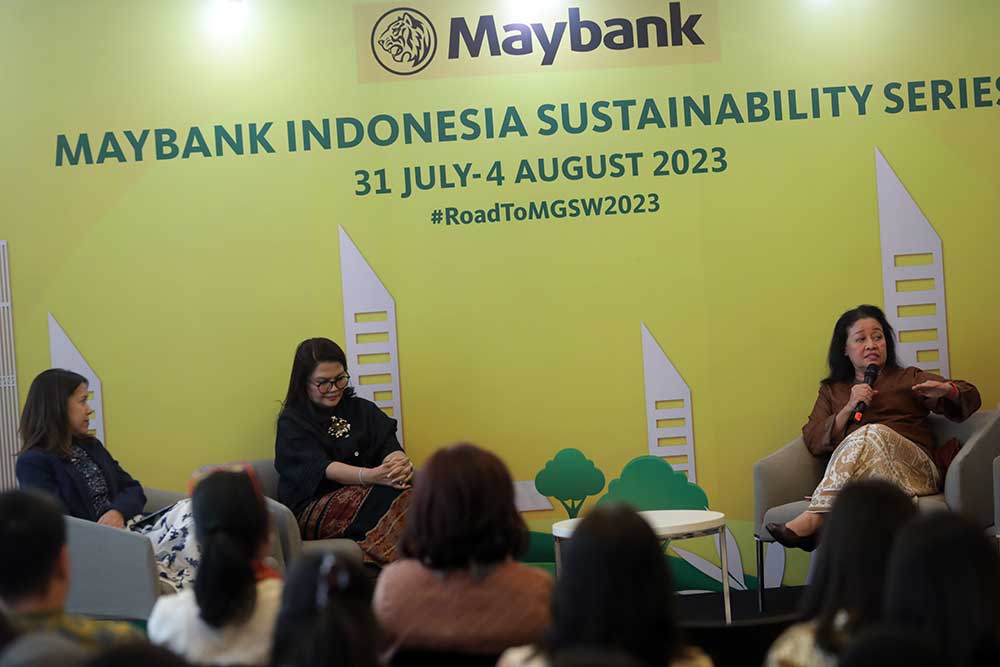
Maybank Indonesia (PT Bank Maybank Indonesia Tbk) has achieved a remarkable milestone in sustainable financing, with total sustainable financing reaching 8.24 trillion Indonesian rupiah in 2025, representing a 92.9% increase compared to the previous year. This notable growth reflects the bank's commitment to enhancing sustainability and supporting environmental projects in Indonesia.
According to the bank's CEO, Stefano Ridwaan, this increase is a result of the expansion of financing in the green sector, with eco-friendly transportation projects being the largest contributor to this growth. Financing allocated to this sector reached 4.6 trillion Indonesian rupiah, a significant increase compared to 2.1 trillion rupiah recorded the previous year.
Event Details
These results come as part of Maybank Indonesia's commitment to implementing the Sustainable Product Framework and the Transition Finance Framework established by the Maybank Group, aligning with global standards. The bank has contributed 315 billion rupiah to financing renewable energy projects, in addition to 500 billion rupiah in natural resource management and sustainable land use.
The bank has also invested in sustainable financial instruments such as green bonds worth 1.5 trillion rupiah and expanded the use of sustainable financing instruments to 1.1 trillion rupiah. These steps reflect the bank's commitment to achieving sustainability goals and enhancing its role as a strategic partner in integrating environmental, social, and governance (ESG) aspects into its clients' strategies.
Background & Context
Indonesia is one of the countries facing significant challenges in sustainability, where the need for a transition to a low-carbon economy requires increasing efforts from both the public and private sectors. In recent years, the country has seen a surge in interest in environmental projects, leading to the emergence of various initiatives aimed at improving quality of life and reducing carbon emissions.
This growth in sustainable financing comes at a time when global pressures on financial institutions to adopt more sustainable practices are increasing. Studies have shown that the shift towards a green economy can contribute to enhancing economic growth and creating new job opportunities.
Impact & Consequences
The growth in sustainable financing at Maybank Indonesia is a positive sign of the banking sector's commitment to promoting sustainability. This growth not only reflects the bank's success in achieving its goals but also contributes to enhancing confidence in the Indonesian financial system as a whole. Furthermore, the increased support for environmental projects can lead to improved environmental conditions in the country.
Moreover, this trend towards sustainable financing may encourage other banks in the region to adopt similar practices, contributing to broader sustainability efforts. The shift towards a green economy is a vital step towards achieving sustainable development goals.
Regional Significance
The experience of Maybank Indonesia can serve as a model for the Arab region, where many Arab countries face similar challenges in sustainability. Promoting sustainable financing can contribute to supporting environmental and developmental projects in Arab countries, enhancing efforts to transition towards more sustainable economies.
Additionally, cooperation between Arab and Indonesian banks in sustainable financing may open new avenues for investment and enhance the countries' ability to address environmental and social challenges.