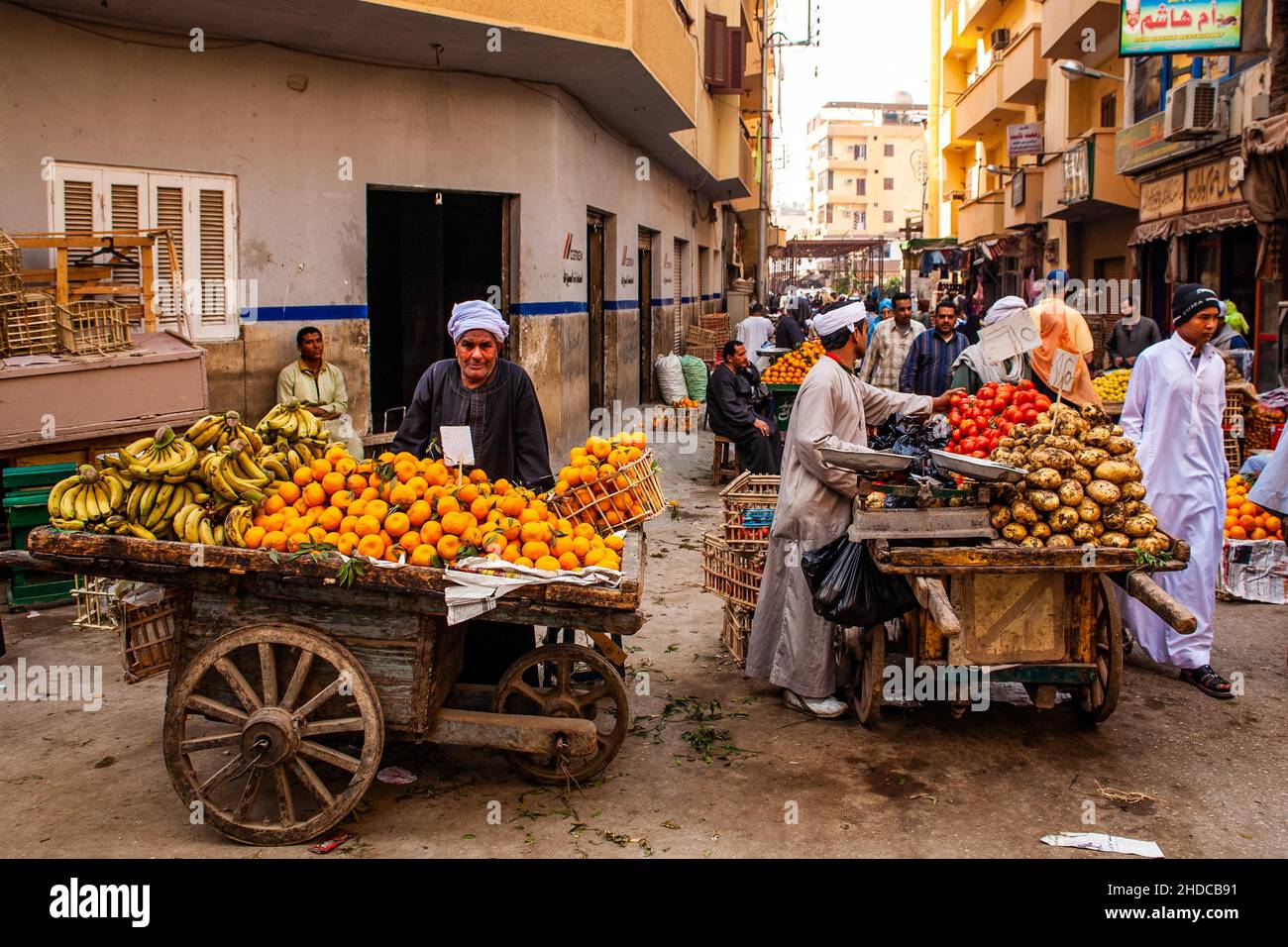
On Sunday, March 29, 2026, Luxor markets witnessed a significant rise in vegetable and fruit prices, raising concerns among citizens about their budgets. Some items recorded increases ranging from 10% to 20% compared to last week.
This price increase comes at a time when many families are suffering from increasing economic pressures, coinciding with a general rise in the cost of living. Traders attributed this increase to several factors, including heightened demand for vegetables and fruits in the spring season, as well as weather fluctuations that have affected production.
Details of the Price Increase
During a field tour of Luxor markets, the following prices were observed: a kilogram of tomatoes reached 10 Egyptian pounds, while the price of a kilogram of potatoes hit 8 Egyptian pounds. As for fruits, a kilogram of bananas was recorded at 15 Egyptian pounds, while a kilogram of oranges reached 12 Egyptian pounds. These prices reflect a noticeable increase compared to last week's prices, where tomatoes were sold at 8 Egyptian pounds and potatoes at 6 Egyptian pounds.
Some vendors reported that the demand for vegetables has significantly increased in recent days, leading to shortages of certain items. They indicated that some farmers were unable to meet the demand due to unstable weather conditions.
Background & Context
Luxor is considered one of the important agricultural areas in Egypt, known for its production of vegetables and fruits. With the onset of spring, the demand for these products increases, directly impacting prices. In recent years, Egyptian markets have experienced price fluctuations due to several factors, including climate changes, agricultural policies, and general economic changes.
The rise in prices in Luxor is not a new phenomenon; other Egyptian cities have witnessed similar increases in food prices, raising concerns for both the government and citizens. The government has launched several initiatives to support farmers, but their impact remains limited.
Impact & Consequences
The rise in vegetable and fruit prices directly affects the budgets of Egyptian families, as these items are a fundamental part of the daily diet. With increasing economic pressures, citizens face significant challenges in securing their food needs.
Additionally, these increases may exacerbate the phenomenon of poverty in some areas, forcing many to reduce their consumption of vegetables and fruits, which impacts their overall health. Civil society organizations have warned that the continuation of these price increases could lead to a rise in diseases resulting from malnutrition.
Regional Significance
Food prices in Egypt are an important indicator of the economic situation in the Arab region. The rise in prices in Egypt may affect neighboring countries, especially those that rely on imports from Egypt. The economic situation in Egypt also reflects on social and political stability in the region.
At the same time, many Arab countries are striving to enhance their food security, increasing the importance of monitoring food prices in Egypt. Price changes may lead to shifts in agricultural and economic policies in neighboring countries.