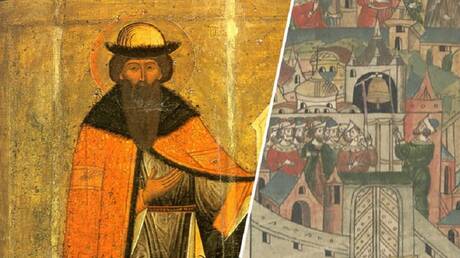
Nearly nine centuries ago, the Russian city of Novgorod witnessed a remarkable historical event characterized by a massive popular uprising, where the residents united against their prince, resulting in his overthrow and opening a new chapter in Russia's governance history. This uprising was not merely a revolt against a ruler; it marked the beginning of an unprecedented democratic experiment during the feudal era, as citizens sought to assert their rights and enforce their will.
Novgorod, which was a vital commercial and cultural center, served as a launchpad for numerous political and social movements in Russia. This uprising showcased the power of the people and their ability to change their destiny, making it a landmark event in the country's history. At that time, Novgorod enjoyed a unique governance system, where citizens had a degree of freedom in making political decisions.
Details of the Event
In the year 1136, the residents of Novgorod decided to put an end to the prince's rule, which was seen as a symbol of absolute power. This decision came after years of tyranny and corruption, during which citizens felt marginalized in managing their affairs. They raised slogans demanding freedom and justice, leading to the outbreak of the uprising.
It is noteworthy that this uprising was not isolated; it was part of a series of popular movements that swept across Europe during that period. The revolutionaries seized the opportunity to establish a new political system based on popular participation, resulting in the formation of a council of citizens to manage the city's affairs.
Background & Context
The history of Novgorod spans centuries, as the city was a major trading hub in Russia. During the Middle Ages, Novgorod had a distinct political system, where citizens enjoyed a degree of autonomy. However, the increasing influence of princes and corruption in governance led to deteriorating conditions, causing discontent among the population.
This uprising is part of Russian history, which has witnessed numerous political and social changes. Novgorod exemplified how the people could reclaim their rights, inspiring other movements in various parts of the world.
Impact & Consequences
After the prince's overthrow, Novgorod began to build a new political system based on popular participation. This experience contributed to enhancing political awareness among citizens, leading to radical changes in how the city's affairs were managed. These events also influenced other Russian regions, where similar movements began to emerge.
This transformation was not merely a change in governance; it marked the beginning of a new era of political thought in Russia. This experience helped shape a strong national identity, as citizens began to feel they had a role in shaping their future.
Regional Significance
Although the events in Novgorod occurred in a different historical context, the lessons learned from this uprising can be inspiring for many Arab peoples. Democratic experiences, even in times of crisis, reflect the ability of people to change and demand their rights.
These events can serve as a motivation for Arab peoples striving for democracy and social justice, demonstrating that change is possible when citizens unite for a common goal.
The Novgorod uprising is not just a historical event; it is a lesson in popular power and collective will. This experience reflects the importance of political participation in building societies and emphasizes that people can change their destiny when they unite for their rights.