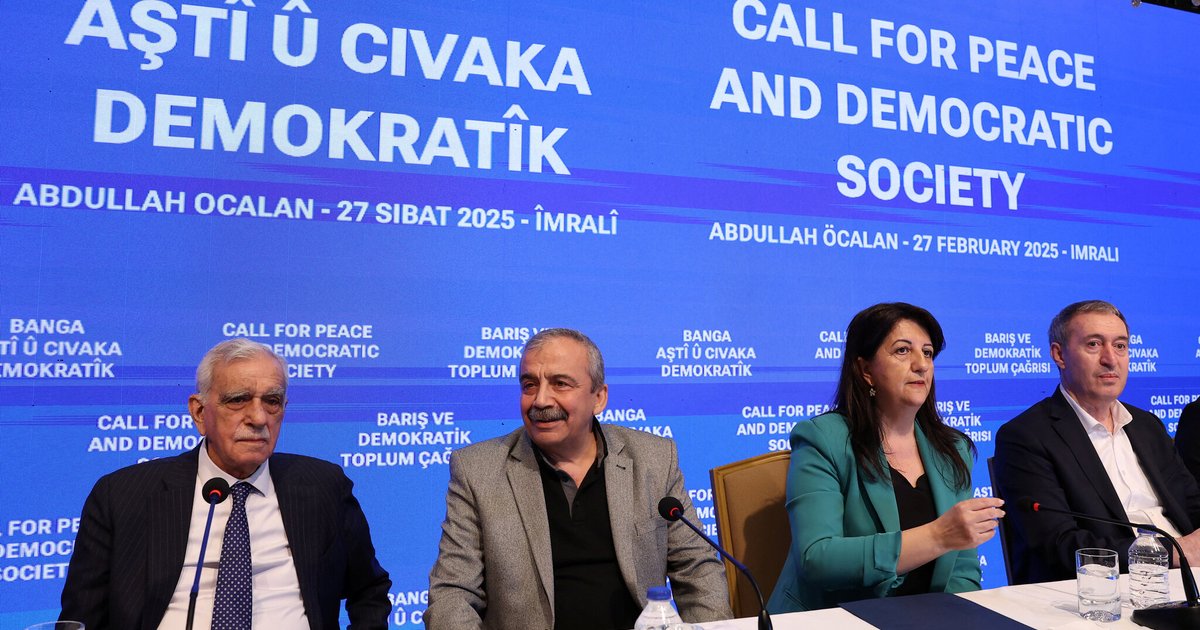
In a new message from prison, Abdullah Ocalan, the founder of the Kurdistan Workers' Party, affirmed that the peace process with Turkey is irreversible. He expressed his desire to address the Turkish public, emphasizing the importance of a new framework that redefines the relationship between Kurds and the Turkish state.
These statements come at a sensitive time for relations between Kurds and the Turkish state, as Ocalan seeks to enhance dialogue and find peaceful solutions to the decades-long conflict. He pointed out that peace is the only option that can guarantee the rights of Kurds and achieve stability in the region.
Details of the Event
Ocalan, who is serving a life sentence, is a pivotal figure in the Kurdish movement and has played a prominent role in shaping the Kurdistan Workers' Party. In his message, he called for a reevaluation of the relations between Kurds and the Turkish state, indicating that progress towards peace requires strong political will from all parties.
Ocalan also stressed that dialogue is the only way to achieve lasting peace, and any attempt to backtrack on this path would have dire consequences for everyone involved. His message has received widespread attention in political and media circles, with some considering it a positive step towards resuming the peace process.
Context and Background
Historically, relations between Kurds and the Turkish state have been marked by significant tensions, with the Kurdistan Workers' Party waging an armed struggle against the Turkish government since 1984. This conflict has resulted in the deaths of tens of thousands of people, alongside the displacement of millions. In recent years, peace talks between the two sides began, but they faltered due to escalating violence and complex political events.
In 2013, the Turkish government initiated talks with Ocalan aimed at ending the conflict, but these discussions were halted in 2015 following a surge in violence. Since then, Ocalan has been striving to revive these talks through his continuous calls for peace.
Consequences and Impact
Ocalan's statements are considered an important step towards reviving the peace process, as they may help alleviate tensions in the region. If the Turkish government responds positively to these calls, it could lead to improved relations between Kurds and the state, positively impacting regional stability.
On the other hand, these statements may provoke mixed reactions among political factions in Turkey, as some hold hardline positions against Kurds. Therefore, the Turkish government's response to these calls will be crucial in determining the future of relations between Kurds and the state.
Impact on the Arab Region
The relationship between Kurds and the Turkish state directly affects the situation in the Arab region, especially in countries with Kurdish minorities such as Iraq and Syria. If a peace agreement is reached, it could enhance stability in these countries, contributing to regional security.
Moreover, the success of the peace process could encourage other movements in the region to seek peaceful solutions to their issues, thereby enhancing opportunities for dialogue and understanding among various parties.
In conclusion, Ocalan's calls for peace remain a significant step in the trajectory of relations between Kurds and the Turkish state. Achieving peace requires strong political will from all parties and reflects the importance of dialogue as a means to resolve conflicts.