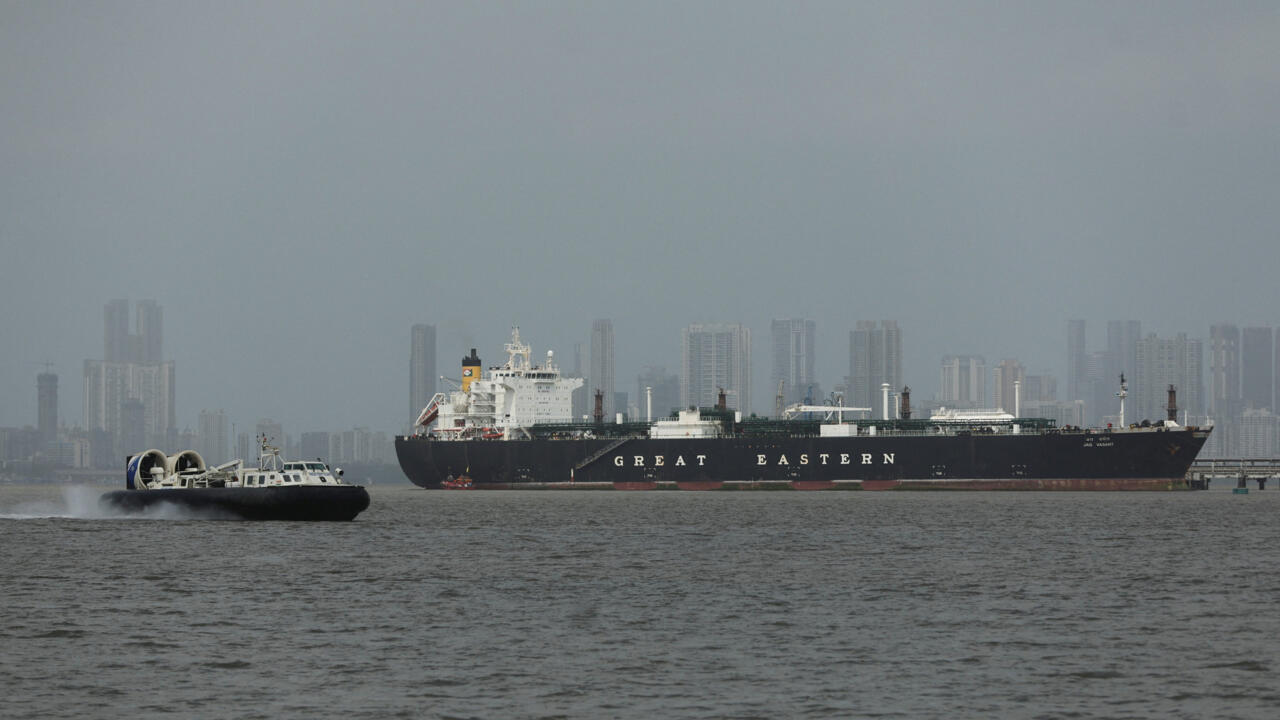
Oil prices have significantly declined, dropping below $100 per barrel on Wednesday, following U.S. President Donald Trump's announcement of a two-week ceasefire with Iran. This decline reflects the positive impact of the news on global markets.
Brent crude recorded a decrease of $14.84, or 13.6%, reaching $94.43 per barrel, while West Texas Intermediate crude fell by $16.13, or 14.3%, to $96.82 per barrel by 00:23 GMT.
Details of the Event
In related news, Trump announced that the United States would assist in ending disruptions to navigation in the Strait of Hormuz, just hours after the agreement between Washington and Tehran on the ceasefire. Trump wrote on his social media platform, Truth Social, "The United States will help end disruptions to navigation in the Strait of Hormuz."
He also mentioned that there would be "many positive actions" to follow, indicating that Iran might begin a reconstruction process. This shift in Trump's stance came before the deadline he set for Iran to open the Strait of Hormuz, a crucial transit point for approximately 20% of the world's oil.
Background & Context
These developments follow escalating tensions between the United States and Iran, where the U.S.-Israeli war against Iran had led to record-high oil prices, with prices increasing by over 50% last March. Trump described a 10-point proposal from Iran as a practical basis for negotiations, suggesting potential progress towards a long-term peace agreement.
Iranian Foreign Minister Abbas Araghchi announced that his country would halt its attacks if the attacks on it ceased, affirming that safe passage through the Strait of Hormuz would be possible for two weeks in coordination with the Iranian armed forces.
Impact & Consequences
Despite the agreement, several Gulf countries reported missile launches and drone attacks, raising concerns about regional stability. Analyst Sol Kavonik warned that Iran might continue to threaten the Strait of Hormuz even with a peace agreement in place, which could affect market stability.
These developments are significant, as any escalation in the region could lead to major fluctuations in oil prices, directly impacting the global economy, especially given the heavy reliance on oil in many countries.
Regional Significance
These events greatly affect Arab countries, as stable oil prices are vital for Gulf economies. The passage of oil through the Strait of Hormuz is a lifeline for many oil-importing nations, making any threats in the region impact economic security.
In conclusion, attention remains focused on developments in the region, as any changes in the U.S. or Iranian stance could lead to drastic shifts in oil prices and regional stability.