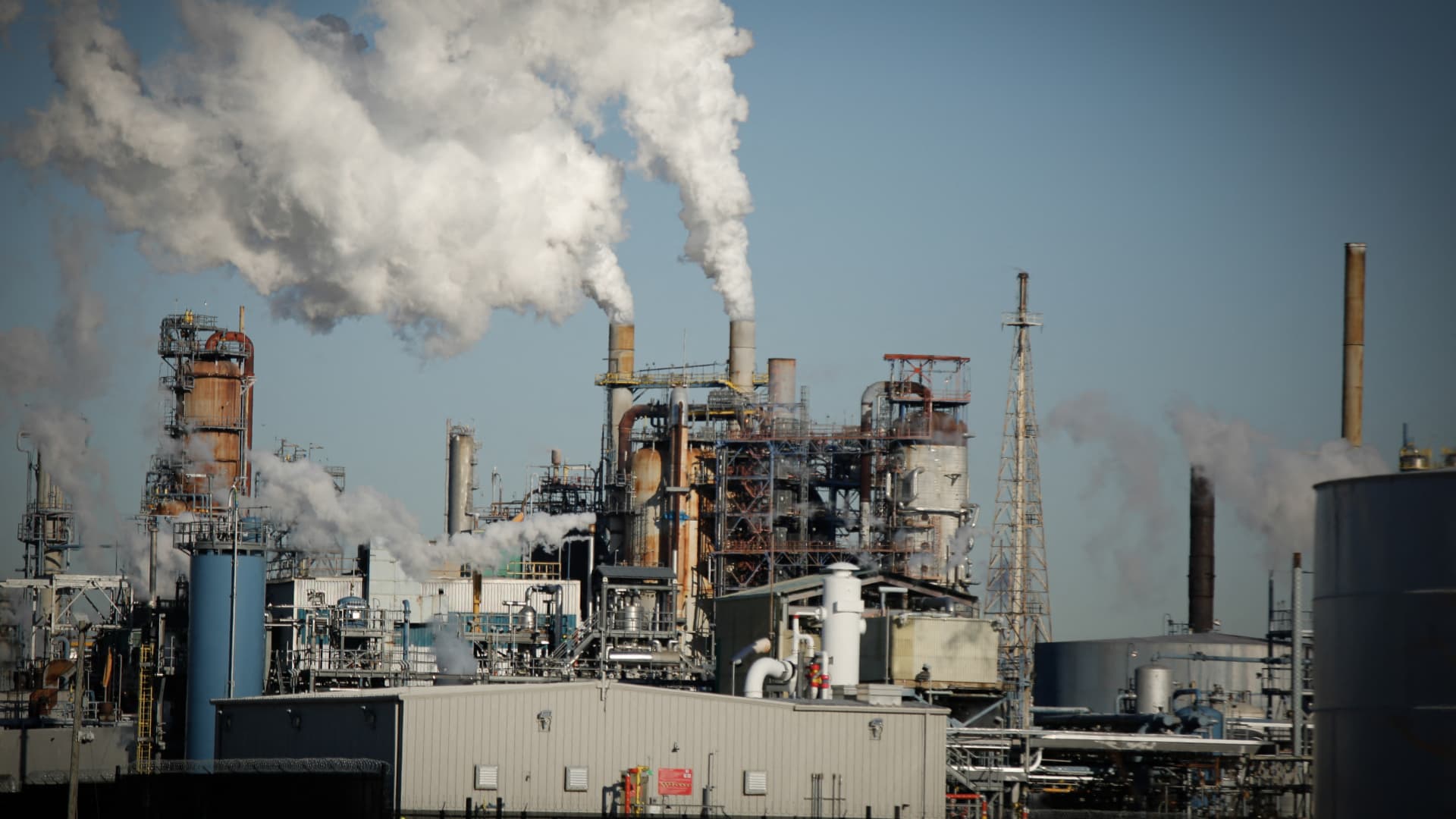
Oil prices rose sharply on Monday, with Brent crude futures climbing by 2.92% to reach $115.86 per barrel, while West Texas Intermediate (WTI) futures increased by 3.20% to hit $102.80 per barrel. This surge followed the announcement from the Houthis in Yemen that they had launched missiles at Israel, indicating their direct involvement in the ongoing conflict between the United States and Israel on one side and Iran on the other.
In a statement published on X platform, Houthi spokesperson Yahya Saree confirmed that the group had fired a series of ballistic missiles at what they described as sensitive military targets in Israel, in support of Iranian forces and Hezbollah in Lebanon. This attack represents a new escalation in the conflict that began with U.S. and Israeli strikes on Iran on February 28.
Details of the Incident
The Houthi attack on Israel comes at a sensitive time, as tensions in the region are significantly escalating. Experts have indicated that this escalation could exacerbate conditions in the Middle East, which will directly impact global oil prices. Edward Yardeni, president of Yardeni Research, expressed concern that global markets are beginning to reflect scenarios of prolonged high oil prices amid increasing risks of ongoing conflict.
This situation coincides with rising threats in the Strait of Hormuz, one of the world's most critical oil transit routes, heightening investor fears regarding the stability of oil supplies. Warnings that the continuation of the blockade in the strait could worsen market downturns and increase recession risks are causing significant concern among analysts.
Background & Context
Historically, the region has suffered from recurring conflicts that affect global oil prices. Since the onset of the Iranian-American conflict, markets have experienced significant volatility, with geopolitical pressures playing a crucial role in determining oil prices. Previous attacks on oil facilities in Saudi Arabia, for instance, led to sharp price increases, reflecting the extent to which regional conflicts impact the global market.
Iran and the Houthis are considered part of a resistance axis against American and Israeli influence in the region, complicating the conflict further. With the Houthis now involved, it is expected that matters will become even more complicated, as more parties may intervene in the dispute, increasing the likelihood of conflict escalation.
Impact & Consequences
The current rise in oil prices may have negative effects on the global economy, as it could lead to increased energy costs, adversely affecting inflation rates. Furthermore, the continuation of the conflict may result in greater volatility in financial markets, as investors gravitate towards safe assets amid rising uncertainty.
Additionally, ongoing tensions in the region could enhance the likelihood of an economic recession in certain countries, particularly those heavily reliant on oil imports. Warnings that markets may experience further volatility until oil flows return to normal indicate that the situation may continue to deteriorate.
Regional Significance
For the Arab region, the escalation of tensions in the Middle East carries significant risks. Oil-producing Arab countries may benefit from rising prices, but importing nations will face substantial economic challenges. Moreover, the continuation of the conflict may lead to an influx of refugees and increased pressures on neighboring countries.
Ultimately, it appears that the situation in the Middle East may trend towards further complexity, necessitating proactive measures from Arab nations to address the economic and political challenges that may arise from the escalation of conflict.