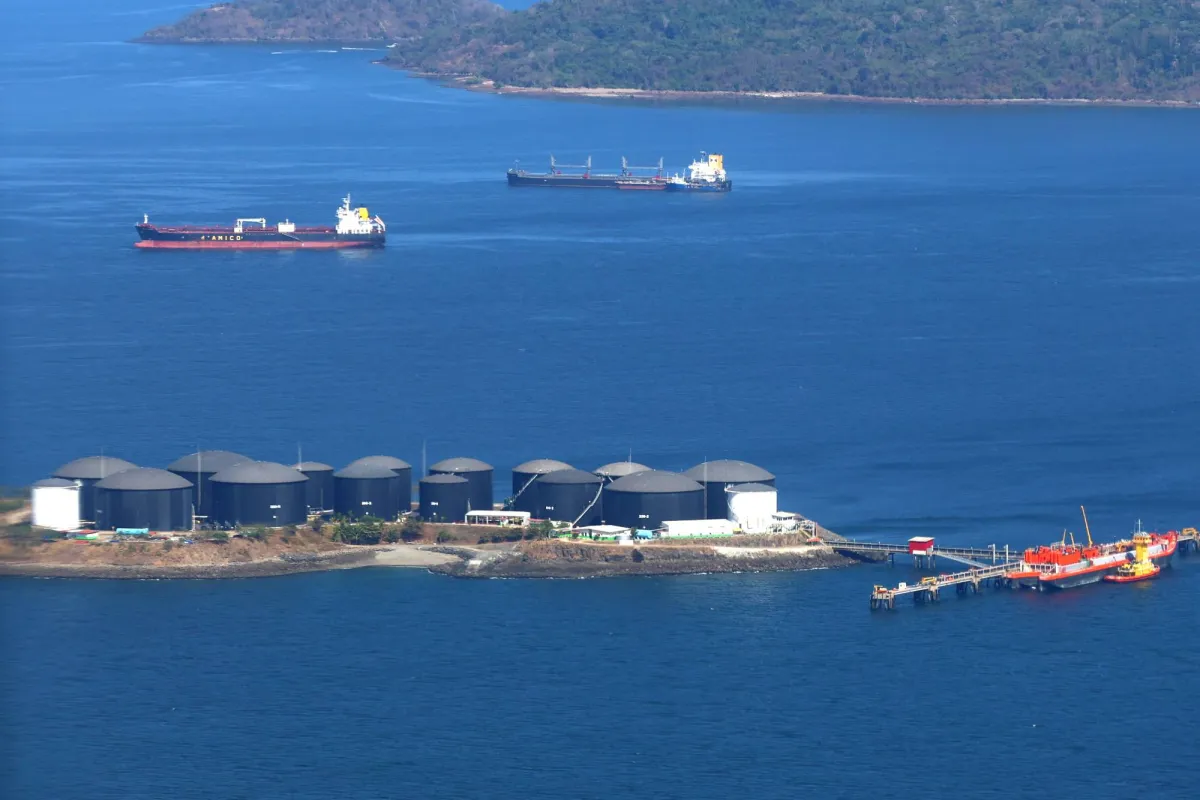
Oil prices surged by more than 4% on Thursday after U.S. President Donald Trump announced in his first speech since the outbreak of war with Iran that the United States would continue to deliver strong strikes against Iran.
In his speech delivered on Wednesday evening, Trump stated that the United States would soon complete its "mission" in Iran, as "key strategic objectives are nearing completion," leading to a sharp increase in oil prices.
Details of the Event
Brent crude, the international benchmark, jumped by 4.9% to reach $106.16 per barrel, while U.S. West Texas Intermediate crude rose by 4% to $104.15 per barrel. Takashi Hiroki, chief strategist at Monex in Tokyo, noted that the market showed disappointment due to the lack of concrete details regarding the end of hostilities with Iran, as expectations were much higher.
Global markets also experienced a rebound following Trump's optimistic remarks about the potential to end the war with Iran, indicating that the U.S. military might conclude its offensive within two to three weeks.
Background & Context
The rise in oil prices comes at a sensitive time, as markets have undergone significant shifts, especially after Trump hinted at imminent military strikes on Iran. This has led to a reassessment of risks in global markets, with gold prices declining after a four-day streak of gains.
The spot price of gold fell by 1.3% to $4694.48 per ounce, while U.S. gold futures dropped by 1.9% to $4723.70. Other precious metals also saw declines, with silver prices down by 2.9% and platinum by 1.8%.
Impact & Consequences
The International Energy Agency and the International Monetary Fund along with the World Bank announced the formation of a coordination group aimed at maximizing their response to the energy and economic impacts resulting from the war in the Middle East. Leaders of these institutions warned that the war has caused significant disruptions in global energy markets, affecting supply chains and food prices.
They also indicated that market volatility and currency weakness in emerging economies could lead to tighter monetary policies, increasing the likelihood of weakened economic growth.
Regional Significance
Arab countries are significantly affected by these developments, as rising oil prices may lead to increased living costs and economic pressures on families. Additionally, ongoing tensions in the region could impact the stability of financial markets and heighten economic risks.
In light of these circumstances, the most pressing question remains: will the United States succeed in effectively ending the conflict? If the war continues, its repercussions will extend to all countries, especially those reliant on energy imports.