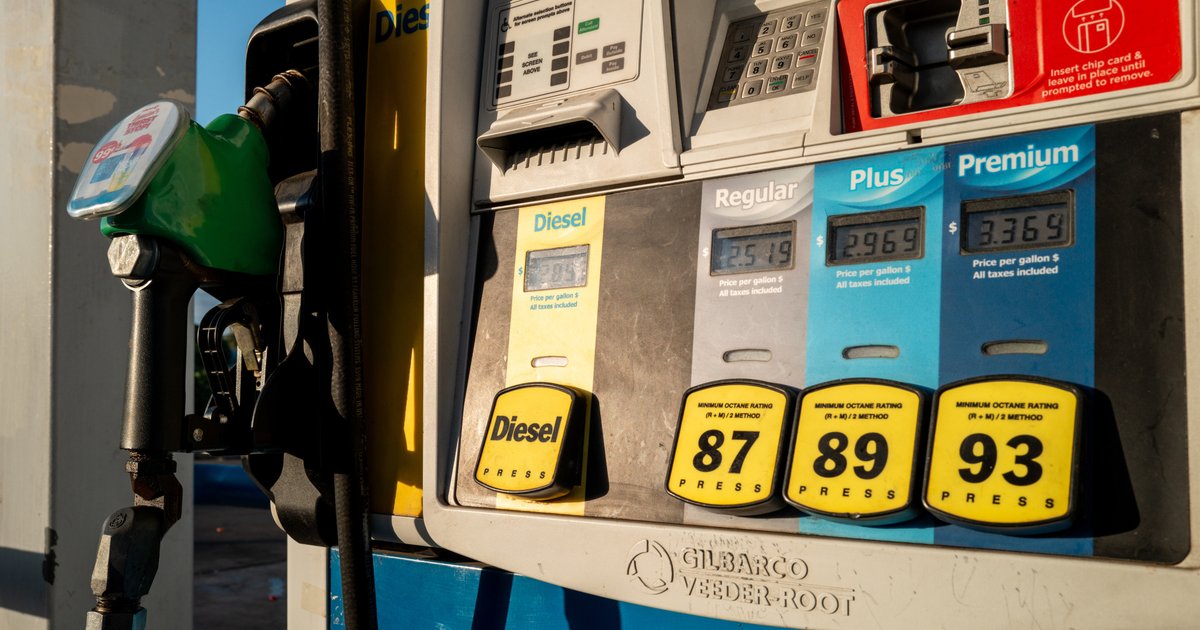
Oil prices continued to rise during Asian trading as escalating attacks in the Gulf and President Donald Trump's threats regarding U.S. troop withdrawal from the Iranian conflict raised supply concerns. The price of Brent for June rose by 1.5% to $105.56 per barrel, after experiencing an increase of over 60% in March, marking the strongest monthly rise since 1988.
U.S. crude oil also saw a 1.5% increase, reaching $102.92 per barrel, having achieved a 51% rise in March, making it the best month since May 2020. These price increases come at a time when the Strait of Hormuz, a vital oil transport corridor, is partially closed due to the ongoing conflict.
Details of the Event
The conflict between the United States and Iran has caused severe disruptions in energy supplies since the war began on February 28, raising concerns in the global economy, which heavily relies on oil from the Middle East. Trump indicated in his statements that he expects U.S. forces to leave Iran within a few weeks, which may reflect a shift in U.S. policy regarding the conflict.
At the same time, the Iranian Revolutionary Guard announced the start of attacks on American companies in the region, escalating tensions further. The list of targeted companies includes major names like Google, Microsoft, and Apple, raising investor concerns about market stability.
Background & Context
Historically, the Strait of Hormuz has represented a vital transit point for transporting about 20% of global oil supplies. As tensions between the U.S. and Iran escalate, this corridor has become increasingly threatened, directly impacting oil prices. Global markets have experienced significant volatility due to these events, as oil prices are considered a key indicator of the health of the global economy.
Regional conflicts in the Middle East often lead to indirect effects on global markets, with commodity prices significantly influenced by political and military tensions. Recent events have shown that the Iranian-American conflict affects not only the region but also extends its impact to global markets.
Impact & Consequences
Concerns are growing that the continuation of the conflict may lead to further increases in oil prices, which could impact the global economy as a whole. Some experts have warned that any additional escalation in the conflict could lead to rising energy costs, affecting inflation and economic growth in many countries.
The Iranian threats to launch attacks on American companies could provoke military responses from the United States, further escalating tensions in the region. Some analysts have indicated that this situation may create uncertainty in the markets, potentially leading to significant fluctuations in oil prices.
Regional Significance
For Arab countries, rising oil prices may have both positive and negative effects. On one hand, oil-producing countries can benefit from increased revenues, but on the other hand, high prices may increase burdens on oil-importing countries, affecting their economies.
The current situation presents an opportunity for oil-producing Arab countries to strengthen their investments in the energy sector, but they also need to take measures to protect their economies from potential price fluctuations. Stability in the region is vital to ensure the continuity of oil supplies and maintain global market stability.