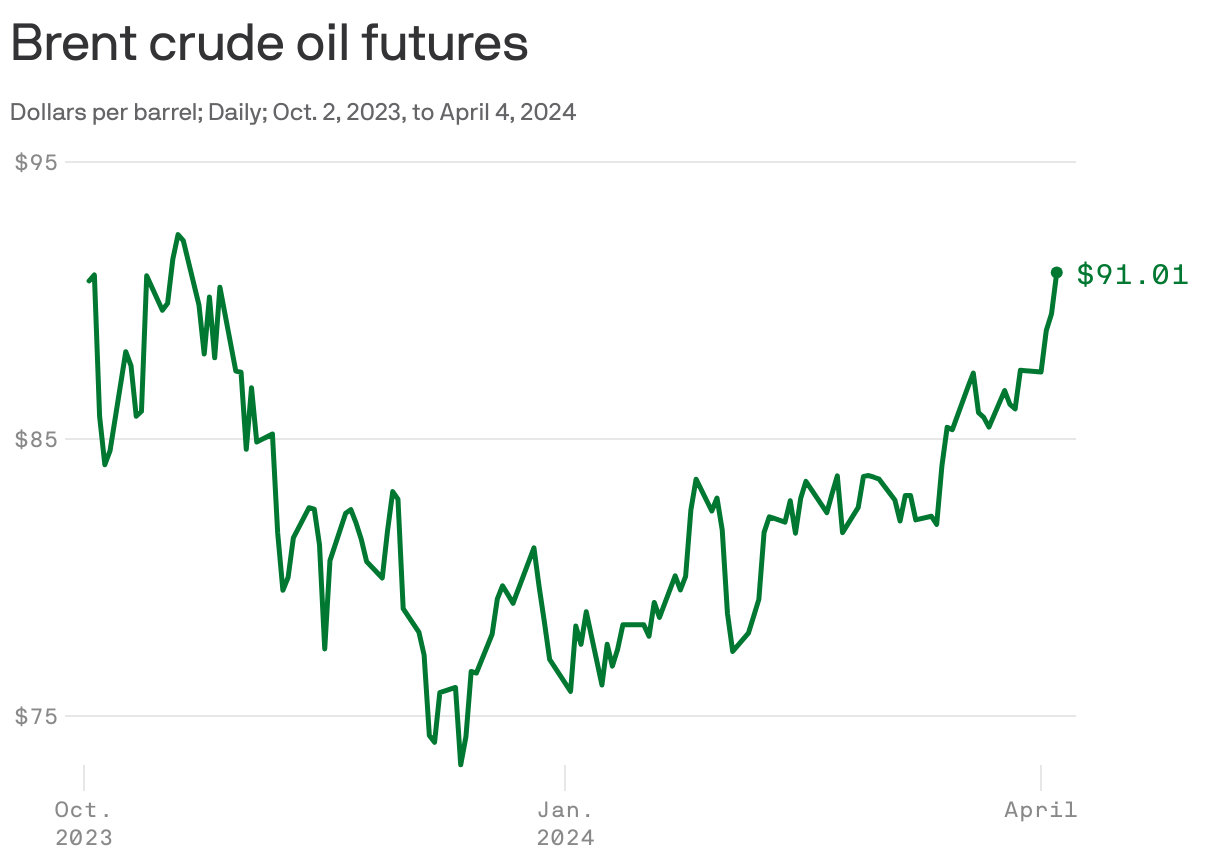
Oil prices have seen a significant increase, with Brent crude nearing record monthly gains at $112.78 per barrel. This rise is attributed to growing global demand and geopolitical tensions impacting the energy market.
Concerns about supply shortages in global markets are rising, prompting investors to purchase oil as a safe haven. Climate factors, such as storms and hurricanes, have also contributed to reduced production in some areas, significantly affecting prices.
Details of the Event
Oil prices have surpassed previous levels, witnessing an increase of over 10% this month. Data has shown that demand for oil in Asian markets, particularly in China, has risen significantly, contributing to price support.
Additionally, geopolitical tensions in regions such as the Middle East and Eastern Europe have heightened concerns about supply stability, leading investors to adopt more cautious positions. Reports indicate that some oil-producing countries have begun to cut production in response to these challenges.
Background & Context
Global oil markets have experienced significant volatility since the beginning of the year, with prices affected by several factors, including economic recovery following the COVID-19 pandemic and increasing energy demand. Geopolitical crises, such as the conflict in Ukraine, have also had a substantial impact on supplies and oil prices.
Historically, oil prices have been heavily influenced by political and economic events, experiencing periods of sharp rises and falls. As reliance on oil increases across various industries, the impact of these prices on the global economy remains significant.
Impact & Consequences
The rise in oil prices affects many economic sectors, potentially leading to increased transportation and production costs, which negatively impacts the prices of goods and services. Oil-importing countries may face economic pressures due to rising energy costs.
On the other hand, oil-producing countries may benefit from these price increases, enhancing their revenues and supporting their budgets. However, the biggest challenge remains how to manage these revenues in a way that ensures sustainable economic growth.
Regional Significance
Arab countries are among the largest oil producers in the world, and thus the rise in prices has a direct impact on their economies. Countries like Saudi Arabia, Iraq, and Kuwait may significantly benefit from this increase, enhancing their capacity to implement developmental projects.
However, countries that heavily rely on oil imports may face economic challenges, as price increases can lead to inflationary pressures and challenges in balancing their budgets. Therefore, governments in the region need effective strategies to address these market changes.
In conclusion, the rise in oil prices remains a vital issue affecting the global economy, requiring close monitoring by investors and decision-makers. With ongoing geopolitical tensions and increasing demand, we may witness further price fluctuations in the coming period.