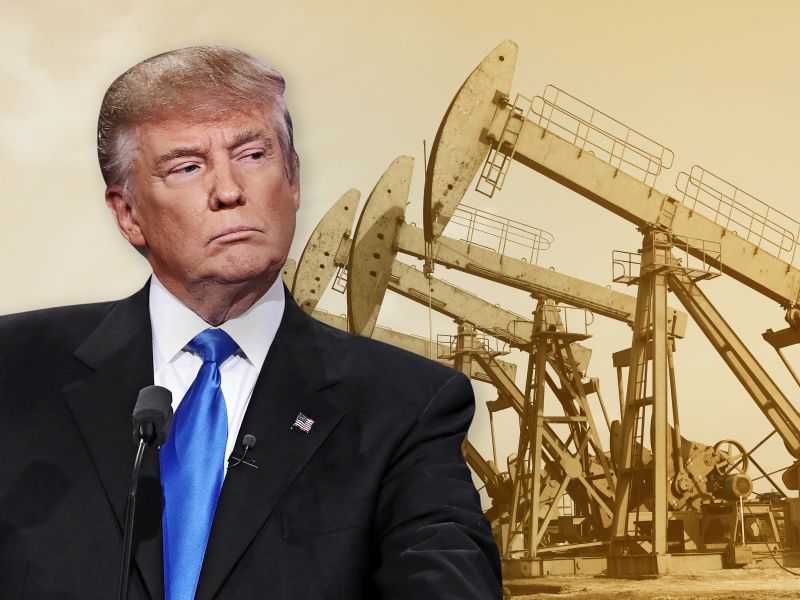
Oil prices have seen a significant increase of over 4% after former US President Donald Trump announced that the United States would continue its attacks on Iran. This statement comes at a sensitive time when the global market is experiencing rising tensions in the Middle East, raising concerns among investors about the stability of oil supplies.
In his remarks, Trump emphasized that the US administration would remain committed to its stance towards Iran, indicating that military attacks would continue as part of the pressure policy on Tehran. These statements have heightened fears of escalating conflict in the region, which has directly impacted global oil prices.
Details of the Event
Brent crude prices rose to around $85 per barrel, while West Texas Intermediate crude recorded a similar increase. This price surge follows a series of military tensions between the United States and Iran, where the region has witnessed an escalation in hostilities, leading to increased fears of oil supply disruptions.
Iran is considered one of the largest oil producers in the world, and any escalation in conflict could significantly impact the global market. Data has shown that markets were expecting price stability, but Trump's recent remarks have turned those expectations upside down.
Background & Context
Historically, US-Iranian relations have seen increasing tensions since the United States withdrew from the nuclear agreement in 2018. Since then, Washington has imposed strict sanctions on Tehran, affecting its economy and leading to a decline in its oil exports. In recent years, there have been several military incidents in the Arabian Gulf, including attacks on oil tankers and production facilities, which have heightened tensions.
The Middle East is a strategic region for global oil supplies, with a significant percentage of oil transported by sea passing through it. Any escalation in conflict could lead to a substantial increase in oil prices, affecting the global economy.
Impact & Consequences
The sudden rise in oil prices could have far-reaching consequences for the global economy. Oil-importing countries may face increasing economic pressures, potentially leading to higher inflation and rising living costs. At the same time, oil-producing countries could benefit from this price increase, boosting their revenues.
Moreover, these developments could impact financial markets, as rising oil prices may lead to volatility in stock and bond markets. Investors might turn to safe assets like gold amid increasing uncertainty.
Regional Significance
For Arab countries, the rise in oil prices could have both positive and negative effects. Gulf oil-producing nations such as Saudi Arabia and the UAE may benefit from increased oil revenues, strengthening their public budgets. However, countries that rely on oil imports may face economic challenges due to rising prices.
At the same time, increasing tensions in the region could lead to heightened security risks, potentially affecting investments and tourism. It is crucial for Arab nations to closely monitor developments and be prepared to address any potential repercussions.